
Priya Nair takes the call at 11:40 on a Tuesday night, which is when most of them come in. That is when people finally sit down and actually read the report instead of skimming the headline percentage. Her headset has a worn spot on the left ear cup from three years of the same grip. The customer on the line is calm at first. He wants to know what a "Lineage C contribution, 0.7%" is, because it wasn't on his report last year, and it wasn't on his report the year before that, and now it is, and nobody asked him first.
Priya has a script for this. She has had a script for this since the merger. "Lineage C" is one of two ancestral populations her company's algorithm now detects using nothing but the DNA already on file. No bones. No burial site. No name. A population that contributed a fraction of a percent to nearly every human genome on the reference panel, and that nobody has ever seen a single physical trace of. She reads him the paragraph. He asks the only question the paragraph doesn't answer, which is who they were. She tells him, honestly, that nobody knows. Not what they looked like, not where they lived, not what happened to them. Just that they existed, and that a piece of them is sitting in his cheek cells right now.
The technical name for what her company found in his file is an unadmixed segment: a stretch of DNA too old and too different from anything in the reference genomes to have come from any ancestor on record. Enough of those segments, shared across enough unrelated people, and a statistical picture starts to resolve, the outline of a population that once existed and once interbred with the ancestors of everyone who now carries the shadow of it. No skeleton required. No cave, no midden, no single tooth to carbon-date. Just enough strangers' spit kits, run through the same pipeline, agreeing with each other in a place a chart would once have needed a fossil to fill.
This was not something Priya's company built. It came from a wave of academic work earlier in the decade, the kind that used to stay inside population-genetics departments. Researchers had found they no longer needed an actual archaic skeleton to prove an extinct human population had once interbred with the ancestors of everyone alive. A new statistical method could reconstruct the genealogical relationships buried inside modern genomes directly, tracing which stretches of DNA in living people were too old and too divergent to have come from any known ancestor, and use that to infer an entire vanished population's existence from the shadow it left behind.1 Two such populations turned up almost immediately once people looked properly: DNA suggesting an unidentified lineage had contributed to the ancestors of everyone alive before humans left Africa, on top of an even older, "super-archaic" signal buried further back still.2 It wasn't the first time a ghost had turned up this way. Years earlier, a similar approach had already found that West African populations carried between two and nineteen percent of their ancestry from an archaic group with no known fossil counterpart at all, folded so deep into people's own family trees that nobody had noticed it was there.3
None of this stayed academic for long, because some of it wasn't abstract. A Denisovan-derived gene variant, inherited the same way, is the reason Tibetan populations can live and work at altitudes that would give most people altitude sickness, letting their blood carry oxygen efficiently instead of overproducing red blood cells the way lowland ancestry does at elevation.4 A cluster of immune-system genes recognizable as Neanderthal or Denisovan in origin shows up repeatedly across different human populations, each one apparently useful enough against local pathogens to have spread and stuck.5 The ghosts weren't just statistical curiosities sitting quietly in a paper. Some of them were doing something, in someone's actual body, right now.
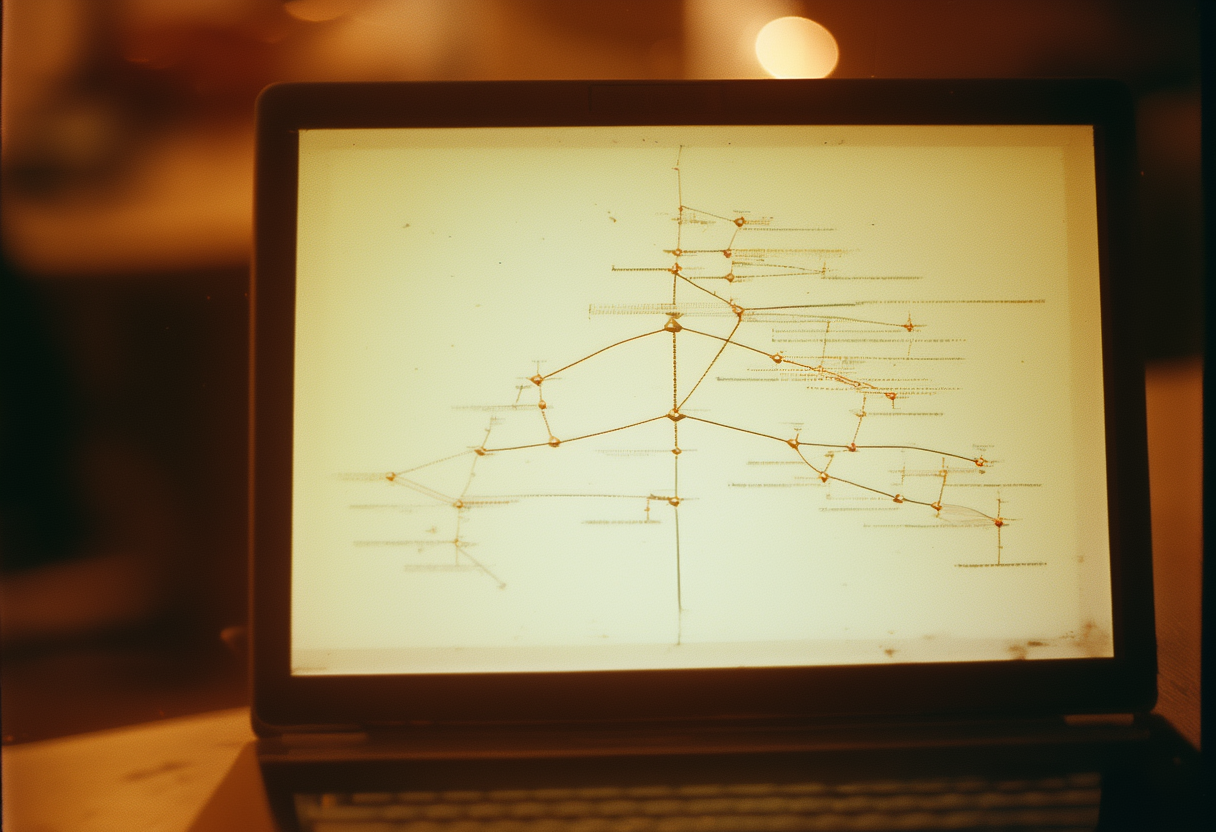
Figure 1. A researcher's working genealogy render, the unidentified branch left dotted rather than solid, 2036.
Priya's employer didn't do any of that research. What it did was buy a genome database. Direct-to-consumer genetic testing had gone through its own extinction event in the back half of the 2020s, when one of the largest companies in the space collapsed into bankruptcy. A court ruled that the genetic and health data of more than fifteen million customers could be sold off as an asset of the estate, the same way you'd sell warehouse inventory or a fleet of delivery vans.6 People were told, correctly, that they could ask to have their data deleted before the sale closed. Most people, it turned out, do not read a bankruptcy notice with the same urgency they read a spit-kit results email.
The database changed hands more than once after that first sale, folded into one consolidator, then another, the way a bankrupt airline's routes get carved up among survivors. Priya's company inherited a slice of it two consolidations later. Nobody on her team had collected a single one of those samples. What they had was a licensing agreement, a decade of frozen genetic records, and a new method for finding archaic ancestry that nobody had thought to run against this particular dataset before, because the dataset's original owner had gone out of business before the method existed. They ran it. They mailed out updated reports. Priya started fielding the calls a few weeks after that.
Nobody re-consented anyone for that. Nobody could have. Most of the customers whose data got reprocessed weren't customers of Priya's company at all, not originally. They were customers of a company that no longer exists, whose obligations, apparently, transferred along with the hard drives. The ghost lineage and the customer's own genetic file arrived at Priya's desk by the identical route: something inferred from the data, attached to a name, with no chance for the person it was attached to to weigh in beforehand.
One of those two things has been extinct for roughly eight hundred thousand years.1 The other one is on the phone with Priya right now, breathing audibly, asking her to explain a sentence about his own body that a company he never signed up for wrote about him without asking.
Priya doesn't have an answer for the part of the question that actually matters to him, which isn't really about the ghost population at all. It's about consent that traveled through a bankruptcy filing instead of through him. She can tell him what Lineage C is. She has never once been able to tell a customer why nobody asked.
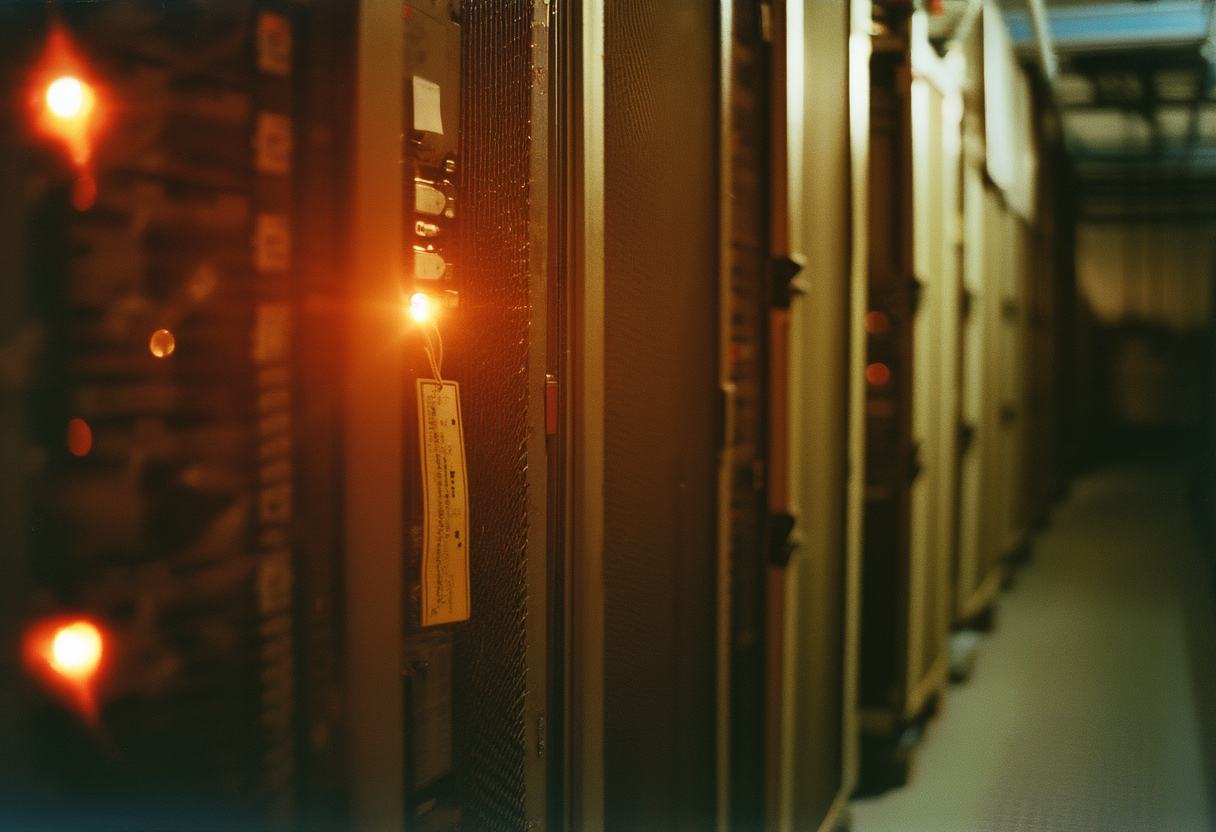
Figure 2. A leased data hall holding archived consumer genome records inherited across three corporate acquisitions, location undisclosed, 2036.
Before he hangs up, the customer asks her one more thing: whether Lineage C will still be on his report next year, or whether it'll be replaced by something else the next time somebody runs a better version of the method against the same old file. Priya tells him she genuinely doesn't know, and that she isn't being evasive, because the honest answer is that the file itself hasn't changed since the day it was drawn out of his arm years ago. Only the reading of it keeps changing, one inherited database and one new algorithm at a time, and there is no version of the form that lets him consent to a discovery that hasn't been made yet.
She logs the call as resolved, because there's a box for that, and there isn't a box for anything else.
Author's Note: This is speculative journalism written from an imagined 2036. Priya Nair and her employer are fictional composites; no such customer-support conversation is being reported. The underlying science, the archaic "ghost lineage" detection methods, the Denisovan EPAS1 altitude adaptation, the Neanderthal- and Denisovan-derived immune haplotypes, and 23andMe's 2025 bankruptcy and the court-approved sale of customer genetic data, is real and sourced below. The consolidation of that specific dataset into a hypothetical future company, and the reprocessing scenario described here, is this magazine's speculative extension of a real, disclosed legal outcome.