
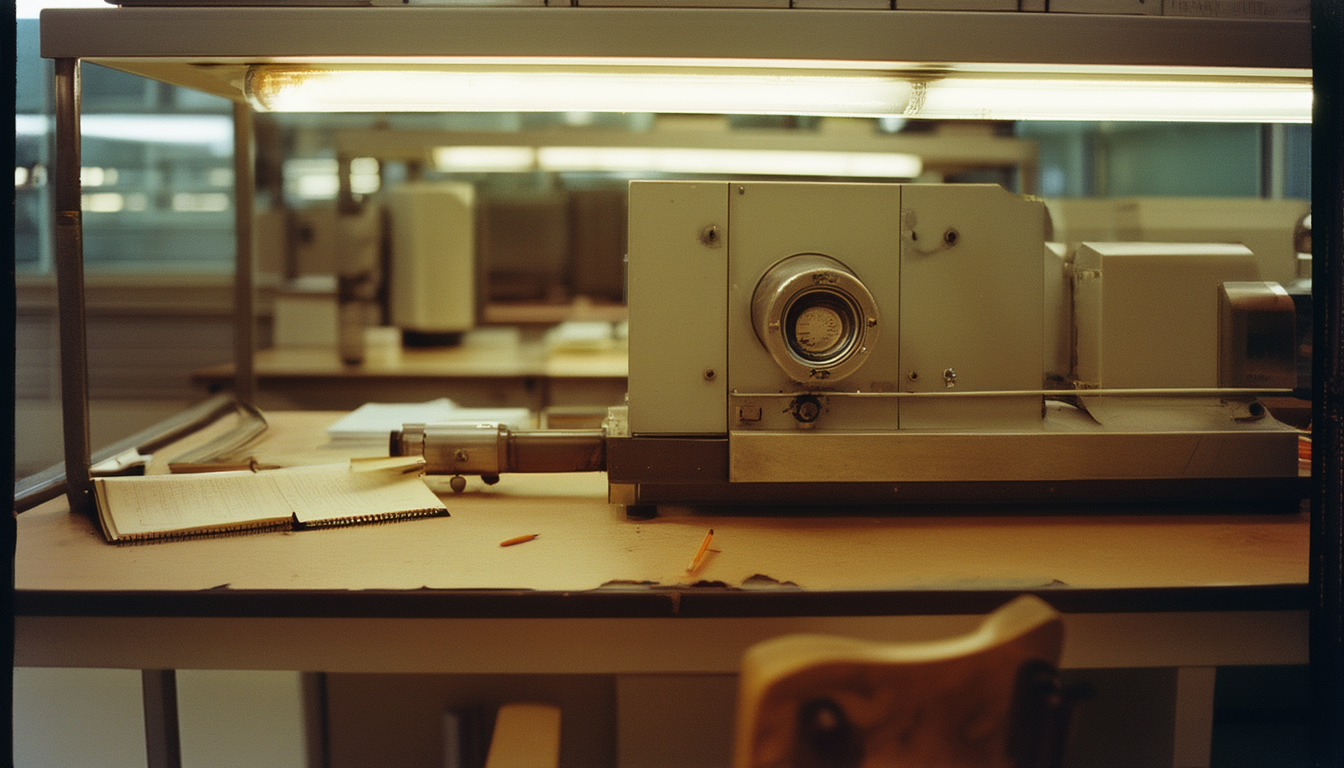
The instrument on the bench at the University of Manchester had a nose attached to it. A gas chromatograph takes a sample apart and delivers the pieces in sequence; a mass spectrometer identifies them by weight. Between the two, the 2019 Parkinson's study added an odor port, a heated outlet where the separated compounds emerged as smellable puffs, so a person could sit with a notebook and name each one as it passed. That person was Joy Milne, who had noticed years earlier that her husband's smell changed before his diagnosis. The compounds she called very strong and musky clustered between nineteen and twenty one minutes.1
The study was small and said so: sixty four participants, forty three of them with Parkinson's, recruited across twenty five National Health Service clinics and split into a discovery group and a validation group. Four compounds held up in both. Perillic aldehyde fell in the Parkinson's samples and eicosane rose. The authors worked without reference standards, called their identifications putative, and described the whole thing as a pilot.1 The apparatus is worth looking at because it holds the field in miniature, including the part that turned out to be hard. On one side, chemistry nameable to a decimal place. On the other, a person who can tell that something has changed and cannot say which molecule did it.
It is difficult now to remember how modest the commercial version was. In 1999 the entire electronic nose market was worth under fifteen million dollars a year. Cyrano Sciences was about to ship a thirty two sensor unit at five thousand dollars. The trial markets it actually chose were off odors in packaging and quality control of soda concentrates, and cancer diagnosis appeared in the coverage only among applications the team had daydreamed about.2 Cyrano was sold to Smiths Detection in 2004 for fifteen million dollars and an earn-out, with twenty three employees, for defense rather than medicine.3
What changed in the 2020s was not the sensors but the prediction. In 2023 a team out of Google Research published a graph neural network trained on roughly five thousand molecules across a hundred and thirty eight perceptual descriptors. Its penultimate layer, a space the authors called the principal odor map, arranged molecules by how they smelled rather than by how they were built. Then came the part that made it hold. Four hundred new molecules were rated by a panel of at least fifteen screened people, eighty were dropped for purity problems, and the model was scored on the remaining three hundred and twenty with no retraining. Its prediction came closer to the panel mean than the median panelist's own rating for fifty three percent of molecules, against forty one percent for a conventional chemical-fingerprint baseline, and it beat the median panelist on thirty two of fifty five descriptors.4 Osmo, spun out of Google Brain to commercialize the work, raised seventy million dollars in February 2026, more for one company working the half that was succeeding than the whole field had been worth when it was still promising to smell disease.5
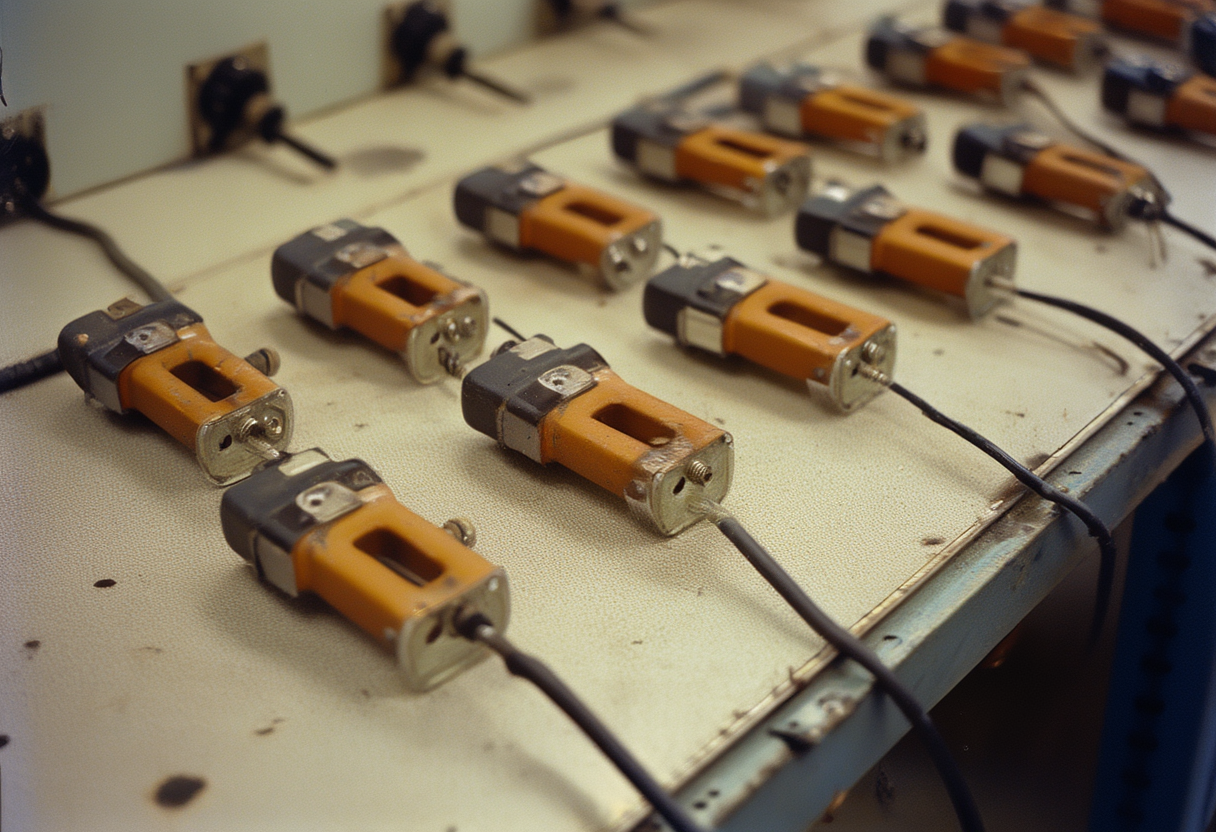
The sensing half had not moved the same way. A 2018 review called drift the most common problem these systems have: metal-oxide sensors change morphology and are poisoned by compounds containing nitrogen, phosphorus and sulfur, while conducting polymers lose their dopant and shift both baseline and sensitivity. One line in it carries the engineering story. A temperature change of a single degree Celsius can move a conducting-polymer sensor's baseline by as much as the response it is trying to measure. Better quality control improves repeatability, the review concluded, but not enough to avoid recalibration, and recalibrating often enough is prohibitively costly.6
The calibration also refuses to travel. Across nominally identical sensor arrays, a model trained on one unit showed a median prediction error of 3.9 percent on that unit, 17 percent on its siblings, and 4.7 percent once a standardization step was used to translate between them.7 The model generalized to molecules it had never seen. The instrument could not generalize to copies of itself.
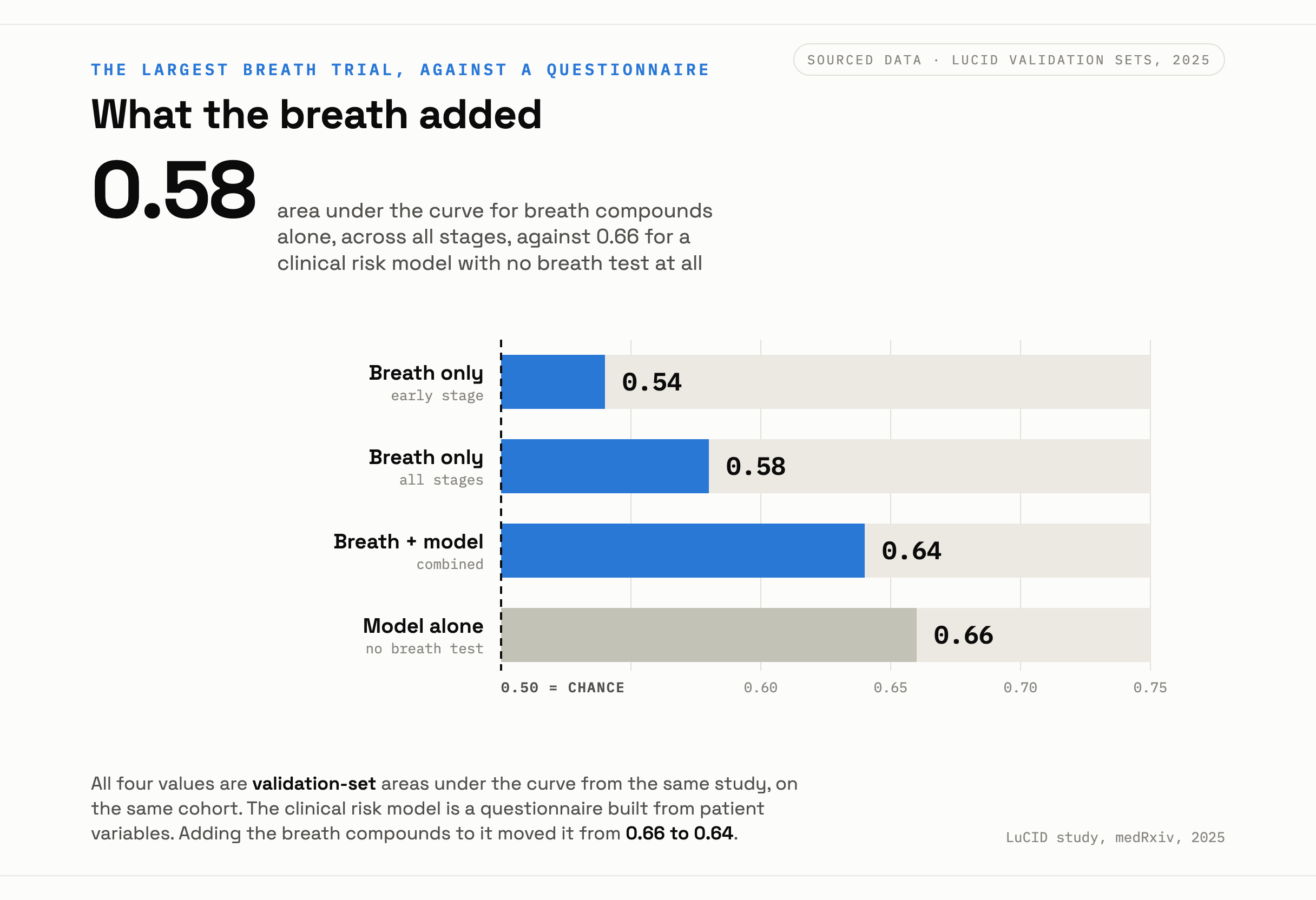
The clinical reckoning came in 2025. LuCID was the largest breath-based cancer detection trial anyone had run: twenty six sites across the United Kingdom and Europe, 1,844 people recruited, 677 controls and 518 confirmed cases after exclusions, the controls followed for two years. On the validation sets the breath compounds alone reached an area under the curve of 0.58 across all stages and 0.54 in early disease. A questionnaire built from clinical variables reached 0.66. Adding the breath data to that questionnaire produced 0.64. None of the candidate compounds survived correction for multiple testing, and the authors described the performance as poor.8
That is not a verdict on the idea, and the counterexample is a strong one. In 2018 a breath test for esophagogastric cancer was validated across three London hospitals on 335 consecutively recruited patients, reaching 0.85 with sensitivity of 80 percent and specificity of 81 percent. In the same cohort, the national referral criteria doctors were following managed 0.73 and sensitivity of 59 percent.9 It did not merely work, it beat the rule in use. What separates it from LuCID is the question it was asked, which was whether one specific disease was present, not the open question the field had been advertising since the 1990s, which was what is wrong with this person.
The deeper obstacle was neither chemistry nor sensors, and it had been named well in advance. A 2014 critique argued that health results in machine olfaction were systematically over-optimistic because almost nobody used a genuinely external validation set. Its cautionary example came from elsewhere in medicine: an ovarian cancer biomarker that turned out to track how long the serum had sat in a freezer.10 A systematic review in 2024 found the warning unabsorbed. Across eleven studies, forty six models and 2,297 patients, every study was rated at high risk of bias, none reported whether its model was calibrated, and exactly one validated models on a new sample of patients.11
The principal odor map paper carried its own version of that humility. When the authors ran a quality check on fifty of their stimuli, the compound named on the bottle was responsible for the smell in twelve cases, while contaminants accounted for eighteen.4 A map that good rested on a supply of samples that uncertain. By the mid-2030s, predicting what a molecule smells like was close to a utility. What stayed scarce was a sample whose provenance anyone could vouch for, a panel of calibrated noses to check it against, and an instrument that would give the same answer next month.
The regulatory record measures how little of that changed. The only breath test the United States has ever approved to help diagnose a disease is Heartsbreath, cleared in February 2004 under a humanitarian exemption for heart transplant rejection. In the trial the regulator reviewed, 1,061 samples from 539 recipients, it reached sensitivity of 59.5 percent, specificity of 58.8 percent and a positive predictive value of 5.6 percent, meaning roughly seventeen of every eighteen positives were wrong.12
Which returns the question to the bench in Manchester. In 2019 the odor port looked like a stopgap, a human nose bolted to a machine because the machine could not yet smell, and everyone involved assumed it was the component that would be designed out first. From 2036 it reads as the most rigorous part of the apparatus. The port was where a chemical peak had to be handed to somebody who could say musky, be asked how certain she was, and be wrong in a way that entered the record. The map that followed was a real achievement and is still in use. It was never an account of the air in a room, and the instruments that had to work in those rooms kept needing what the port had, which was a way of being checked.
Author's Note
This is speculative journalism written from 2036. The method audit, the diagnostics courses, the retained sampling trolley and all readings of the field after 2026 are projections. The Manchester odor-port study, the principal odor map results, the drift and calibration-transfer figures, the LuCID and esophagogastric trial numbers, the 1999 market figures, the 2014 critique, the 2024 review and the regulatory record are real and sourced below.