
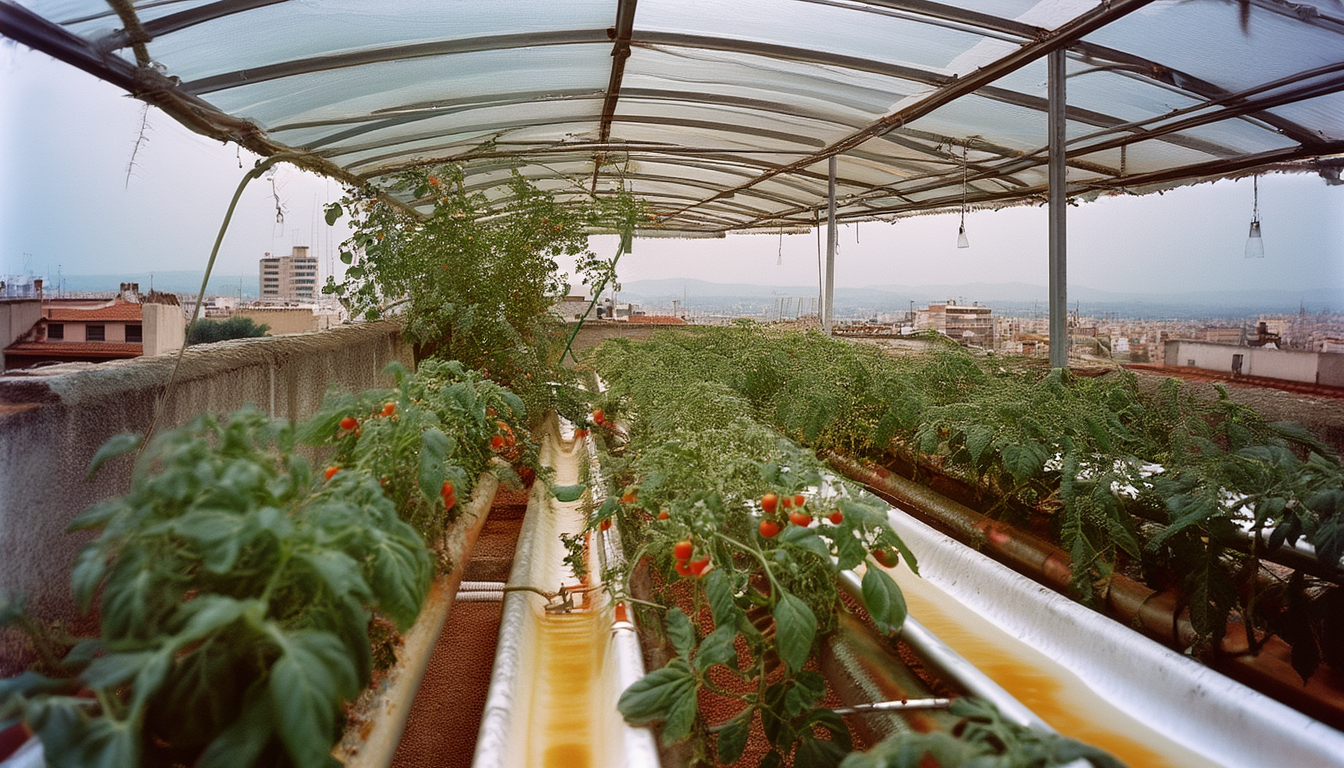
The flush was never a hygiene technology. It was an accounting decision.
For roughly a century we built sanitation on a single premise: that the nitrogen and phosphorus leaving the human body were waste to be diluted, piped, and removed at public expense. Looking back from 2036, that premise is the most expensive misclassification in the history of agriculture. We spent enormous energy manufacturing the exact nutrients we were simultaneously spending enormous energy to flush away. The Yellow Revolution — the global shift to urine-derived fertilizer that reorganized farming over the past decade — was not, despite the marketing, a breakthrough. It was a correction. And like most corrections, it arrived late, under duress, and carried a cost that nobody put on the original invoice.
The conventional wisdom
The story everyone told in 2030 was a story about water. It is half right, which is the most dangerous kind of right.
The drought was real, and it was the trigger. A 2023 investigation found the United States was depleting its groundwater "at a dangerous rate, shrinking aquifers nationwide."1 Of more than 84,500 monitored wells, roughly 40% had hit all-time lows in the previous decade; every year since 1940, more wells fell than rose.2 By mid-2023 Arizona had stopped certifying new groundwater-dependent housing in the Phoenix area.3 The High Plains aquifer, which underwrites about 20% of the nation's wheat, corn, cotton, and cattle, was being drawn down faster than any rainfall could refill it.4
So the popular account treats urine recycling as a thirst response — a way to stop flushing potable water. That account misses the larger ledger. Toilets are a water problem, yes. But they were always, underneath, a nutrient problem wearing a water problem's clothes. The drought didn't reveal a new idea. It removed the subsidy that had hidden an old one.
Force one: the nutrient already in the building
Start with the supply that was always there. Roughly 90% of the nitrogen and 50–65% of the phosphorus a human excretes leaves in urine — not in solid waste, and not in the parts of sewage that are hard to handle.5 The volumes are modest and the chemistry is generous: a year of one person's urine carries enough nitrogen and phosphorus to grow a meaningful share of that person's own grain.6 The nutrient was never scarce. It was misrouted — flushed, on the American average, more than five times a day with about 2.2 gallons of treated drinking water each time.7
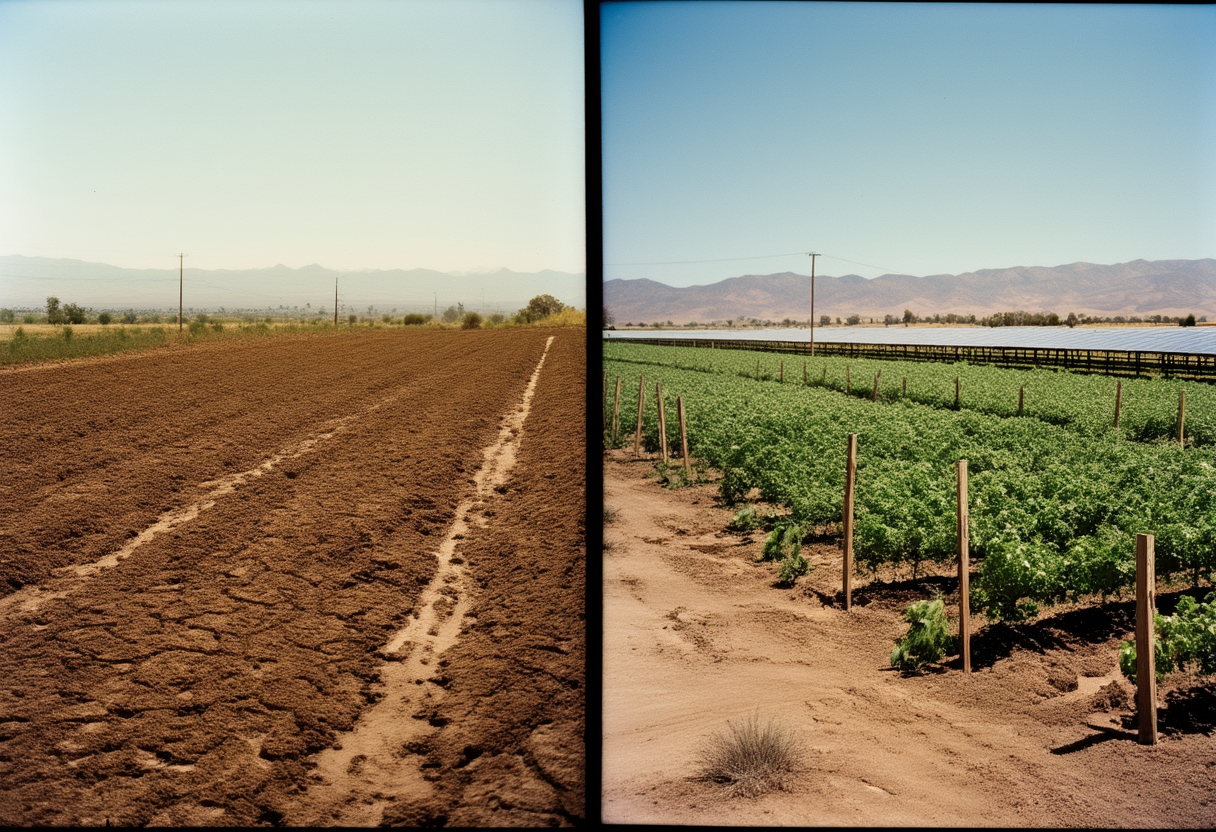
This is the enhancement, in tetrad terms: the technology amplifies nutrient autonomy. A building, a campus, a city block becomes a small fertilizer producer. The capability was latent in every restroom for a hundred years; what changed was the willingness to capture it.
Force two: the cost of making it the hard way
Now the system being displaced. Synthetic nitrogen comes from the Haber-Bosch process, which by the early 2020s consumed on the order of 1–2% of global energy and emitted roughly 450 million tons of CO₂ a year — more than the world's steelmaking or cement.8 It is a magnificent piece of chemistry and a ruinous piece of accounting: we burned fossil fuel at high temperature and pressure to synthesize nitrogen we were pouring down the drain at the same time.9
Phosphorus is worse, because you cannot synthesize it at all. It is mined as rock phosphate, a finite resource whose economically recoverable reserves are extraordinarily concentrated — roughly 70–80% sit in Morocco and the contested territory of Western Sahara.10 "Peak phosphorus" was a live concern years before the drought.11 Recovering phosphorus from urine doesn't just save energy; it touches one of the few genuinely non-substitutable inputs in all of agriculture.
Put the two forces together and the obsolescence is plain. The Yellow Revolution pushed aside the flush-and-mine model: the assumption that you discard the nutrient at one end of the system and dig up its replacement at the other. By 2036 that round trip looks like what it was — a century-long act of moving the same atoms in a circle and paying for the trip twice.
What it brought back
The retrieval is the part nobody likes to say plainly, so I will. The Yellow Revolution retrieves the pre-industrial night-soil economy — the closed nutrient loop that fed cities from their own waste for millennia before sewers severed it. What flush sanitation obsolesced in the nineteenth century, source separation has now returned, only sanitized, metered, and certified.
The real-world groundwork was laid well before any crisis. Switzerland's Eawag spun urine into Aurin, the first urine-derived fertilizer certified for all edible plants, adopted by cities including Zurich.12 In France, a "peevolution" of building-scale diverters and farm trials ran for years; one operator's urine-fed corn out-yielded mineral-fertilized plots in independent testing.13 None of this required inventing chemistry. It required retrieving an old relationship with waste and giving it instruments.

The reversal
Here is the turn, and it is the part the 2030 enthusiasts skipped.
A closed loop is also a loop with no exit. The flush, for all its waste, was a flush — it carried the body's pharmaceutical load out of the food system. Hormones, antibiotics, and antidepressants pass through us and out in urine. Storage alone does not destroy them. Even months of holding fail to clear the residues, so processed urine needs active treatment before it touches an edible crop.14 The same circularity that captures nitrogen captures everything else we excrete, and routes it back toward the plate. A technology sold as purity reverses into a new contamination pathway — one we engineered ourselves by closing the very loop that used to dilute it.
And the phosphorus story flips too. We were told recycling would end our dependence on a few politically fraught mines. In practice, recovered phosphorus supplements the mined supply; it does not replace it. The reserves still sit where they sit. The tool marketed as the end of nutrient geopolitics became, instead, one more managed input in a system that still bows to Morocco. The Yellow Revolution did not abolish scarcity. It relocated it — from the aquifer to the contaminant filter, from the mine to the monitoring lab.
The lesson
Strip away the solar arrays and the certified powder, and the durable principle is an accounting one. We did not discover that human waste is fertilizer; farmers knew that for ten thousand years. We discovered that calling it "waste" was a choice — a line item we drew to make a convenient system look free. The drought didn't change the chemistry. It changed the price, and the price is what we had been managing all along.
The cautionary half is just as plain. In a genuinely closed system, nothing leaves — not the nutrients you want, and not the pollutants you don't. Circularity is not the same as cleanliness; it is the discipline of owning what you used to be able to throw away. The Yellow Revolution's real legacy isn't that we learned to recycle urine. It's the colder realization underneath it: on a finite planet there is no "away," and every loop you close hands you something you now have to keep.
Speculative-vs-sourced boundary: This is speculative journalism written from a 2036 vantage. The 2036 framing, the named figure scenes, and the projected scale of adoption are imagined. Every present-day claim — the groundwater data, the nutrient chemistry, the Haber-Bosch figures, the phosphorus geography, the real urine-recycling pilots, and the micropollutant limitation — is real and sourced below. Where the original draft asserted specific proprietary systems and adoption percentages that could not be verified, those have been cut or reframed as plausible projection rather than fact.