
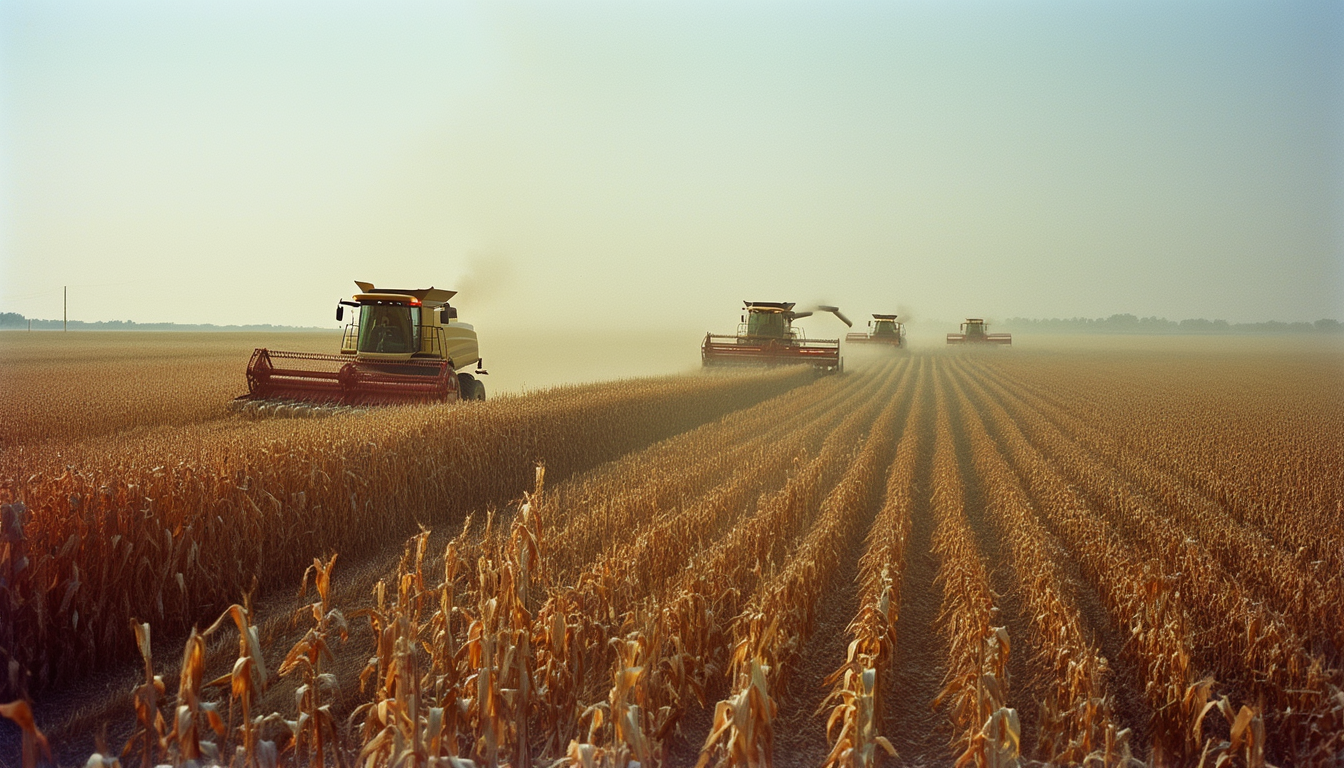
The corn should have been coming off by now.
Marcus Chen stands at the window of the operations center, coffee going cold in his hand, watching 2,400 acres of Illinois bottomland do nothing at all. It is a Tuesday in September 2036. Outside, the corn is dry and tall and perfect. Inside, on the screen wall, forty-seven combines sit frozen in a diagonal line across the fields, stopped exactly where they quit at 3:47 a.m. four days ago. The dashboard has shown the same line of text the whole time: SYSTEM AUTHENTICATION FAILURE. REMOTE OVERRIDE DISABLED.
He has called the vendor. Everyone has called the vendor. On his phone, corn futures are doing something he has never seen futures do. The financial press is calling it "an extraordinary disruption event." Everyone else is calling it the Blackout.
The promise
Marcus did not grow up in farming. His group bought this ground in 2029, when the math had become irresistible. By the early 2030s you no longer bought a robot — you bought robotic capability as a service, a subscription that ran your fleet while you slept. The pitch wrote itself: round-the-clock harvest in the good-weather windows, machine precision, and an answer to the one problem nobody could fix with money.
That problem was people. The average American farmer was already 58 years old by the 2022 ag census, and the number kept climbing.1 Hardly anyone young was walking into the fields. On specialty crops — fruit, vegetables, nuts — hand labor ran near 40 percent of total expenses, the highest share in all of agriculture.2 Automation did not feel like a luxury. It felt like the only door left open.
So the door opened. The U.S. autonomous-tractor market was worth about $2.2 billion in 2025 and was forecast to keep compounding at roughly 18 percent a year.3 Farms that automated early grew fast, bought out the neighbors who couldn't, and grew again. Marcus's group was one of them. He thought he was running a farm.
The mechanism
What investigators reconstructed later was almost insultingly simple.
The machines were not the target. The authentication servers were — the check-in points every machine pinged every few minutes to prove it was still allowed to run. In a field, monoculture means a thousand acres of one seed; one blight takes everything. In software, it meant most of the continent's farm equipment leaning on the same handful of platforms, the same protocols, the same cloud.
That this was possible was not a secret. In 2022, a researcher who goes by Sick Codes stood on a stage at DEF CON, having bought a John Deere display console off eBay and jailbroken it — running the game Doom on a tractor screen to prove the point.4 One universal display, he noted, ran across the whole machine line, which made it one beautiful target. Earlier, his group had pulled customer data out of the company's cloud. None of this was hidden. The year before the Blackout, the FBI gathered hundreds of farmers in Omaha and told them ransomware was now the number-one threat to the food supply, and that grain cooperatives in the region had already been forced to shut down by attacks.5 One had a name everyone knew: in 2021, ransomware froze JBS, one of the largest meatpackers on earth, and the company paid roughly $11 million to get its plants running again.6
So when, at 3:47 a.m. on a September night in 2036, the corrupted credentials rolled out and the machines stopped accepting commands all at once — combines, planters, sprayers, haulers, across the corn belt and the wheat plains and the orchards of the Central Valley — the only surprising thing was that it had taken this long.
The turn
Here is the part Marcus could not get anyone to understand on the phone.
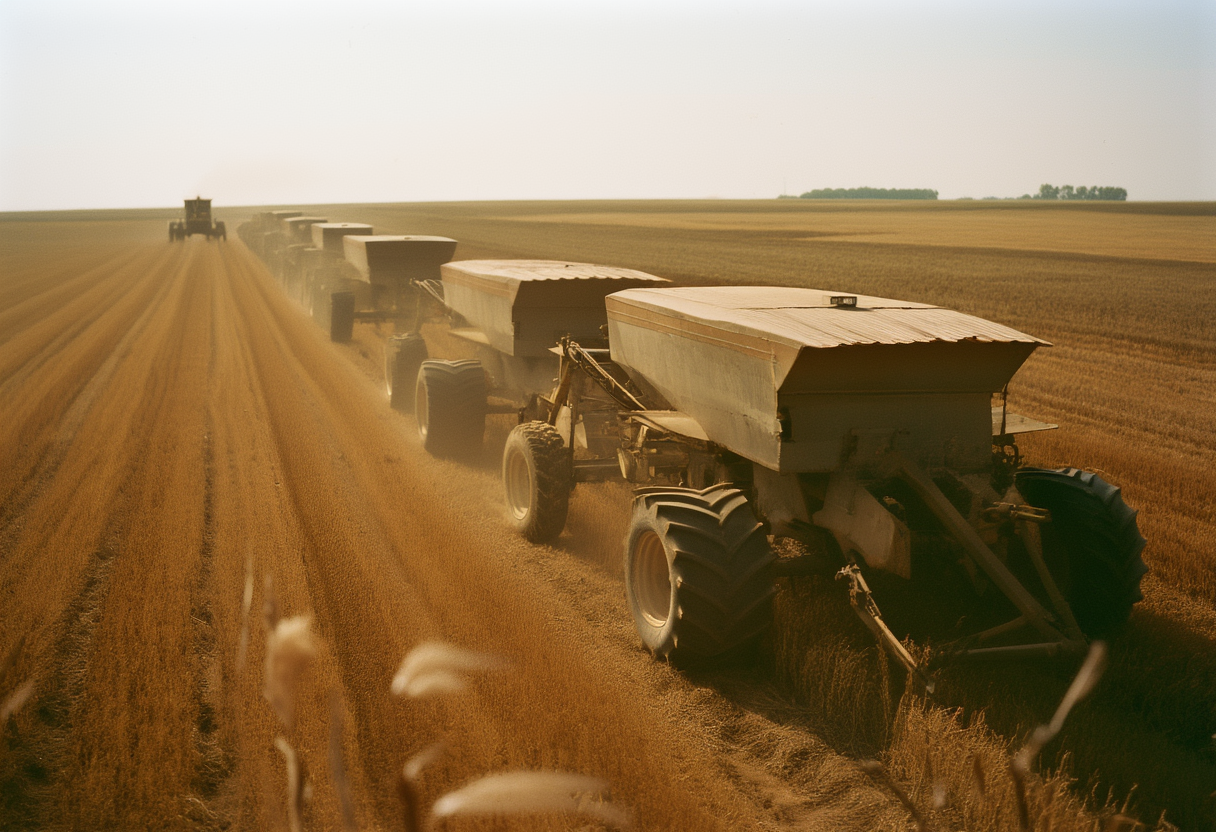
It was never just that the combines stopped. It was that stopping was the only thing left that could happen. He asked the regional manager the obvious question — could they harvest by hand? — and heard himself realize the answer as he said it.
There were no hands. The people who knew how to read a field by eye and touch had aged out a decade ago, and their kids, sensibly, had not learned a skill the market had spent fifteen years declaring worthless. There was no backup iron either; the old combines that hadn't been scrapped wouldn't start. And even if you magicked up the machines and the crews, the grain elevators, the storage, the processing plants — every link downstream had been rebuilt around a smooth, automated flow with no slack and no manual setting. You cannot run a modern harvest on a 1950s spare tire.
This is the reversal, and it lands hardest because it is so quiet. The technology had been sold as a way to enhance output and retrieve the round-the-clock harvest the labor shortage had taken away. It did both. But pushed to its limit — pushed all the way to total dependence — a system built to obsolesce the slow, redundant, human parts of farming reversed into the opposite of its promise. The most efficient food system ever built was also the most fragile. America in 2036 had more food than it ever had in history. It simply could not get any of it out of the field.
Back at the window
It took twenty-seven days. There was a ransom, and a long argument about whether paying it was surrender or survival, and eventually a payment, and then the machines woke up almost as fast as they had died. But the windows for some crops had closed while everyone argued, and a share of the harvest was simply gone — dried past saving, or rotted on the vine.
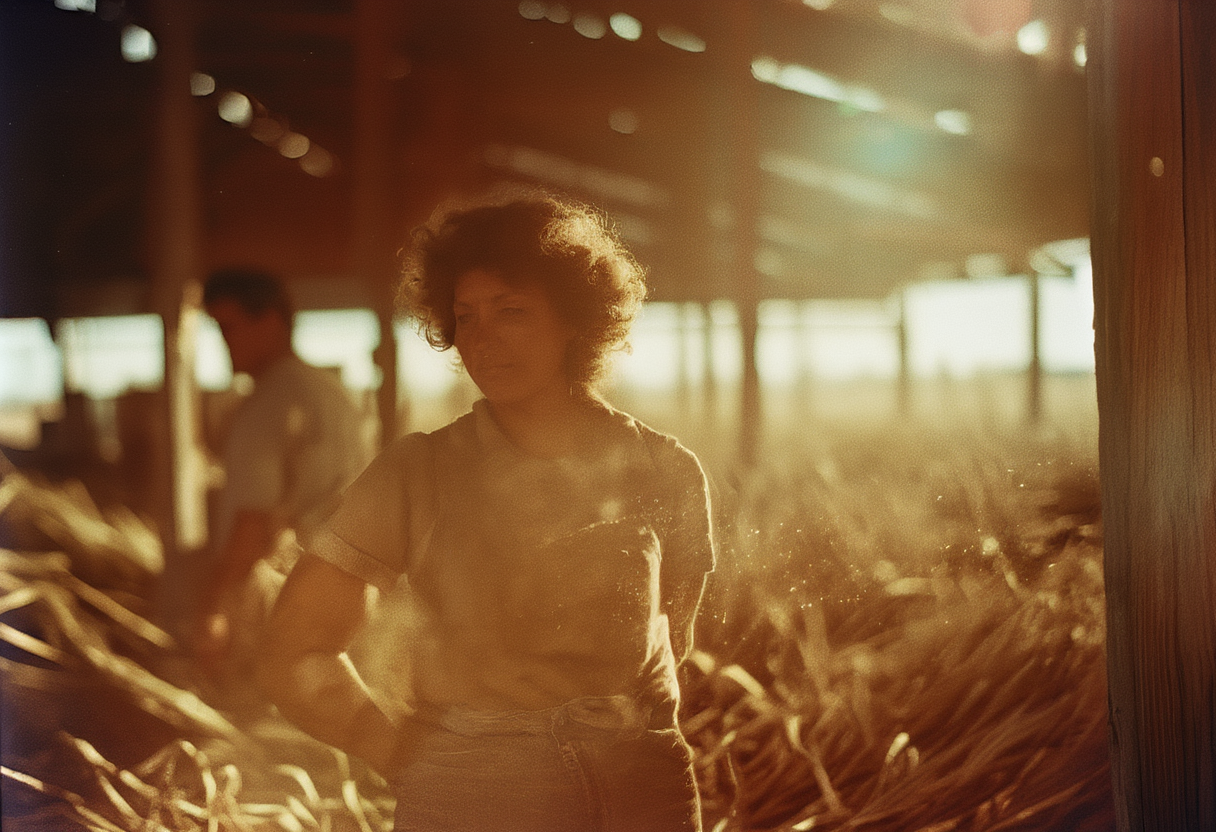
Marcus kept his combines; they were too expensive to walk away from. But he also hired a crew of six who knew how to run iron by hand, and he keeps a few conventional machines greased and ready in a shed he used to think of as wasted space. His margins are thinner now. His insurance is cheaper, and he sleeps.

"I thought I was managing a farm," he says, watching a combine and a human-driven cart work the same row. "I was managing a software platform that happened to grow corn. The technology is supposed to serve the farm. We had it backwards."
The corn is coming off now, the way it should in September. Not a record year. A reliable one. Which, it turns out, was the whole point — and the open question is whether anyone remembers that long enough to keep paying for it once the harvests are easy again.
Author's Note
This is speculative journalism: a story set in 2036 and looking back, narrated through a fictional composite character, Marcus Chen, who stands in for many real operators. The Blackout, the ransom figures, the crop-loss numbers, and the 2036–2039 reforms are invented — one plausible trajectory, not a prediction. Everything outside that frame is real and sourced below: the market growth, the labor economics, the aging workforce, the demonstrated vulnerability of connected farm equipment, and the federal warnings that the food supply is now a cyber target. The tension the story dramatizes is genuine. As we automate food production for efficiency, are we building something reliably abundant — or catastrophically fragile?