
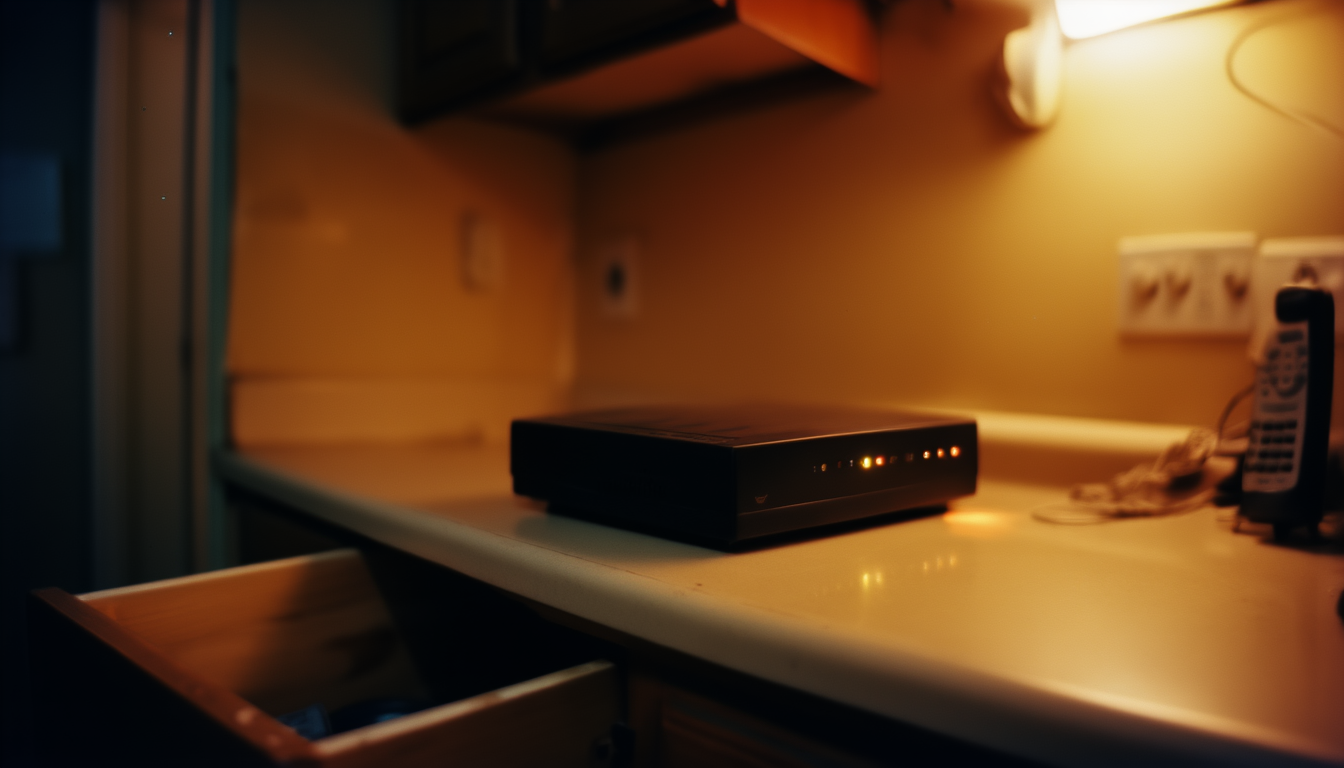
Renata Cho owned nothing that could speak for her, and the apartment knew when she came home anyway.
She had done it the hard way, the way the old guides still recommended in 2036. No smartphone. A dumb handset for calls, left in a drawer most days. No accounts under her legal name, no smart speaker, no doorbell that filmed the hall. She was a night-shift home aide in a building where half the units were rented by people who, like her, preferred not to be counted. She thought of herself as unlit.
The machine resolved her fine. The landlord's leased internet gateway, the black box blinking on the kitchen counter, had a feature switched on by default. It watched the Wi-Fi signal bounce around the rooms and flagged when something moved between the router and the smart thermostat. It did not know her name. It did not need to. It knew a body crossed the living room at 6:14 a.m., every morning, and it wrote that down.
Sold as connection, sold as safety
None of this arrived as surveillance. It arrived as convenience, and as care.
The router was there to connect you. The camera on the corner was there to keep you safe. Those were the promises, and for a long time they were most of the truth. The same network that logged Renata's footsteps also carried the video call to her mother in Busan. The same municipal cameras that would later map her walk had first been sold to the city as a way to find a lost child faster.
What changed was not the wiring. It was what the wiring learned to notice. For most of the smartphone era, being tracked meant carrying something that reported on you: an app, a login, a device leaking its location to companies you would never meet. The defense was obvious, if hard. Carry nothing. Feed the machine nothing. Renata's whole method depended on that one assumption, that the watching needed a thing in your pocket. By 2036 the assumption was dead. The watching had moved into the room and into the street, and it read the body directly.
The room becomes an instrument
The technical name for what the gateway did is Wi-Fi sensing. A wireless signal does not stop at your skin. It passes through walls and reflects off whatever is inside, including a moving person, and the pattern of those reflections changes in a way a computer can read. Engineers call the raw measurement Channel State Information. Feed enough of it to a neural network and the network can reconstruct where a body is and what it is doing.
Researchers at MIT showed the sharp edge of this back in 2018. Using low-power radio in the Wi-Fi band, their system could sense people through a wall and render them as moving stick figures, tracking a person it could not see.1 For years that stayed a lab trick. Then, in 2024, the standards body that governs Wi-Fi ratified an amendment, 802.11bf, that turned sensing into an official job of the network. It gave ordinary Wi-Fi devices a shared language for detecting motion, position, even the rise and fall of breathing.2 The router was no longer only a radio. It was a sensor, by design.
Consumers met the friendly version first. A leased home gateway could be set to treat the house as a motion detector, alerting you when something moved between your connected devices, across rooms and even floors, with no camera and no extra hardware. The fine print noted that the movement data could be shared with third parties.3 The feature was framed as home security. It was also a floor plan of your life, drawn in your own signal.
The street learns your walk
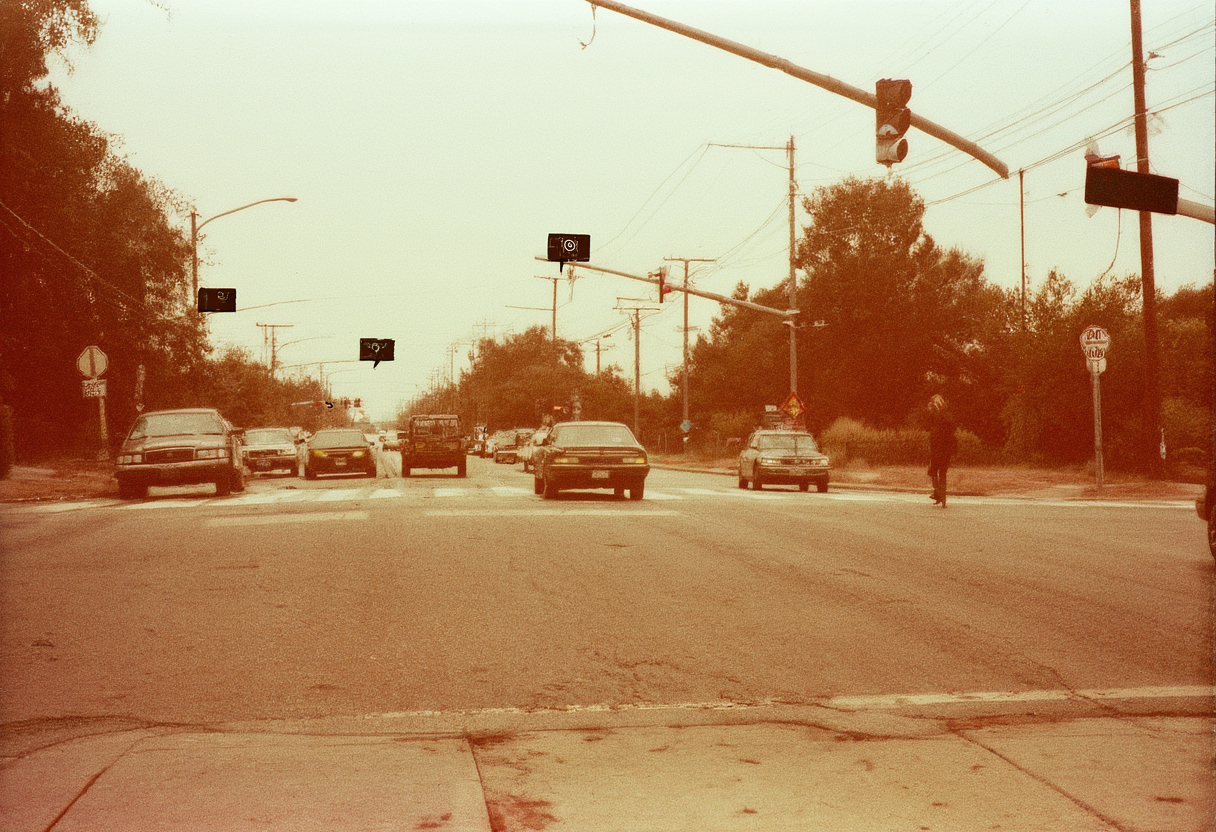
Outside, the second half of the grid was older and blunter, and it had been filling in for years. By the end of 2021 the world held roughly a billion surveillance cameras, about half of them in China.4 A camera is only glass until something teaches it to recognize. Several things did.
Face recognition came first and drew the most alarm. One firm, Clearview AI, scraped some thirty billion images off the open web without anyone's consent and sold matching to police, collecting a string of European fines, including a 30.5 million euro penalty from Dutch regulators in 2024, that it mostly absorbed as a cost of doing business.5 But faces can be covered. So the tools reached past them. In China, a company called Watrix deployed gait recognition, identifying people by the geometry of how they walk, from as far as fifty meters, back turned, face hidden.6 You cannot leave your walk at home.
The most quietly total system watched cars. Automated license plate readers from a single vendor, Flock Safety, spread across thousands of American communities, scanning billions of vehicles a month and holding the trails. Investigators at the Electronic Frontier Foundation documented how those networks were queried to help federal agents locate immigrants, and how individual officers used them to track women they knew.7 Even the home doorbell fed the grid. Amazon's Ring spent years handing footage to police on request, and although it closed that easy channel in 2024, police could still reach the video by warrant or by claiming an emergency.8 The corner, the curb, and the front door were all reporting.
Who won, and who paid
By 2036 the reversal is finished and almost invisible. The infrastructure sold to connect you and protect you became the most complete presence-detection system ever built, and it needs nothing from you to work. You do not opt in. There is no app to delete. The router in someone else's name and the streetlight you never voted for do the sensing, and the body is the barcode.
The winners are the vendors who turned every wall and pole into billable sensing, and the agencies that gained a view of the population no warrant-bound officer of the last century could have assembled. The ones who paid are everyone, unevenly. For most people the cost is a low hum of being known. For the person who most needs to be unseen, the aide without papers, the woman leaving a violent house, the organizer, the cost is sharp, because the one strategy that used to work, carrying nothing, no longer does.
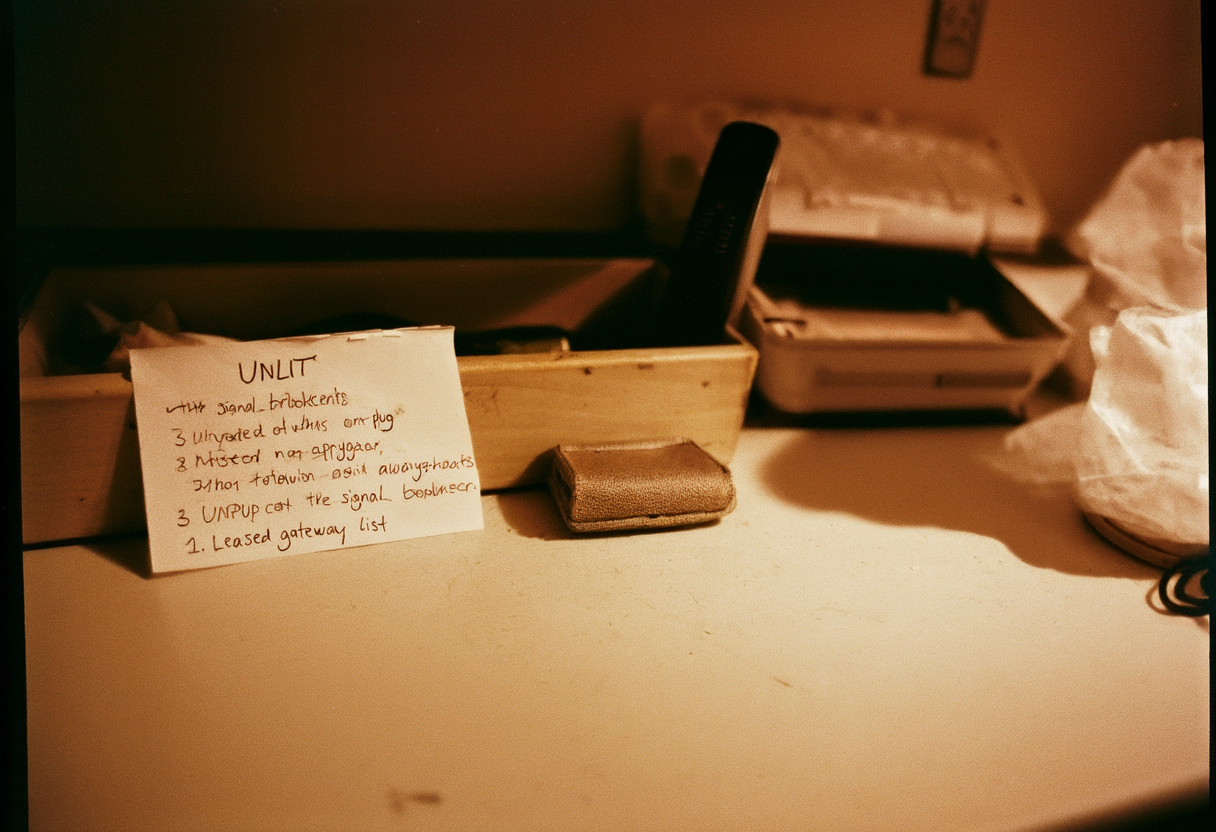
Renata still keeps the drawer, the dumb handset, the pouch. They are habits now more than defenses. She has understood the thing the rest of us are still catching up to: the machine stopped waiting for you to hand it something. It learned to read the room you stand in, and the street you cross, and the plain fact of your moving body. There is no drawer deep enough for that.
Author's Note. Renata Cho and the 2036 scenes are fictional, a composite drawn from documented technology to show what the system does to a real life. The developments through 2026 are real and sourced below: MIT's through-wall RF sensing, the IEEE 802.11bf Wi-Fi sensing standard, consumer Wi-Fi motion features and their data sharing, the global camera count, the Clearview AI scrape and fines, Watrix gait recognition, the Flock license-plate networks and their documented misuse, and Ring's police-footage history. The fully ambient, opt-out-proof grid of 2036 is a projection of where those documented drivers point, not a reported fact.