
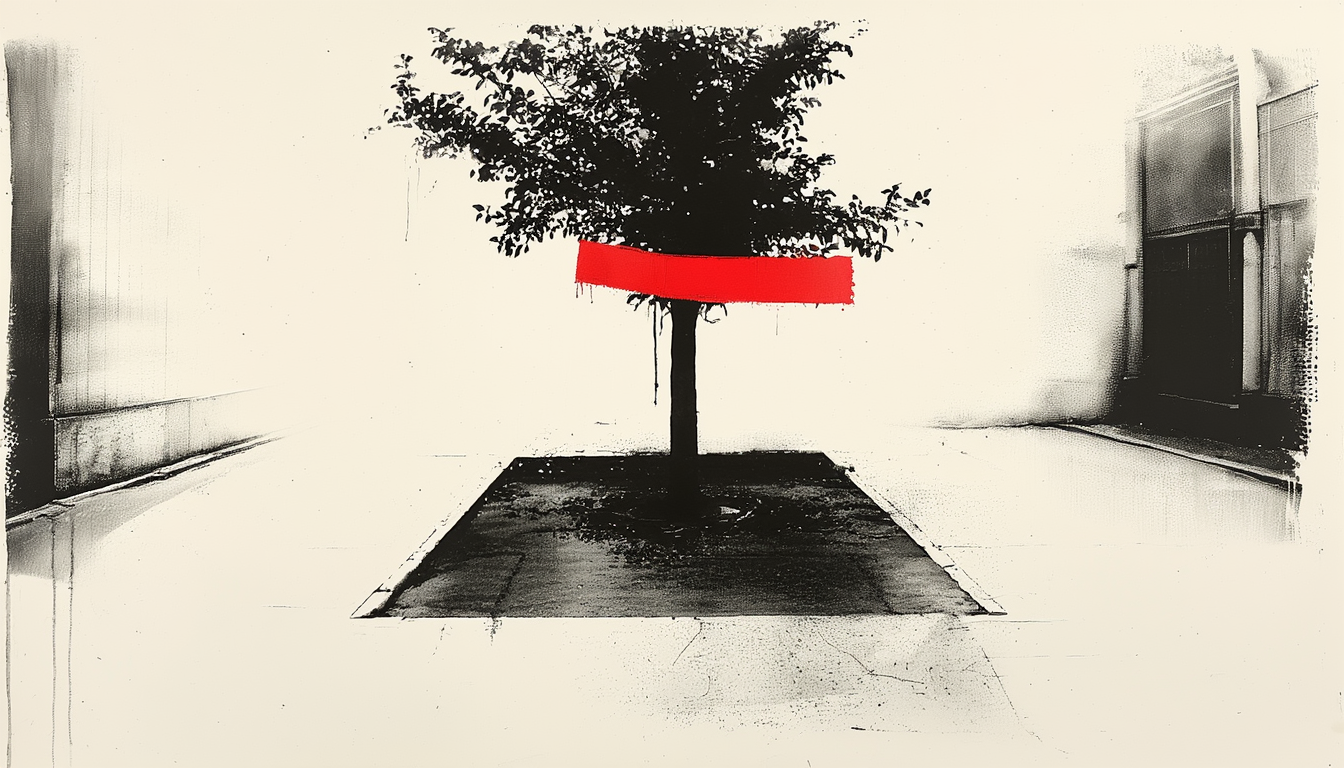
Delfina Arriaga grafts in the first warm week of March, and in 2036 that was the week of the ninth. She works the Portola on a bicycle with a canvas knife roll in the frame bag, and she has been cutting scions into San Francisco street trees since 2014. She learned the work from Emmanuel Ocampo, who kept a nursery yard off San Bruno Avenue and who handed her the knife and the rule in the same afternoon.
"If the union takes, the block has a fruit tree."
Arriaga has kept a notebook against it ever since. Tree, date, scion variety, whether the union held through June. Twenty-two years of entries, and the column for what happened after year three is mostly empty. She said so before I asked.
What would have to be true
The rule is not a figure of speech. A graft transplants an identity. The scion becomes the top of the plant and bears its own variety rather than the host's, and the limit on that is relatedness: varieties within one species unite reliably, two species in one genus may unite weakly or not at all, two families will not unite.1 Inside those limits the cut is the whole intervention, and the cut has one requirement. "Cambium contact is the key," as a Wisconsin extension handout puts it.2 Lining the two cambial layers up is what lets callus knit the pieces into a single vascular system.1 An old tree can be converted a few branches at a time; the guidance for topworking a large one is to graft about half the branches the first year and the rest the next.1
The Guerrilla Grafters built a practice on that. The group formed in San Francisco in 2011 and cut fruiting scions into the city's non-fruiting ornamental apple, cherry and pear trees, with an Asian pear worked into a flowering pear in Hayes Valley as the demonstration case.34 Margaretha Haughwout, Tara Hui and Ian Pollock presented it at an electronic art symposium in 2015.5 By early 2012 the newsletter list ran to 130 or 140 people with about a dozen regulars at grafting events, and the group counted more than a hundred volunteers across three states.46 It grafted only trees that had a committed steward to prune, water and harvest.4
The tactic has a long record under other names, and the record includes the part where an institution absorbs it. The Green Guerillas threw seed bombs of fertiliser, seed and water over the fences of vacant New York lots beginning in 1973, and in April 1974 the city leased one of those lots back to the gardeners for a dollar a month.7 Incredible Edible started in Todmorden in 2008 with sweetcorn on unused public ground in front of the police station, signed red, amber and green so passers-by knew when to pick.8 A seed library at the Joseph T. Simpson Public Library in Mechanicsburg, Pennsylvania was pulled under the state Seed Act of 2004 until a 2015 coalition letter got the department to accept that a library giving seed away is not a distributor.9 Beavers appeared on Devon's River Otter in 2013 with origins that are still unclear, were threatened with removal, licensed in 2014 as a five-year study, then allowed to stay for good in 2020.10 England opened licensed wild release in February 2025.11
What the rule is measuring
The take measures whether two cambium layers stayed in contact long enough to knit, on one branch, in one spring.
What it gets read as is whether the block gets fruit, and that is a twenty-year question settled by pruning cycles, water, and whoever holds the maintenance contract.
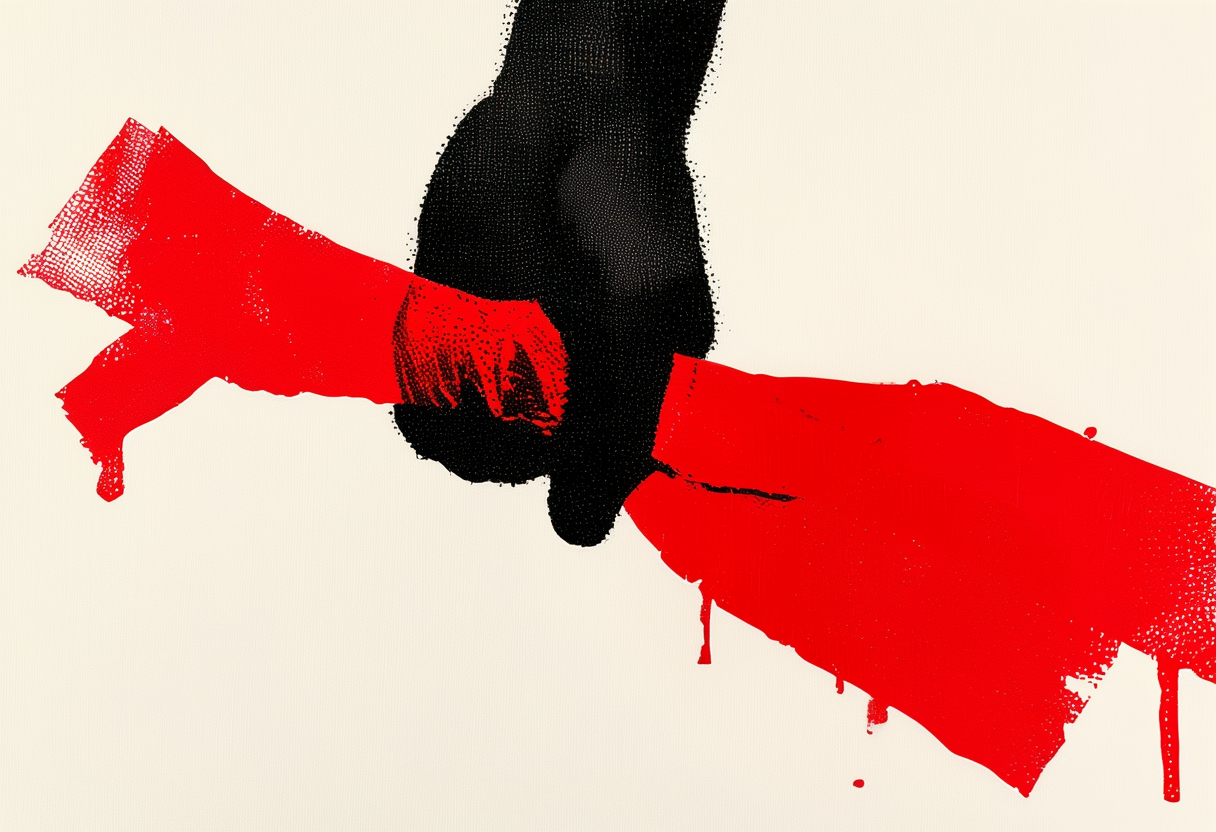
Figure 1. The measurement and the inference. The union is the only part of the sequence that the knife decides.
Ocampo's rule is exact about the cut and silent about everything downstream of it. Even the first crop belongs to somebody else's variable: on one common apple rootstock the extension guidance is no fruit until year four or five.2
Which way it points, and against what
Backward, at the branch, over about six weeks. Scored against the survival of the tree it is cut into, it carries no information at all.
A planted street tree is not a stable object. Across eleven United States studies, annual street-tree mortality runs 3.5 to 5.1 percent, which puts mean life expectancy at 19 to 28 years and the population half-life at 13 to 20 years. In New York, 26.2 percent of street trees were dead eight to nine years after planting. In West Oakland between 2006 and 2011 annual mortality was 3.7 percent overall and 5.6 percent among trees with trunks of three inches or less, about four times the rate in the larger classes.12
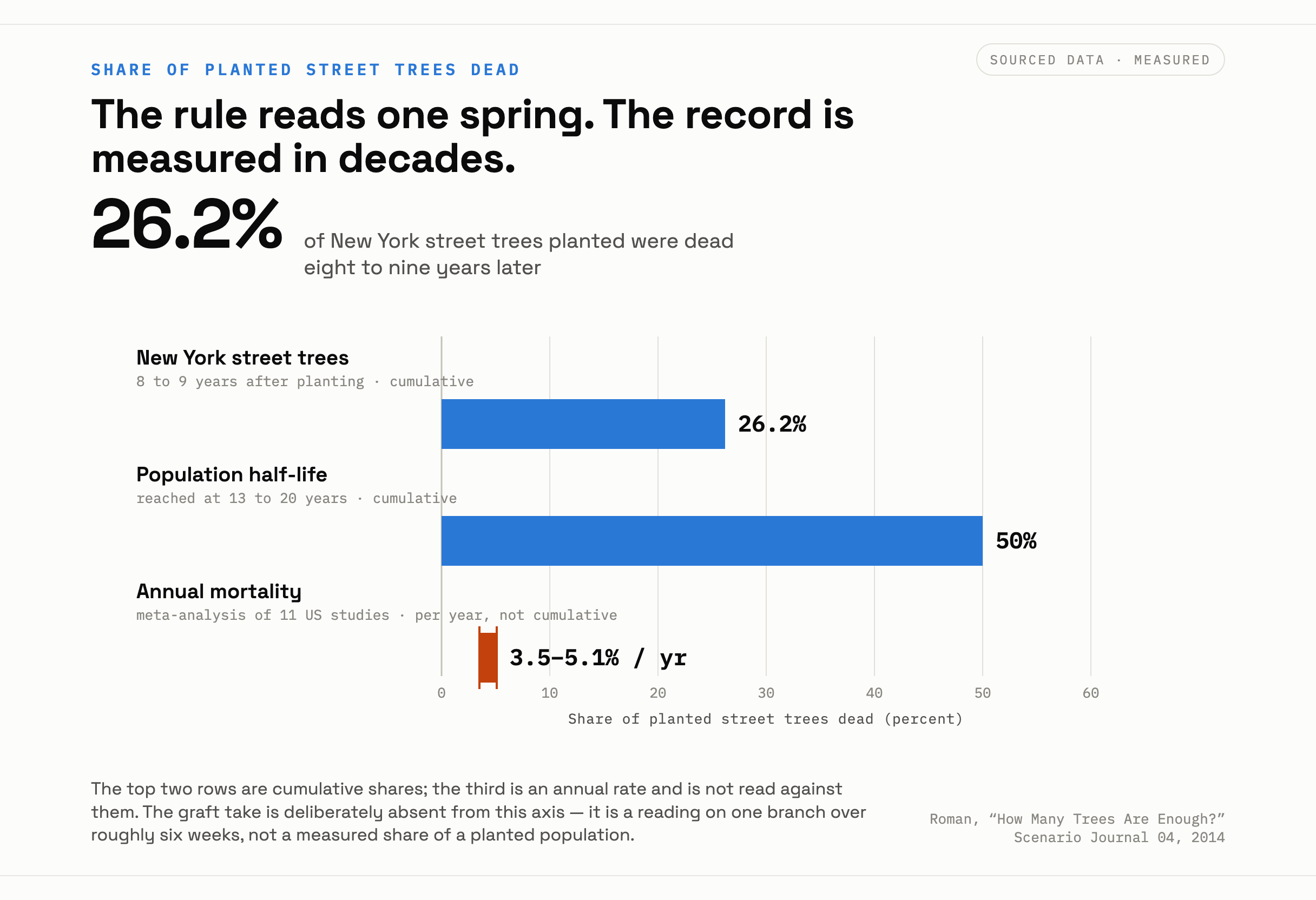
Figure 2. Measured loss among planted street trees. The take is a reading on one branch over roughly six weeks.
Then the saw. San Francisco plans routine street-tree pruning on a three to five year cycle depending on species.13 A grafted scion is a young shoot on an old frame, which is the thing a crew takes.
Hayes Valley settled it. A video made for a conference demonstration had shown where the grafted trees were. The trees were then severely pruned, every grafted branch removed, and the ripening Asian pears went with them. The group stopped publishing locations.46 The unions had held.
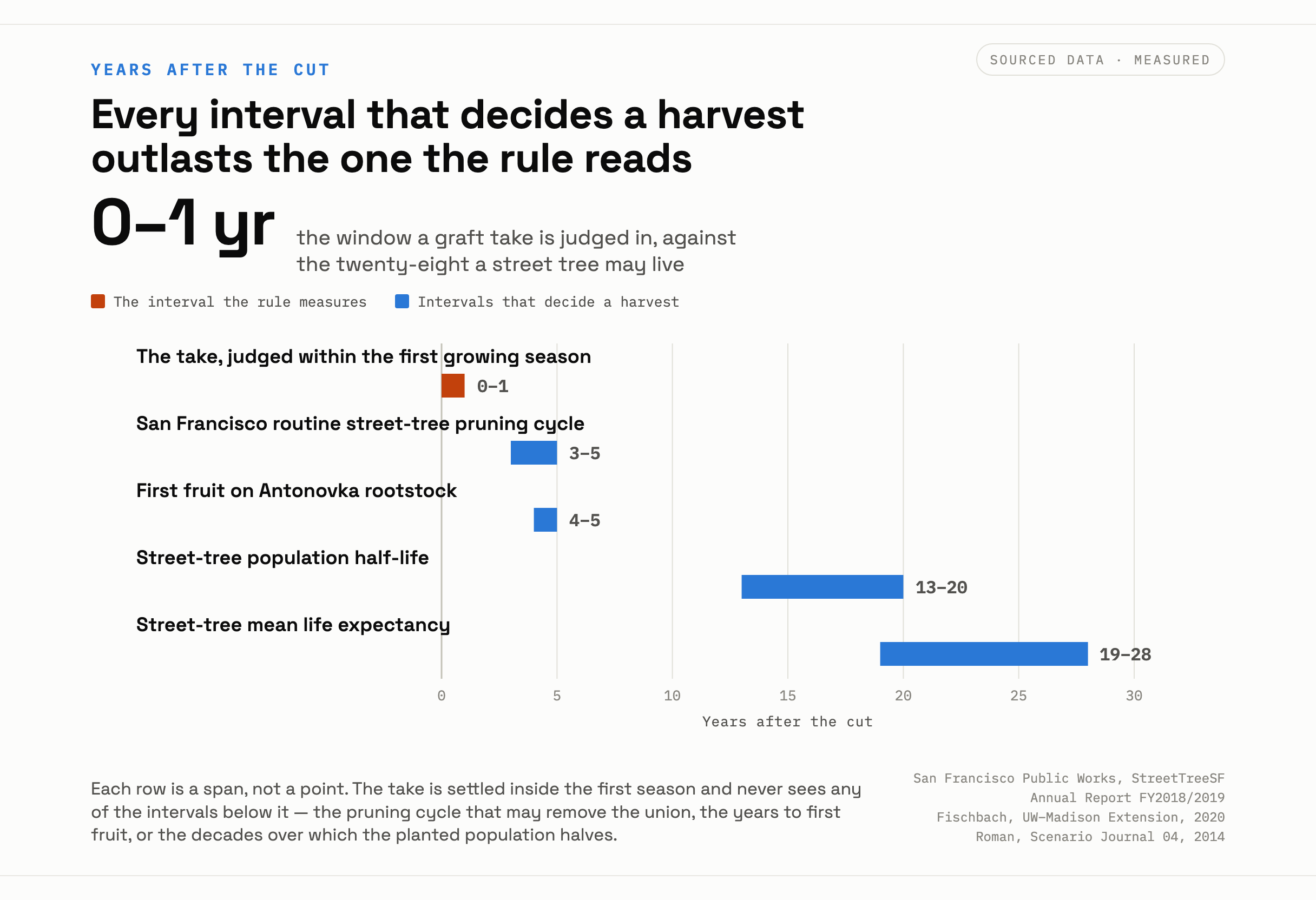
Figure 3. The intervals that decide a harvest, against the interval the rule measures.
The objection was never horticultural. Carla Short, then an urban forester at San Francisco Public Works with 103,000 public trees under her, put it in terms of fallen fruit on a sidewalk: "It gets very dangerous very quickly."3 Public Works director Mohammed Nuru was shorter: "The trees that are in the right of way, they're not for grafting."14 When Hui asked permission to plant a fruit tree in front of her own house, the answer came back as maintenance and liability, and her offer to carry both did not move it.4
Then the city took the liability itself. Proposition E passed in November 2016 and made San Francisco responsible for every street tree, for sidewalks those trees damaged, and for injury caused by its own failure to maintain one. Until then the city maintained about a third of them and had been relinquishing some 22,000 more to abutting property owners since 2014.15 The program began on 1 July 2017 with upwards of 124,000 trees, on 19.7 million dollars in fiscal 2018/19.13
The objection was answered and the grafts still did not fruit, because the party that absorbed the liability also absorbed the saw.
The preference shows up in the plant list. San Francisco's 2021 recommended street-tree species list names the fruitless olive cultivars Swan Hill and Wilsoni, and its one litter note on a Prunus reads "Fruit drop may get messy."16
The ornamental pear was never sterile. A Bradford is self-incompatible, so two of them set no viable seed alone. Once other Callery cultivars and wild seedlings came into pollen range the flowering pears crossed, fruited heavily, and birds carried them into open ground. Clemson's extension service lists the tree as extremely invasive and says it can bear viable fruit in as little as three years.17
The city got the fruit. It arrived by pollen instead of by knife, in the places nobody had chosen.
The live one
Same arrow, running on a bigger number. Trees planted.
MillionTreesNYC launched in October 2007 and reached its millionth tree on 20 November 2015, two years ahead of schedule: 155,000 street trees, 595,000 park trees, 250,000 on private and other open space, more than 350 million dollars of city money, and close to 50,000 volunteers. The announcement carries no survival figure.18
The count is honest and it is a count of plantings completed. What it measures is the budget year, the nursery contract and the volunteer turnout in the season the money was spent. What it is read as is canopy, which is a reading on year fifteen. The study that puts New York street-tree mortality at 26.2 percent by year eight or nine locates the losses in young trees in the establishment phase, where it says the payoff from maintenance is largest.12
Arriaga's notebook has a column for the union. Twenty-two years in, it has no column for the crew.
A take is a measurement of a cut. A harvest is a measurement of a crew.
Author's note. Category: wrong arrow. Delfina Arriaga and Emmanuel Ocampo are a composite drawn from the published record of grafting practice in San Francisco rather than from any one person, and the rule as quoted is composite phrasing rather than a transcription from a named speaker. The Portola, the notebook and the 2036 dates are fictional furniture. Everything attributed to the Guerrilla Grafters is sourced: the 2011 start, the species, the steward system, the membership figures, the Hayes Valley pruning, and the quotations from Short and Nuru. Two sources differ on Hayes Valley. One reports the grafted branches as severely pruned after a video revealed the locations, the other calls the grafts hacked and does not say by whom, so the body reports the outcome and not the hand.46 The group's current status is not in the checkable record. Its co-founder now teaches at Colgate, and the most recent sourced activity is the 2015 poster.519 Nothing here says the group is or is not still cutting. The topic as filed called the host trees sterile. They are not, and the piece says so.