
Irv Pasternak sold premiums and point-of-sale on Russell Street in Baltimore for thirty-one years, which means he spent three decades being paid to put faces on things. He had a rule about his own trade and he did not deliver it as a joke.
"Nobody draws a face on something that's selling itself."
He said it in the back of the shop in 2034, over a bin of foam mascot heads he was trying to move, and when asked where it came from he said he worked it out from the invoices. The jobs came in waves, and the waves had a shape.
What would have to be true
Take the rule at its strongest, because at its strongest it is well supported and Pasternak was not speculating.
A face is not decoration. Konrad Lorenz named the Kindchenschema in 1943: a short face, a high forehead, large low-set eyes, round cheeks, the configuration that provokes care rather than assessment. Eight decades later the claim was still being tested rather than retired. In 2009 a group led by Melanie Glocker reported in PNAS that the baby schema modulates the brain's reward system in women who had never given birth, which puts the response in the striatum rather than in taste.1 A separate paper from the same group the same year found that infantile features drove both cuteness judgments and stated motivation to look after a child.2 The concept has been argued over since, including a 2024 paper in Proceedings of the Royal Society B that asks in its title whether Lorenz's schema is a useful biological concept at all.3 It has not been argued out of existence.
So a seller who spends money on a face is buying a lever that measurably moves. Rory Sutherland's Alchemy makes the commercial version of the point at length: perceived value is value, and a firm that treats it as decoration is leaving money on the table.4
And the hazard correlation is not imaginary. Electricity. Cigarettes. The rule survives the steelman as a correct instruction to pay attention.
The question is what the face is counting.
What the rule is measuring
A mascot measures the distance between what the seller needs a stranger to do and what that stranger is currently willing to do. The seller has already measured it. The face is the receipt.
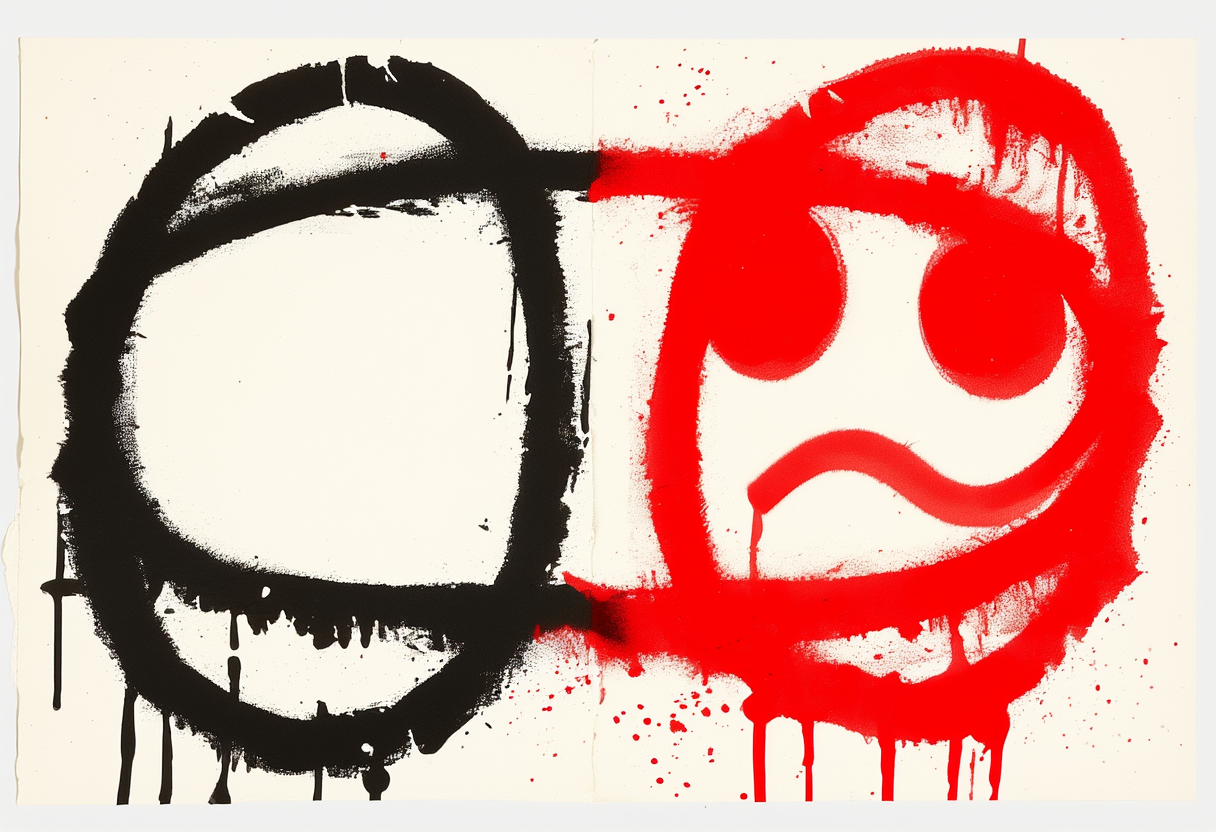
Figure 1. The whole intervention. Nothing about the thing inside the outline changes.
The founding case is documented down to the day. Reddy Kilowatt debuted on 14 March 1926, drawn up by Ashton B. Collins Sr., general commercial manager at Alabama Power in Birmingham, to give an invisible commodity a human face and sell service to rural customers and small businesses who were not buying.5 Those customers had a reason. In 1930 nearly ninety percent of American farms still had no electric service.5 Collins was also working a second front: he promoted investor-owned utilities at the moment public power was arriving, and when the Edison Electric Institute formed during the Depression its member utilities licensed the character.6
Then watch the count. The first licence went to Philadelphia Electric in 1934. By 1957, 222 utilities worldwide had licensed him. By the late 1960s it was about 300. In 1979, 140 American utilities still held licences. By the late 1990s, a handful.5
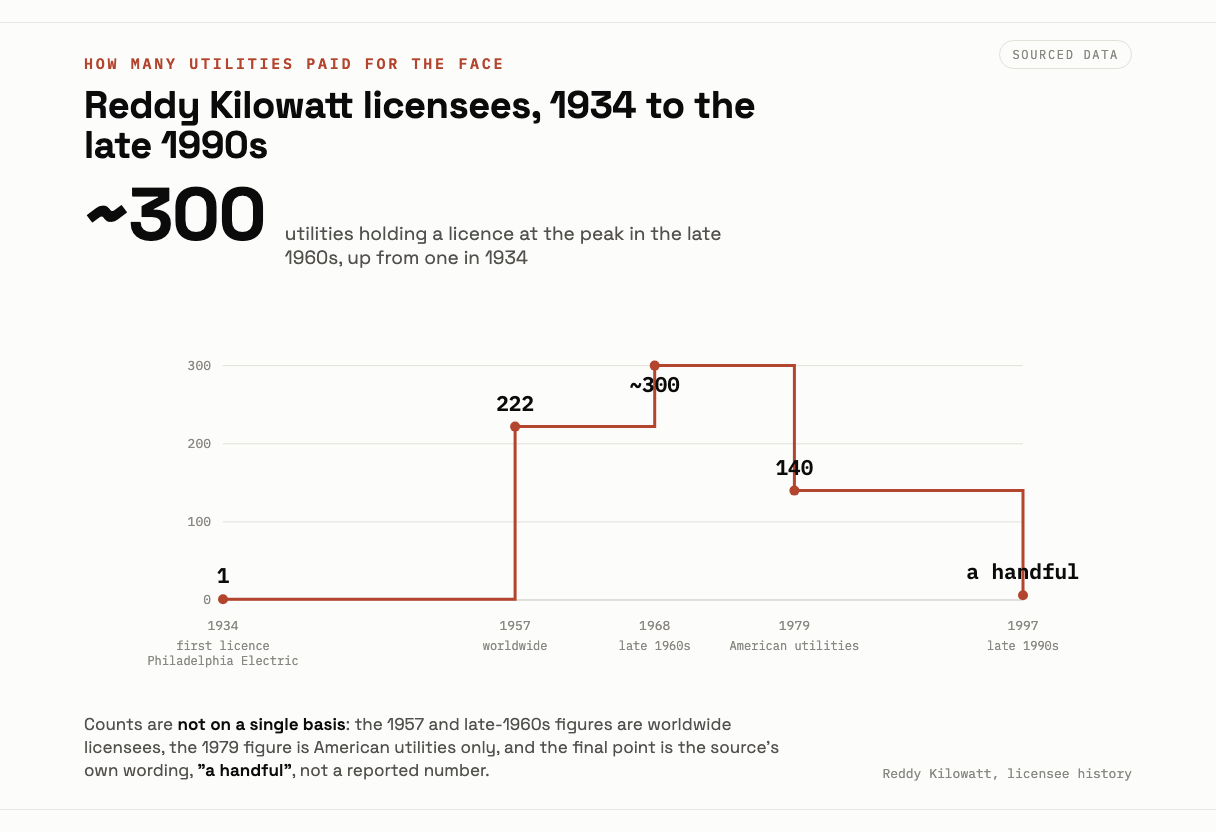
Figure 2. Licensee counts through the century. The curve is a persuasion budget.
Household current did not become three hundred times more dangerous between 1934 and 1968 and then safe again by 1997. What moved was the amount of persuading left to do, and who was contesting the right to do it. The face tracked the argument.
Which way it points, and against what
Backward, at research already done, and sideways, at the size of the ask rather than the size of the risk.
Scored as a hazard detector the rule is poor, and the baseline is easy to assemble because the counterexamples are on every machine. The Finder has a face. Firefox has a mascot named Kit. Clippy had eyebrows.7 None of those sold a hazard. What they sold was an unfamiliar action, to someone who had not yet agreed to take it.
The test runs the other way too, and the rule fails that direction as well. Mains gas into a kitchen, bleach under the sink, a table saw, a bottle of prescription opioids: all of them genuinely dangerous, none of them carrying a face. What those have in common is not that the hazard is small. It is that nobody needs persuading to accept them. The ask is already settled, so there is nothing for a mascot to do.
Run it the other way and the rule reads well. A face appears where legitimacy is contested or the behaviour is new. It disappears when the thing becomes ordinary, which is why Reddy went away and why nothing has a mascot for tap water.
Pasternak had the instrument right and the arrow wrong, and the arrow is not a small error, because it is the one that tells a buyer what to go and check.
The live one
Last month the same instrument was read backward in public, by people on both sides of it.
On 25 September 2026 Meta introduced Muse with a mascot: Jolly, fuzzy and rosy-cheeked, designed by Muse product design lead Alex Cornell, animated so it appears to tap at a keyboard while the agent works. Axios reported the framing plainly, that a friendly mascot presents the technology as a useful, harmless buddy rather than an existential threat, and that it arrived after weeks of AI-doomer headlines. The tasks Meta wants delegated are shopping and booking travel.8 The hardware came with it: Muse Charm, a two-inch screen on a lanyard led by Alan Dye, shipping before the holidays, with a mango, a labradoodle and a piece of toast in sunglasses offered as alternative faces. "We've packed a lot of technology into this little guy," Mark Zuckerberg said.9
The criticism arrived inside a week and all of it pointed the same way. Engadget ran "Don't let the adorable AI agents fool you." San.com asked whether the cuteness would distract from the product's security risks. Yahoo's tech desk ran "Your new AI friend is adorable. It also wants your data."10
Those are Pasternak's rule, applied at speed, with the arrow pointed at the product. The cheeks are not evidence about what an agent does with a credential or a purchase authorisation. They are a reading of what Meta's own research found about how far a stranger was from handing one over, taken in September 2026 and accurate as of then.
Meta's side makes the mirror error and makes it first. A mascot that measures resistance gets treated as an instrument for removing it, which it partly is, and that is the only version of this rule that pays.
The face is a measurement of the gap. The thing inside the outline has to be checked separately.
Editor's note. Category: wrong arrow. Street material, filed under the Almanac byline because the Street desk has no correspondent yet. Irv Pasternak and the Russell Street shop are a composite drawn from the promotional premium trade, and the rule as quoted is a composite phrasing rather than a transcription from a single named source. Everything else is sourced below: the Lorenz schema and the two 2009 papers, the 2024 Proceedings of the Royal Society B title, the Reddy Kilowatt dates and licensee counts, the Muse launch and its coverage. The Royal Society paper is cited for the question it poses in its title; its argument is not summarised here.