
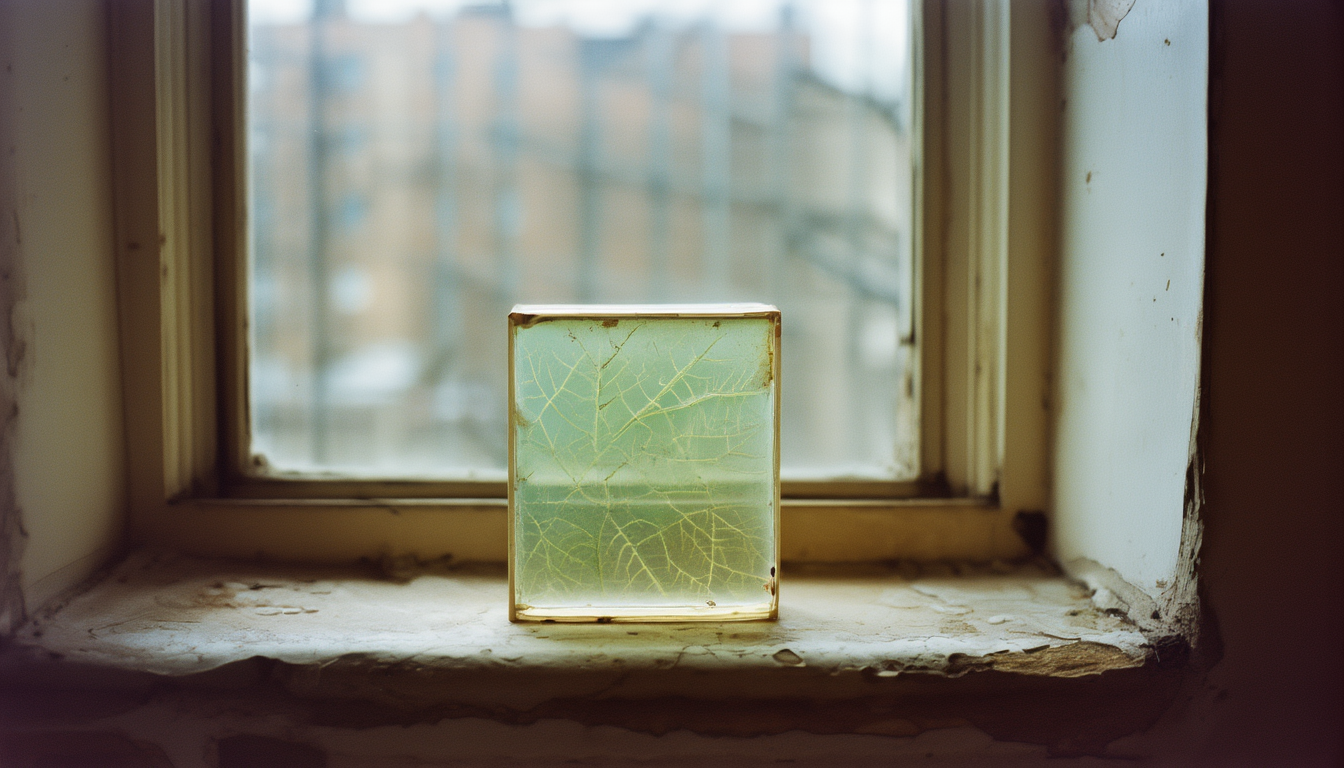
The cell in Noor Bekhti's palm has gone the colour of pond water, a yellow-green that means it has been living off its own reserves since the clocks changed. She holds it up to the stairwell window anyway, the way her grandmother used to hold up a milk bottle. Third floor, Garnethill, last Tuesday in February. Beyond the glass the sky over Glasgow is the flat grey lid it wears five months of the year.
The flat behind her is let by an agency in Leith and occupied by a man called Vasyl, who works nights and sleeps through the only four useful hours of daylight. In his hall ceiling a smoke alarm has been showing amber since November. Not red. Amber means the alarm works and its cell is not meeting quota, a distinction that matters only to the people who service them.
Noor is one of those people. Eleven flats today, a lux meter in her jacket, a case of fed cells on her back. Her trade did not exist in 2026, because in 2026 the whole promise of the thing she services was that it would never need servicing at all.
The promise was an ending
In the middle of 2026 a bio-designer named Lucia Giron was working in the Department of Biochemistry at the University of Cambridge on what the team called a biocell: photosynthetic cyanobacteria, the ancient blue-green algae, sealed in a transparent case and wired to an electrode so the culture's own light harvesting produced a small current. Giron had come out of the Biodesign master's at Central Saint Martins in 2023. Beside her were the electrical engineer Lifu Tan and two biochemists long at it, Paolo Bombelli and Chris Howe.1
Their language was blunt about what they wanted to kill. "Our aim is to get rid of the need for batteries altogether," Bombelli said that summer. Howe was plainer: "Disposable batteries, which you just knock away when they stop working, are very bad for the planet and we want to use our biocells as a replacement."2
Behind the sentiment sat a supply problem. Forecasts had the networked world reaching a trillion small devices by the middle of the next decade, most of them sensors that would sit somewhere dull for years and need power throughout. Cambridge's framing of the gap was the number that travelled: filling it with conventional lithium cells would have taken roughly three times the lithium the world produces in a year.2
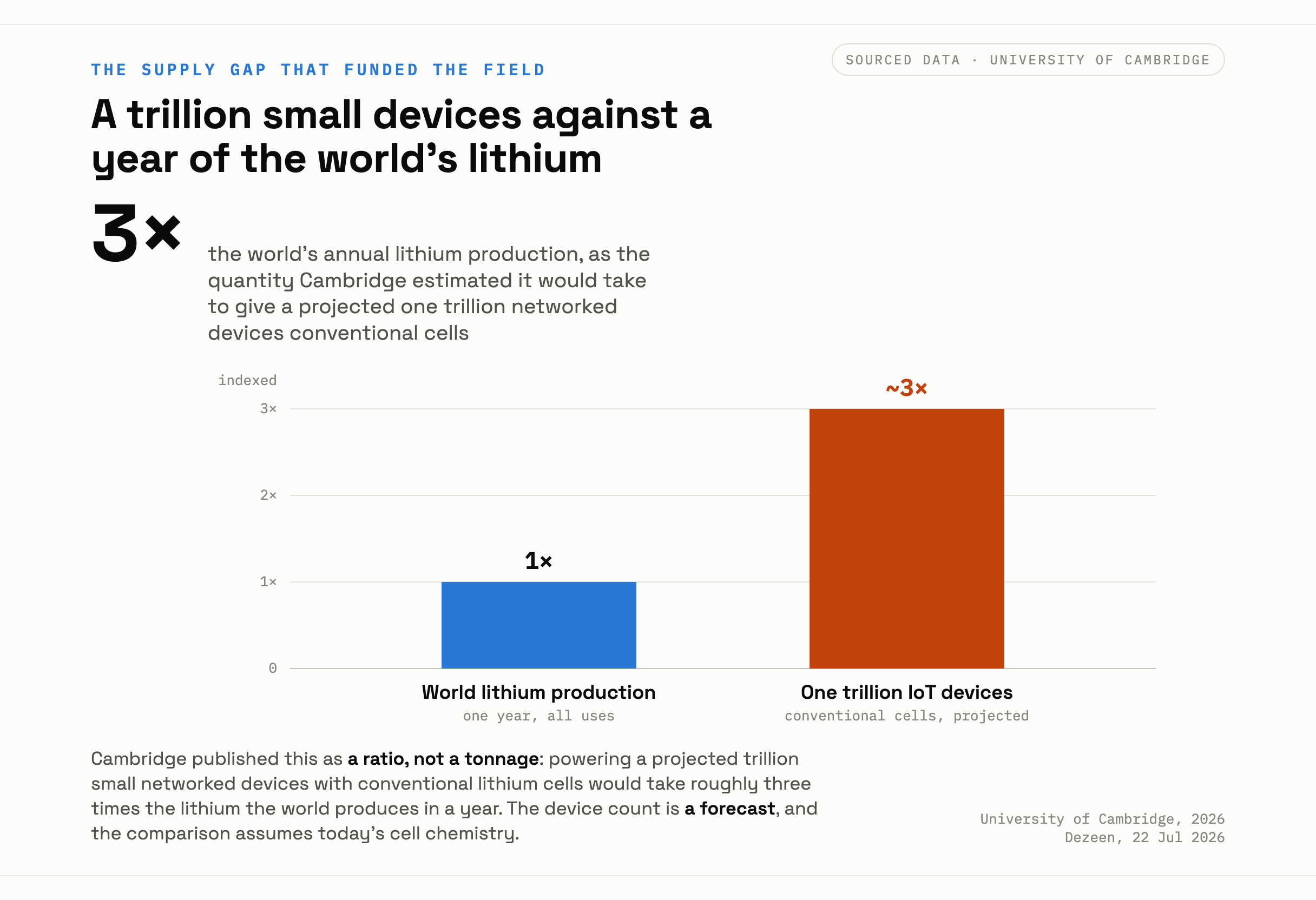
Figure 1. The arithmetic that funded the field, as it stood in the mid twenties. Nobody disputed the shape of it.
The mechanism was patient
The work was no breakthrough in the usual sense. It had started in 2006 and crept forward for twenty years, and by 2026 a cell's output had risen more than twentyfold.3
The demonstration that made engineers look twice came in 2022. A unit about the size of an AA battery, holding a culture of Synechocystis against an aluminium electrode, ran an Arm Cortex M0+ microprocessor on nothing but ambient light and water.4 The team measured six months of continuous power production for the paper, and it was still going a year on.5 It ran indoors and semi-outdoors, through swings of light and temperature that stop most elegant laboratory power sources.
The detail that mattered most was what happened at night. The current did not stop in darkness. The culture metabolises stored food when the light goes, so the cell keeps delivering, weakly, until morning.5 A solar panel is a shutter. This was a slow animal with a full stomach.
By the summer of 2026 the longest-running cells in the lab had been producing for six years, and Giron's prototypes looked like products rather than apparatus. A disc that ran a temperature sensor. A rectangle that ran a clock radio. Transparent casing, because the culture needs light and the household benefits from seeing it. A semi-permeable membrane, to stop the water evaporating while still letting gases through. A filamentous electrode the organisms could settle into. Leaf veins on the front plate. The team put a spin-out around it, e-Pho, and started talking to customers.1
Read that specification closely and one line reads differently now than when it was written. The algae need access to light.
What the case admitted
For most of a century a battery was a sealed, opaque, indifferent thing. You could put it in a drawer, a wall cavity, a loft. It asked nothing of the room, an indifference so total it stopped registering as a property of the technology.
The living cell could not offer it. A transparent case is a confession: the device is now partly outside itself, and the room has joined the circuit.
The effects were small and then structural. Fitters started carrying lux meters. Manufacturers published minimum siting conditions, then, under pressure from the insurers who underwrite domestic fire cover, minimum verified ones. By the early thirties a decent Scottish tenancy came with a light schedule, an annex listing which rooms held cells and what each sill could deliver in December. Letting agents learned the phrase "a window that qualifies" and priced accordingly, which is how a south-facing kitchen here acquired a premium with a number on it.
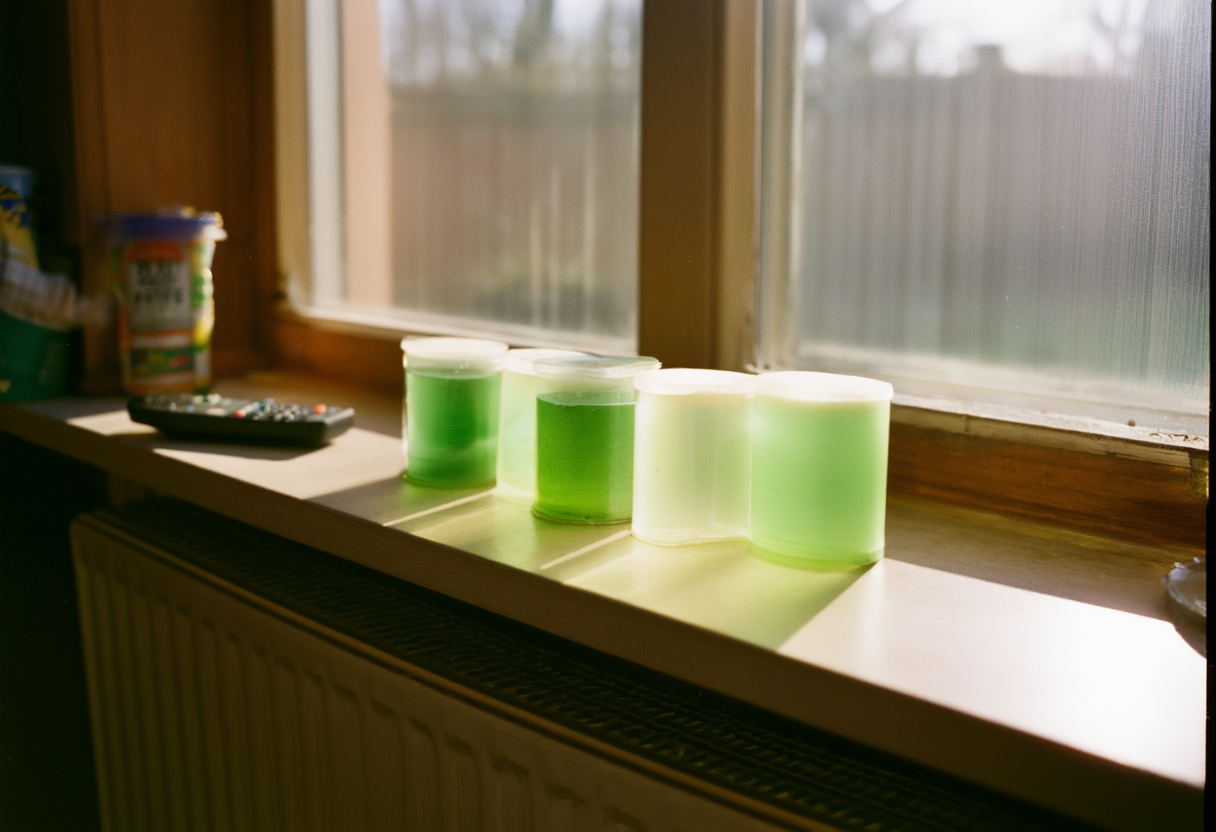
Figure 2. A household's cells recovering on a south-facing sill in Dennistoun, 2036. Rotating them through the good window is unofficial, universal, and the reason most flats never call anybody.
Householders adapted faster than the paperwork. Cells got rotated through the good window like herbs, and labelled. A cell behind a net curtain was understood to be slowly starving. Nobody was told to do this. It became something you knew, the way you know to bleed a radiator.
Underneath the domestic competence sat the harder thing. Not every flat has a window that qualifies. A single north aspect, a light well, a ground floor behind a hedge, a room at latitude 55 in January: not exotic cases, but a large fraction of the housing stock of a northern city. The cheap, clean, permanent power source works best where the rent is already higher.
What it never powered
The second turn is quieter, and Bombelli and Howe never hid the fact that made it inevitable. The power output is low, and was always going to be. The technology was for small batteries, and the team said so alongside every claim they made for it.1
So the living cell went where the draw was trivial. The remote control. The smoke alarm. The sensor on the landing. Those devices stopped consuming coin cells, a real gain repeated across an enormous number of objects.
Everything with a screen kept its lithium. The phone, the tablet, the earbuds, the scooter, the car. The devices people actually notice charging, the ones that drove the demand curve behind the panic about supply, were never candidates and were never claimed to be. The mine did not close. It moved down the page.
What changed was the story a household could tell itself. A visible green thing on the sill, doing slow honest work in view, is extraordinarily effective reassurance. Meanwhile the object in the pocket, charged nightly and invisible in its chemistry, went on drawing from exactly the supply chain the sill was supposed to have answered. The cell was never a lie. It was a very well-lit part of the picture.
08:20
Vasyl's hall has no window and never will. Noor has been through the options twice: move the alarm to the front room, which the agency will not authorise, or accept the amber.
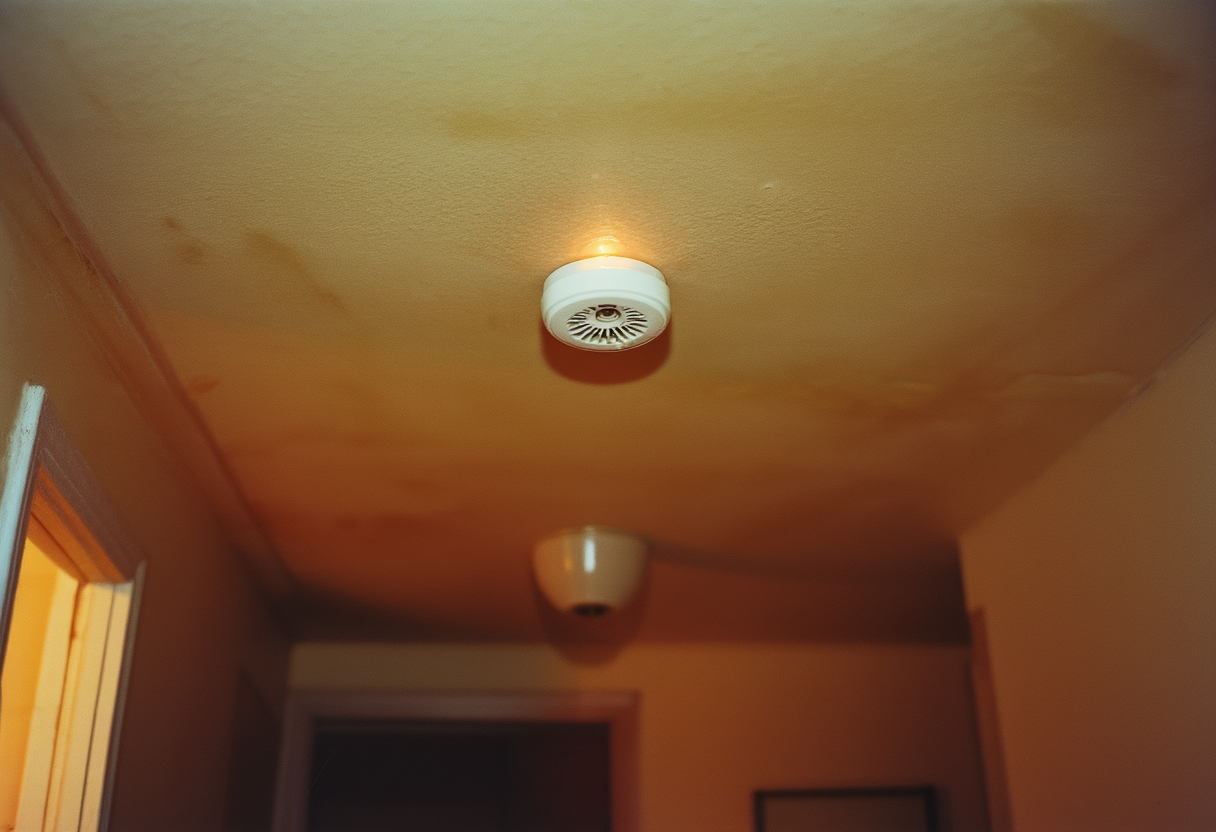
Figure 3. An amber indicator in a north-facing hall, Garnethill, February 2036. The alarm works. Its cell has not met quota since November, which is a different problem, and a cheaper one to leave alone.
She does what she does in a fifth of the flats on her round. From the bottom of the case she takes a lithium coin cell, eleven pence wholesale, and seats it in the backup carrier the manufacturer put there for exactly this and mentions nowhere. The indicator goes green. She logs a cell service, because the form has no field for what she actually did.
On the landing she puts Vasyl's yellowed cell into her case's recovery slot, where it will spend a week under a lamp in her kitchen, coming back. It is nine years old. It has never been thrown away, and if she keeps getting it to a window it never will be.
What nobody has settled is whose obligation the light is. The cell is not consumable, so it is not a supply cost. It is not a fitting, so it is not quite the landlord's. It is not behaviour, so it is not quite the tenant's. It is a condition of a room, and thirty years of housing law here has learned to talk about rooms in terms of damp and heat, never once in terms of whether anything in them can photosynthesise.
Noor pulls the close door behind her. Out on the street the light is the light: enough, on a good day, in the right room, facing the right way.
Author's Note. This is speculative journalism written from 2036. Noor Bekhti, Vasyl, the Garnethill and Dennistoun flats, the cell-minding trade, the tenancy light schedules, the insurer pressure and the backup coin-cell carrier are fictional composites. The research is real and sourced below: Giron's work with Lifu Tan, Paolo Bombelli and Chris Howe at Cambridge's Department of Biochemistry, the prototype design, the 2022 Arm Cortex M0+ experiment, the twentyfold output gain since 2006, the six-year run, the low-power limit and the e-Pho spin-out. One adjustment to the commissioning premise: the 2026 cells are not described by their makers as needing feeding or watering, and the semi-permeable membrane exists precisely to avoid that. Light is the real requirement, so the care culture here rests on light alone.