
The loop read 64 degrees and Marisol Teague wrote it down before she let herself look at the other number.
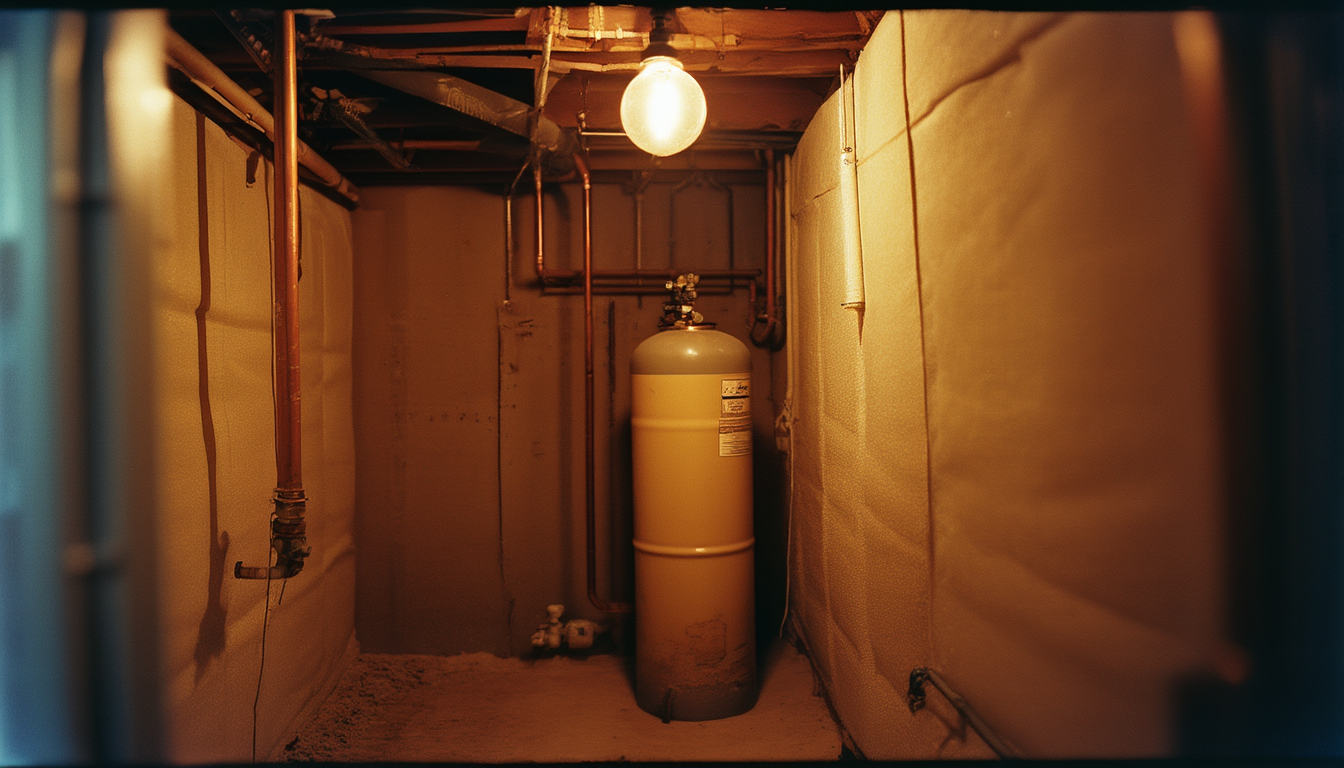
The tank stood where a 275 gallon oil drum used to sit, in a basement in Unity, Maine, in February 2036. Two hundred liters of dielectric fluid, six machines sunk in it like instruments in a case, pipe coming off the plate exchangers and climbing into the joists toward the house's cast iron radiators. The room smelled faintly of warm plastic. Upstairs the thermostat held 68.
The second number sat on her tablet, in a field the installer app still labeled Revenue.
Four dollars and eleven cents.
Marisol had been fitting these for nine years. The first ones she sold on the arithmetic. The last four she had taken out.
The pitch was arithmetic
The pitch reached Maine in 2025 in almost the form it still circulates. Heating is a payment with no return. Electricity becomes a digital asset. The miner takes the role of the heater, and the house is warmed by work it gets paid for.
The hardware was real, and most of it is still sold. Fog Hashing built its C-series immersion kits for exactly this use: the C6 holds four to six rigs in 200 liters of coolant, moves 24 kW of heat at 35 degrees Celsius, and routes it to a room or a pool, with a dry cooler outside for whatever the house does not want.1 At the consumer end, Heatbit shipped the Maxi in January 2026, a 1,500 watt unit doing up to 60 TH/s for $1,499, sold on the claim that the computation replaces the heating element and therefore costs nothing extra.2
Define the terms once, because the whole decade turns on them. A resistive heater makes heat from electricity. A heat pump moves heat that already exists. An application-specific integrated circuit, an ASIC, makes heat too, and the mining is simply what the heat is made of.
What the machine actually does
Nothing in the pitch was false about the physics. Almost every watt an ASIC draws leaves as heat. The industry's own 2026 survey of home mining put it in one line: an ASIC is a roughly 100 percent efficient electric heater that also earns bitcoin.3
The engineering problem was never the heat. It was everything attached to it. A stock air-cooled flagship runs at 75 to 85 decibels, which is a machine nobody lives above.3 Immersion solved that, and something better: fluid at 60 to 70 degrees Celsius is close to what a hydronic loop already wants.3
One documented retrofit, posted by the kit vendor in 2026, ran two S19k Pros in a tank and threaded the output through three brazed plate exchangers: one preheating tap water from 55 to 130 Fahrenheit before the boiler, one feeding the radiator loop with the boiler left in parallel, one dumping surplus to an outdoor radiator. The baseline it had to beat was about $380 a month in oil, against electricity at 15.4 cents a kilowatt hour.4
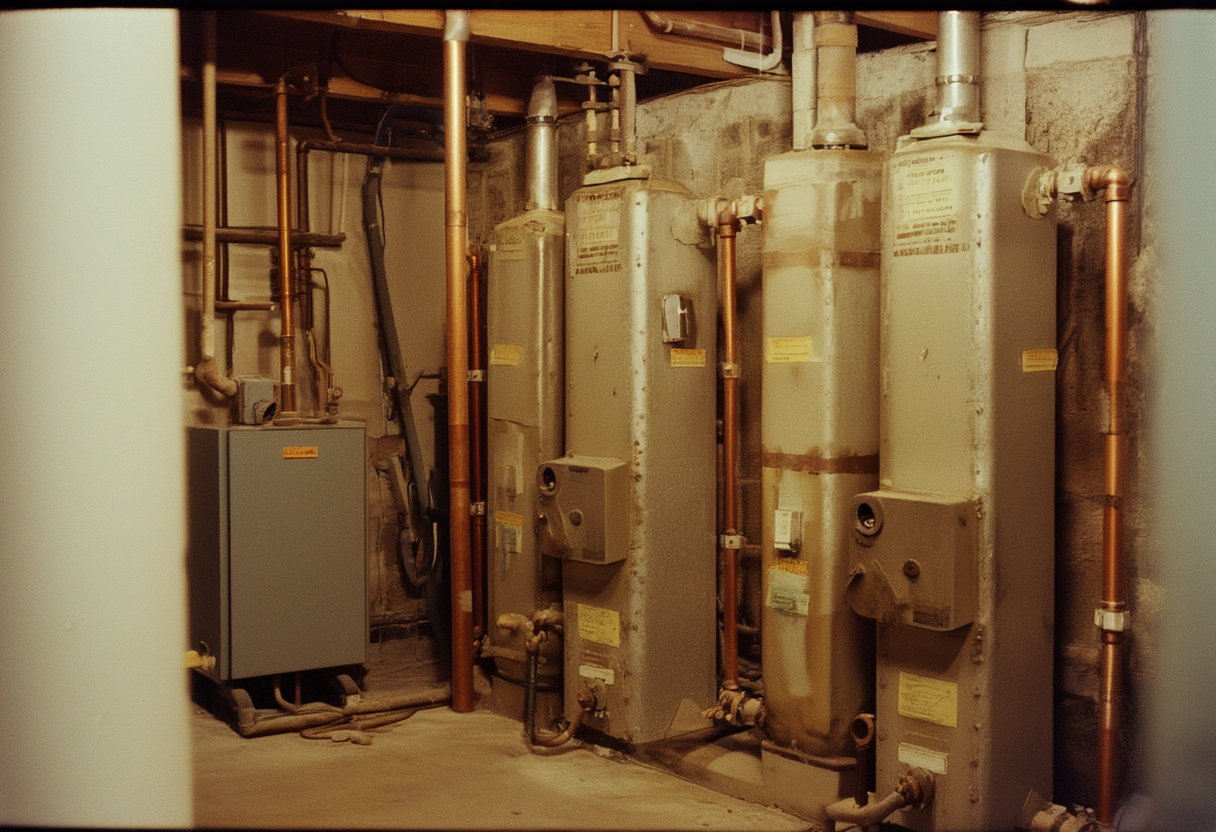
An earlier air-based build in an attic logged the honest version of the result. Between 7 January and 7 February the backup furnace ran a total of 1.1 hours, and the miners carried 46 percent of that month's heat.5 The same owner wired a smoke alarm and temperature sensors to cut the miners and the exhaust fan automatically.5 In a house, heat is never the only engineering problem.
The comparison nobody ran
Marisol's first customers were oil customers, and against oil the tank wins on any winter you care to model. Against electric baseboard it is cleaner still: the offset is one to one, so a resistance-heated house pays for its computation in heat it was buying anyway.3
Against a heat pump it is not close, and almost nobody ran that number before signing.
The United States Department of Energy puts a modern heat pump at up to 75 percent less electricity than resistance heating for the same delivered warmth. Stated the other way, the comparison in that basement was never the tank against the oil drum. It was the tank's coefficient of performance of 1.0 against a heat pump's 3 or better. The 2026 survey said it without hedging: at a heat pump's efficiency, a miner costs roughly three times as much per unit of heat it puts in the room.3
So the heat was free only against the worst alternative in the house. Every house that had already made the efficient choice was being offered a worse furnace with a coupon attached. And the coupon had to cover the gap, every month, forever, or the deal quietly inverted.
Two things the brochures left out. The offset exists only in the heating season, which in Maine is about six months and in most of the country fewer. And residential power at 7 to 15 cents is the wrong side of the market: at those rates a home machine loses to industrial fleets on the mining itself, which is why the heat had to carry the case.3
The subsidy that decayed
The half of the deal sold as income was the half with no floor under it.
Hashprice, the daily revenue a machine earns per unit of computing power, peaked near $63 per PH/s per day in July 2025. By November it was $35 to $37, a five-year low. By early March 2026 it was $28 to $30, a new post-halving low.6 In June it printed $27.67, within a cent of February's record.7
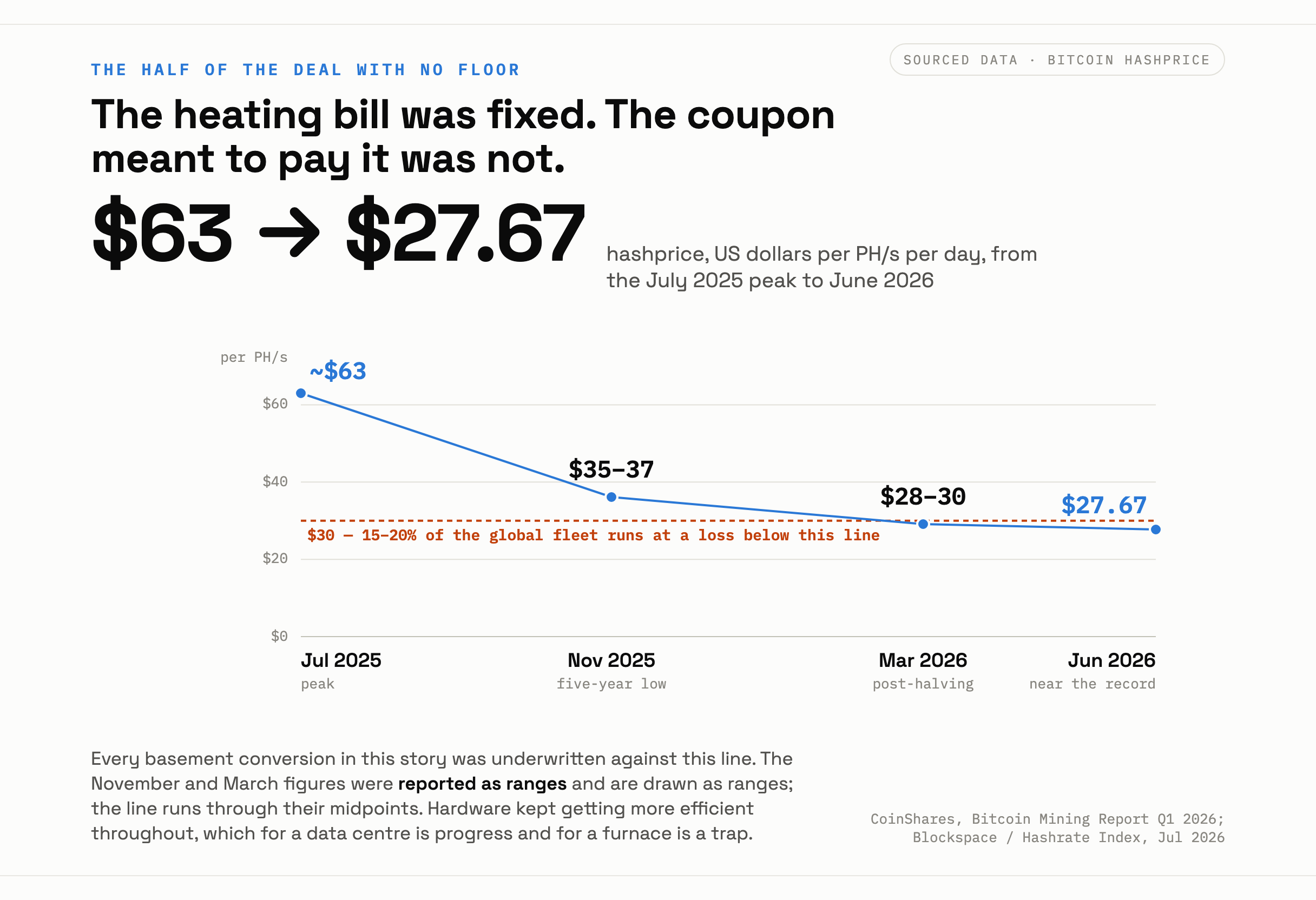
That year the network did something it had done only once before. Difficulty and implied hashrate fell year over year, the first time since China's 2021 ban, with February alone dropping difficulty 11.16 percent to 125.86 trillion.7 CoinShares reckoned 15 to 20 percent of the global fleet was underwater at $30, with the weighted average cash cost among public miners at about $79,995 per bitcoin.6
Then the part Marisol came to explain at kitchen tables, because it is the part that does not reverse. Mining hardware kept getting more efficient. Current fleets run below 15 joules per terahash, with sub-10 machines expected through 2026.6 For a data center that is progress. For a furnace it is a trap.
A house needs the same kilowatts every January no matter what the chips can do. Each new generation raises the network's computing power per watt, which lowers what any watt earns. The heat demand is fixed and the revenue per joule decays, and there is no upgrade path out, because a more efficient machine sells you hashrate you do not need and delivers the identical heat you already had. The only way to keep the coupon was to draw more power than the house wanted.
What came back
Something did get retrieved in all this, and it was older than bitcoin.
Houses became producing units again. For a century the domestic basement was a pure cost center, a place where fuel went to die. The tanks turned it back into the mill room: work on the premises, heat as its byproduct, somebody watching a gauge. The trades came with it. Marisol's apprentices learned plate exchangers, glycol loops and circulator sizing, skills the oil era had been retiring.
And the thermal engineering survived the financial case. The hybrids she sells now keep the tank as a buffer, put a heat pump on the real load, and let a machine run in the shoulder season or against surplus rooftop solar, when the power is nearly free and the warmth is nearly worthless. That configuration pencils. It is just not the one anybody was sold.
The loop closes
The family in Unity had bought the full version in 2027, on a spreadsheet Marisol had checked herself.
She logged the fluid temperature and showed the father both numbers: $4.11 for the day, and the quote for the hybrid, tank retained, loop reused. He asked the question everyone asks, whether the machines had broken. They had not. They were doing precisely what they were sold as doing. The network had repriced the half of the job that was never guaranteed.
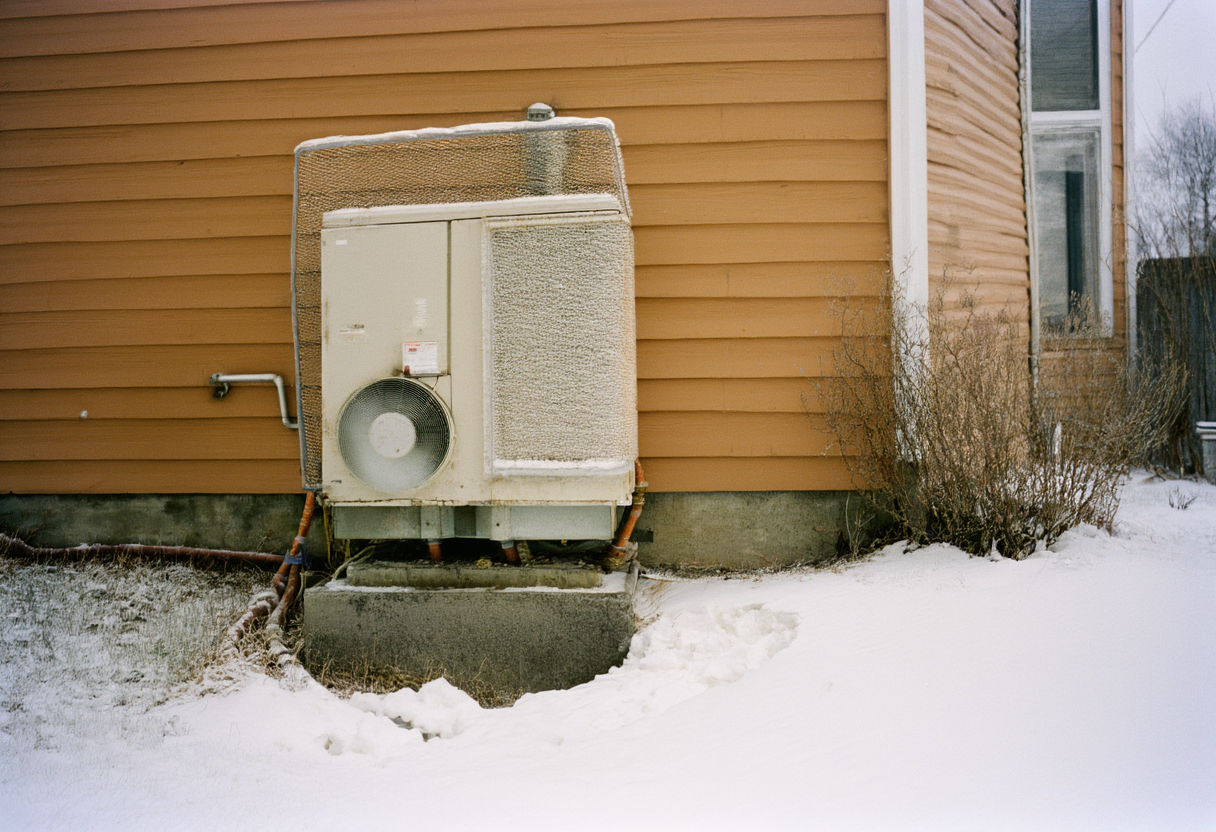
She left one installation untouched that week, four towns over: 14 kW of rooftop solar, no heat pump, a long cold season and an owner who treats the whole thing as a hobby that happens to warm a workshop. For him it still works, and it has worked since the day it went in.
The open question
The physics never lied, and it still does not. A kilowatt hour into an ASIC is a kilowatt hour of heat in the room, and if the alternative is burning oil the trade is real. What the decade settled is narrower and harder: heat is a commodity with a known price, and the market will always offer it to you at a better coefficient of performance than 1.0 unless something else is paying the difference.
Whether anything pays that difference again depends on a number nobody in a basement controls. The question is not whether a miner can heat a house. It is whether a household should take the other side of a trade whose revenue leg reprices every two weeks and whose cost leg never does.
Author's Note
This article is speculative journalism written from 2036. Marisol Teague, the Unity household and the figures on her tablet are fictional composites. Every product, price, hardware specification, efficiency claim, hashprice level, difficulty adjustment and government efficiency figure cited below is real, published, and sourced. Projections beyond mid-2026 are the author's, and are marked as such in the text.