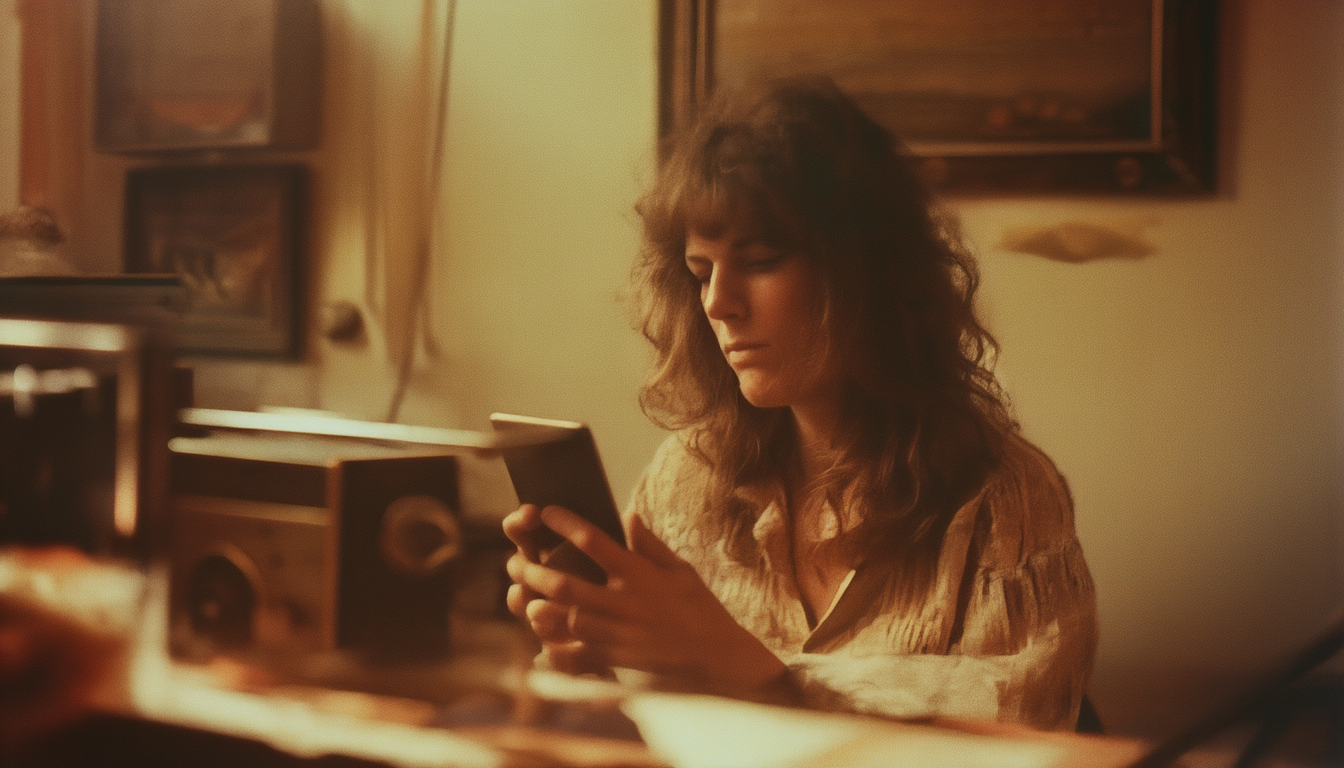
Reya Ostrander keeps the little radio on the kitchen windowsill, where the light is bad and the signal is good. It is the size of a bar of soap, amber screen, a stub antenna she has wrapped in blue electrical tape so she can find it in the dark. No SIM card. No subscription. It has never once touched a cell tower. Twelve years after she bought it, in the panic autumn of 2024, it still does the one thing she bought it for: it lets her send a sentence to her neighbors when everything else is down.
This morning the sentence is "creek's up past the Millers', keep off the low road." It hops from her windowsill to a solar node bolted to a dead pine on the ridge, then to a repeater above the old fire station, then down into forty other kitchens along the valley. No carrier bills her for it. No account is required. For a few seconds the message belongs to no company at all.
That was the promise, and the promise was real.
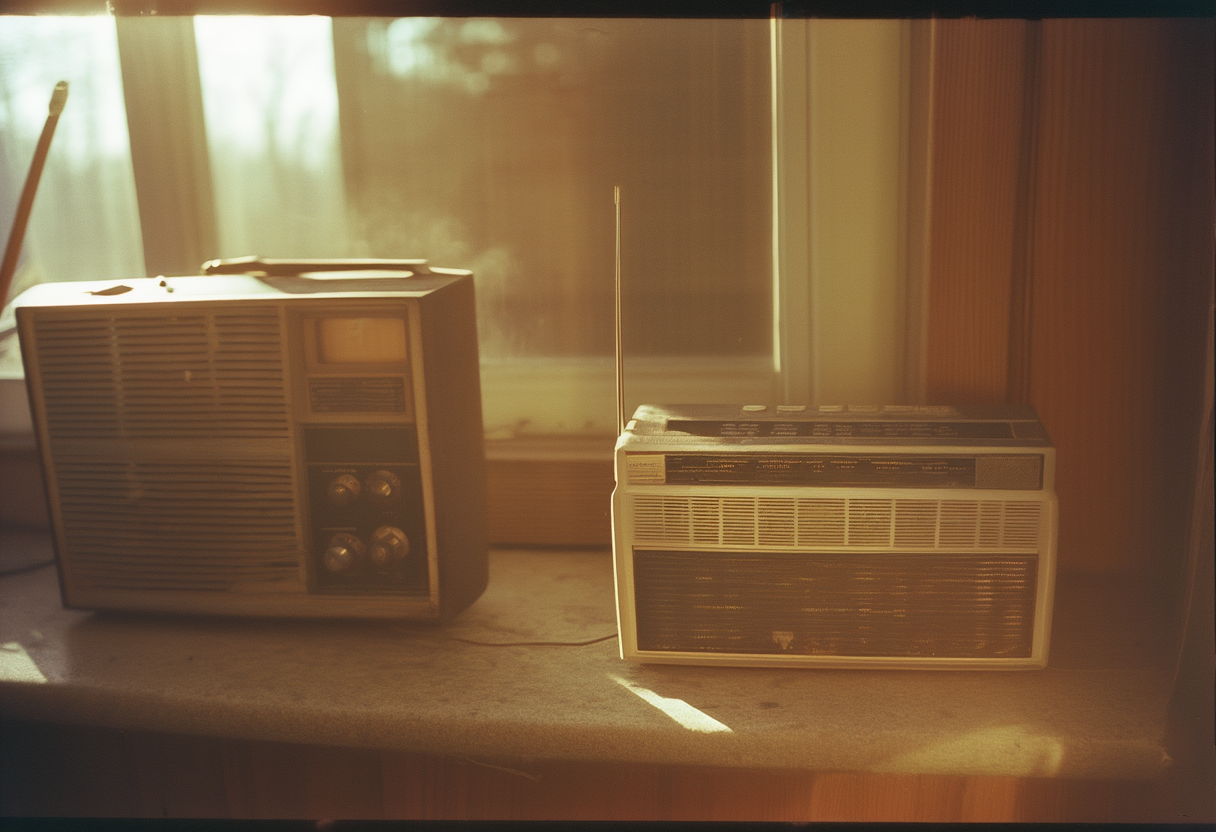
Figure 1. A household mesh node, Watauga County, North Carolina, March 2036. Twelve years after the storms that sold them, the radios are still on the windowsills.
The thing you could hold in your hand
The radios ran an open project called Meshtastic. Underneath was a chip most people had never heard of: LoRa, a long-range, low-power radio that trades speed for reach, sending short bursts of text over the unlicensed 915 MHz band in the United States. There was no data plan because there was no network to plan for. Every node was also a relay. Your message climbed from device to device, self-healing around whatever was broken, until it reached someone.1
The reason a farmer in Watauga County had one on the windowsill was Helene. When the 2024 hurricane tore through the southern Appalachians, it took the towers with it, and it took the first-responder systems that were supposed to survive the towers. In the weeks after, people in the North Carolina and Tennessee mountains strung together ad-hoc mesh nodes and texted through the dead zone, house to house, when nothing else would carry a word.2 The story moved fast through the preparedness world. Here was the thing you could actually hold in your hand: thirty dollars, no gatekeeper, no bill, a lifeline that worked precisely because it depended on nobody.
The market read the moment correctly. The one serious consumer competitor, goTenna, had already walked away from ordinary buyers years earlier and pointed its mesh at government and military customers instead.3 That left the open project and its swarm of cheap boards to fill the gap, and it did, by the hundreds of thousands. People bolted solar nodes to ridgelines and water towers. A valley could knit its own private telephone system in an afternoon.
What the map was made of
Here is the part nobody read in the setup guide.
By default, the radio told everyone where it was. Position sharing was on out of the box, broadcast in the clear to every node within earshot on the standard channel.4 That alone was local. The reversal came from a convenience feature: link one node in the mesh to the public internet gateway, which plenty of enthusiasts did to bridge two valleys or reach a friend in the next county, and the location of every node it could hear went up to a public server.5
So the map got drawn. A near-live, worldwide picture of self-reporting nodes, dots blooming across coastlines and back roads, each one a device someone had bought specifically to get off the grid.6 The tool sold as a way to disappear from the carriers turned out to publish, by default, the one fact those carriers had always been able to sell: where you are, and when you were there.
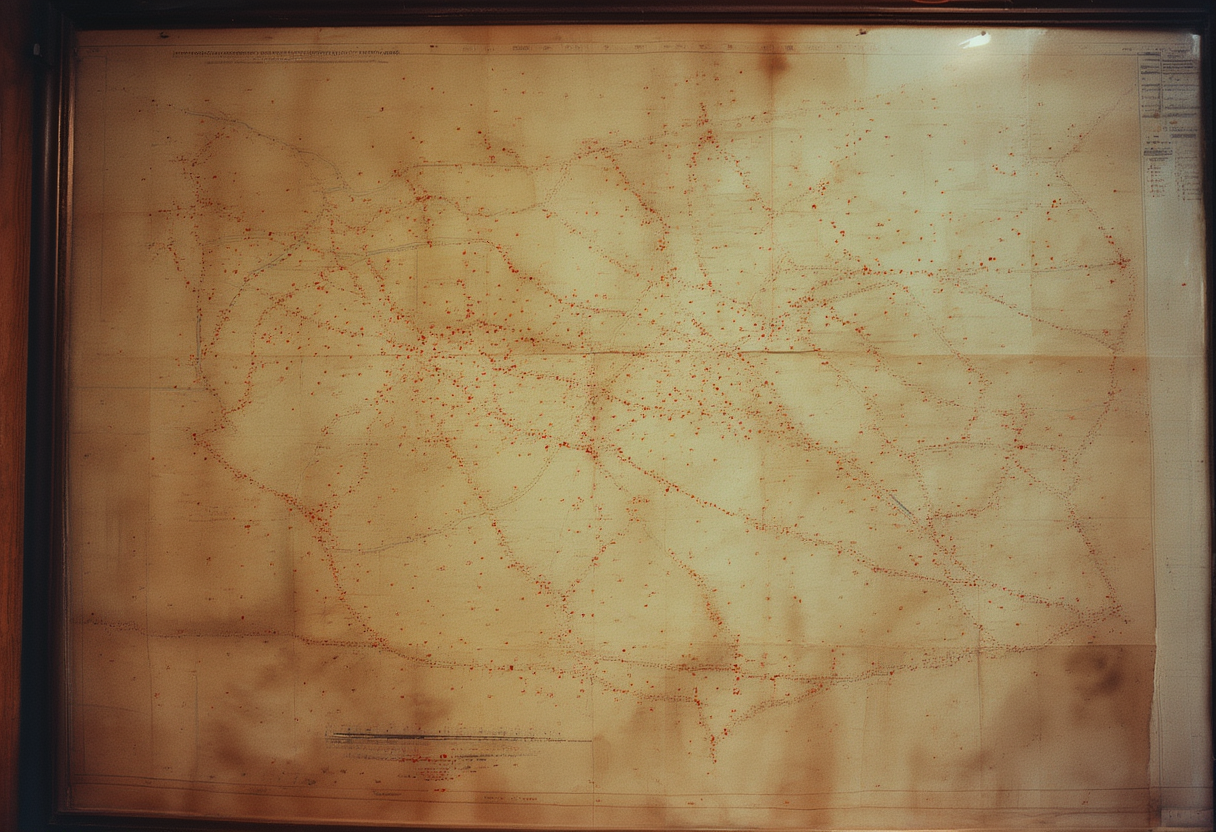
Figure 2. Public node map of the southern Appalachian mesh, archived January 2033. Every dot is a radio bought to be untraceable, reporting its position to the open internet.
None of this was a plot. It was a default, and a good-faith one: a shared map helps a stranger find a working route into a disaster zone, and it helps a new user see that the network around them is alive. The people who built the software saw the problem and moved on it. Later firmware added a switch to keep your node off the public gateway, and the public server started blurring precise coordinates down to a coarse grid so a dot no longer marked a doorstep.6 But the defaults had already run for years, across the exact window when the radios spread fastest, and defaults are what most people ever touch.
Off the grid, onto a grid
By the early 2030s the mesh was no longer a prepper hobby. Counties adopted it as a fallback layer. Utilities leaned on it. And once a thing becomes infrastructure, it stops being invisible to the people who regulate and mine infrastructure. The 915 MHz band the radios lived in was never really theirs: it is unlicensed space, shared with anything else that wants it, on the standing condition that your device must accept interference and must never cause it.7 A citizen network with no license has no standing to complain when the band it depends on gets crowded, or when someone with more power decides to listen to the map it publishes.
The lesson Reya's valley learned is the quiet one. The radios delivered exactly what was promised: texting without a carrier, resilience without permission, a message that for a few seconds belongs to no company. What came bundled with the freedom, unpriced and unread, was legibility. To route a message through a place, the mesh had to know that place was there, and knowing is the same muscle whether the knower is a rescuer or a broker or a court.
Reya turns the little radio off during the day now. Not because the creek stopped rising, but because she read, twelve years late, what the windowsill had been saying about her the whole time.
Author's Note. Reya Ostrander and her valley are composite fiction, and the 2030s adoption arc, county fallback networks, and the band getting crowded are informed projection, not reported fact. Everything about the present is sourced below: the technology, the Helene deployments, goTenna's pivot, the default position broadcast, the public map, the later privacy switches, and the unlicensed status of the 915 MHz band. The line between what happened and what I am guessing is the map itself, and I have tried to keep it honest.