
The task that paid best in Karur that October was one nobody had filmed yet.
Vasanthi Murugaiyan kept them in a school exercise book, one to a line, in pencil. Unsticking a jammed jacquard card. Splicing a snapped warp thread by feel, in bad light. Getting a dead borewell pump out of a four-inch casing with two wrenches and a rope. Beside each line, a price.
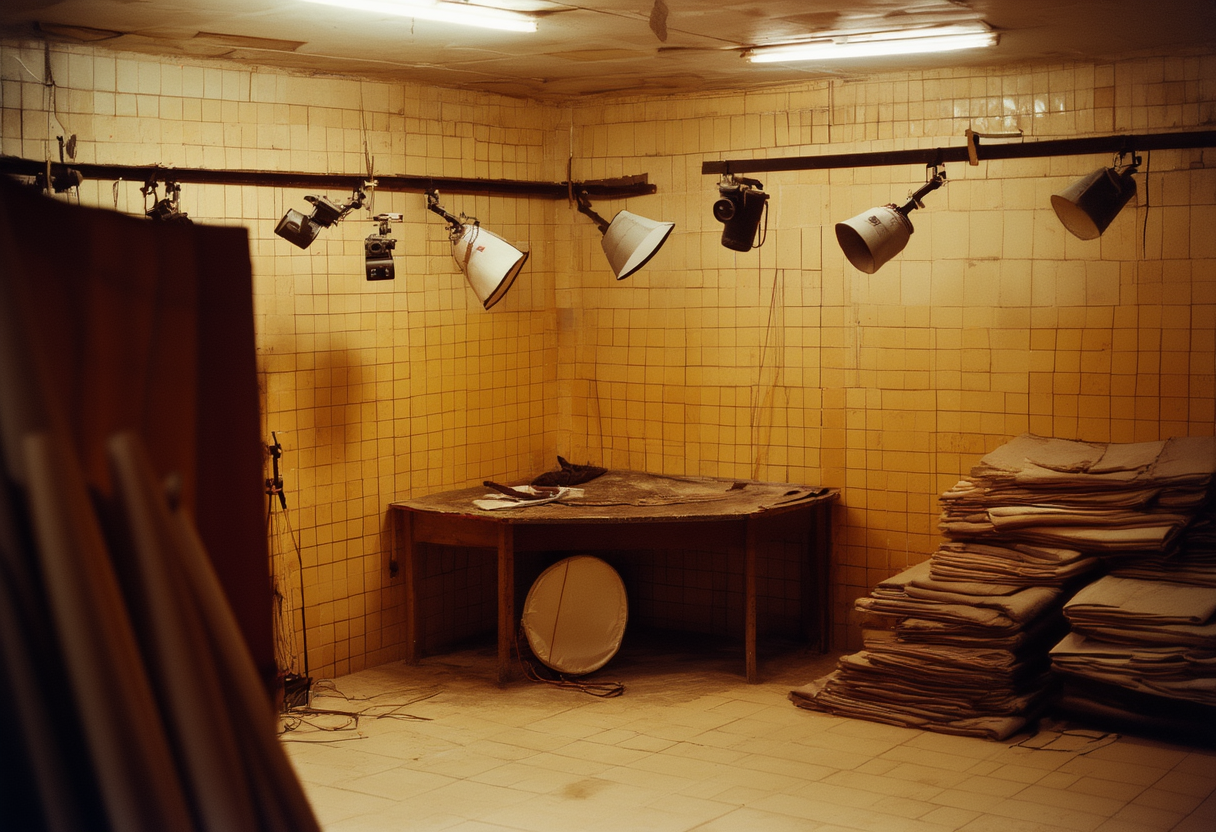
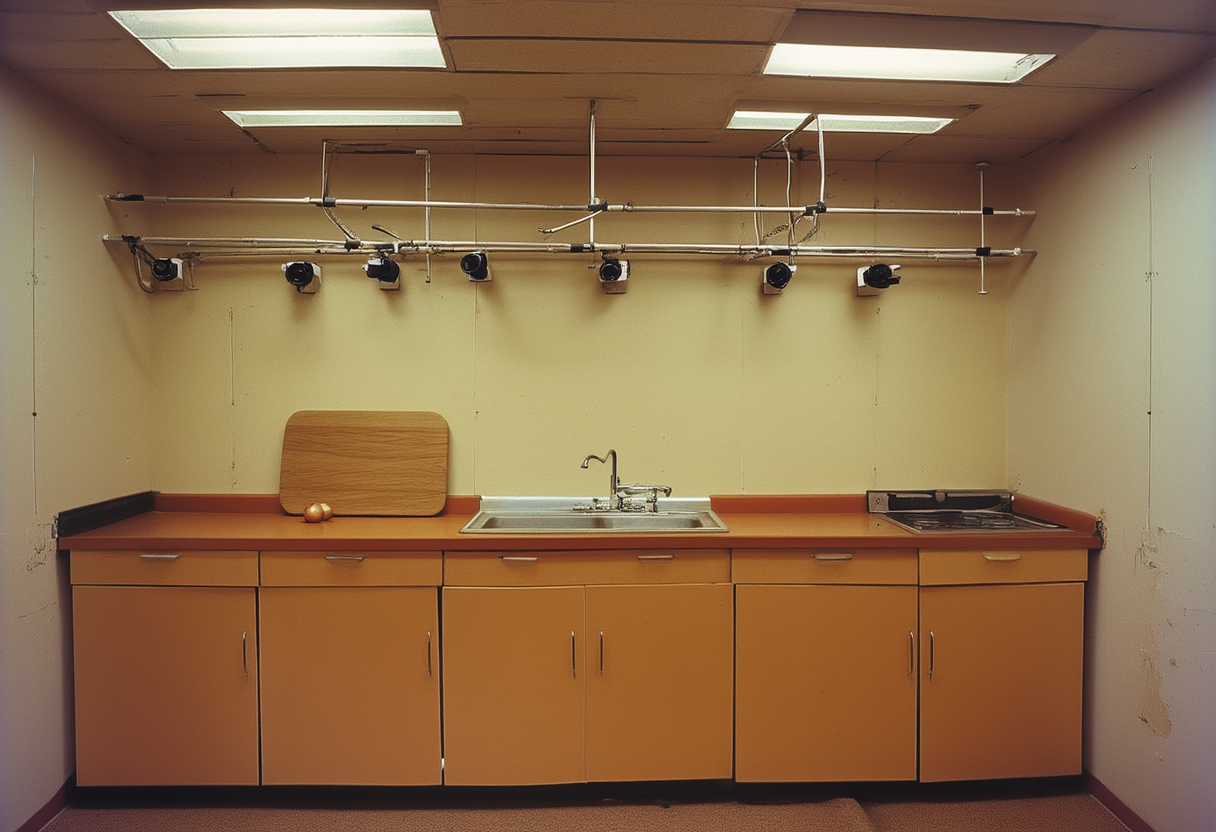
Her studio was three rooms behind a cloth shop off the bazaar road. Room one was a kitchen that had never cooked anything. Room two held a plain workbench under a ceiling frame carrying six cameras. Room three was where she watched the takes back and deleted most of them.
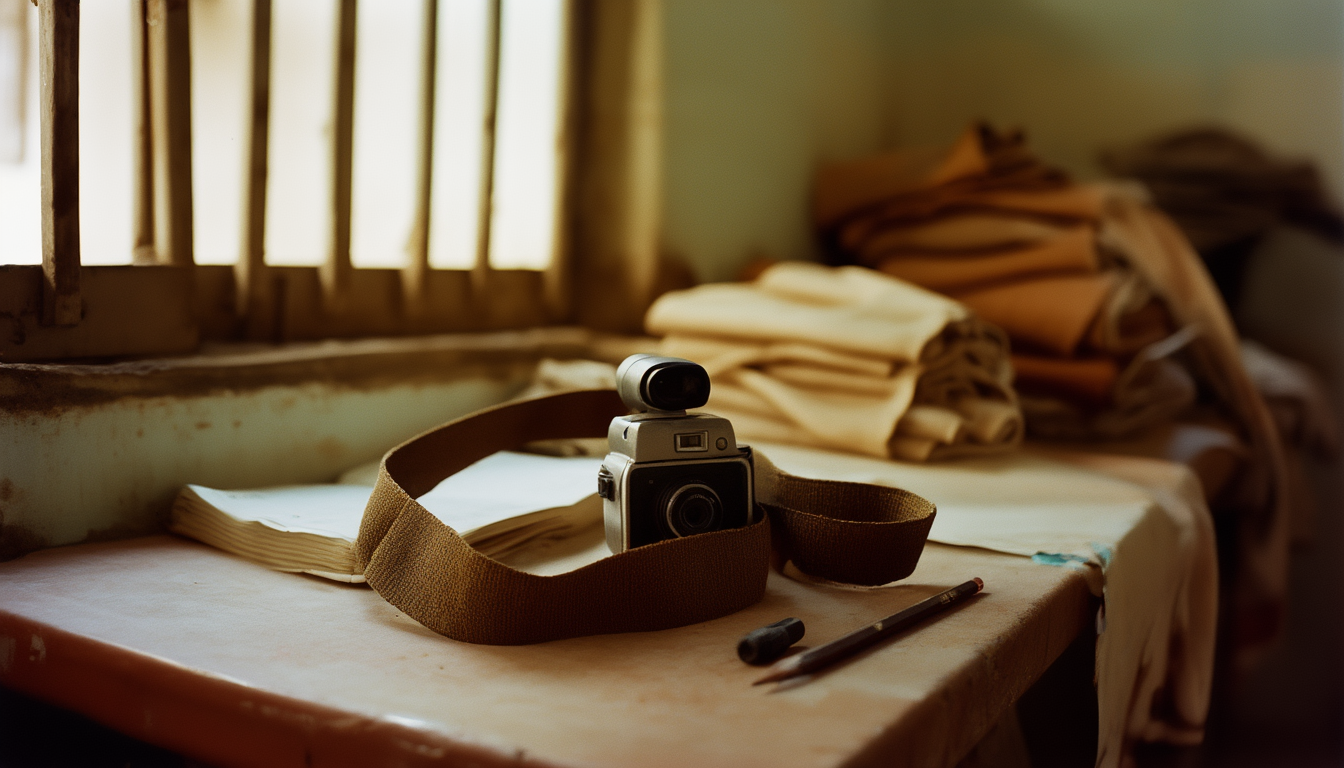
The head strap was the cheapest thing she owned. It was also the only thing a client had ever specified by model number.
The number that should have been the story
The arithmetic that built that room was printed in the newspaper eleven years earlier, and almost nobody did the division.
In October 2026 reporters went to Texworth, a textile factory in Karur in southern India, where workers packing aprons for an American brand wore action cameras strapped to their heads and, in some cases, smart glasses, while they worked. The footage went to Objectways, a data company in the same town occupying at least four building blocks, which gathered first-person and overhead recordings and sold them to developers of artificial intelligence.1
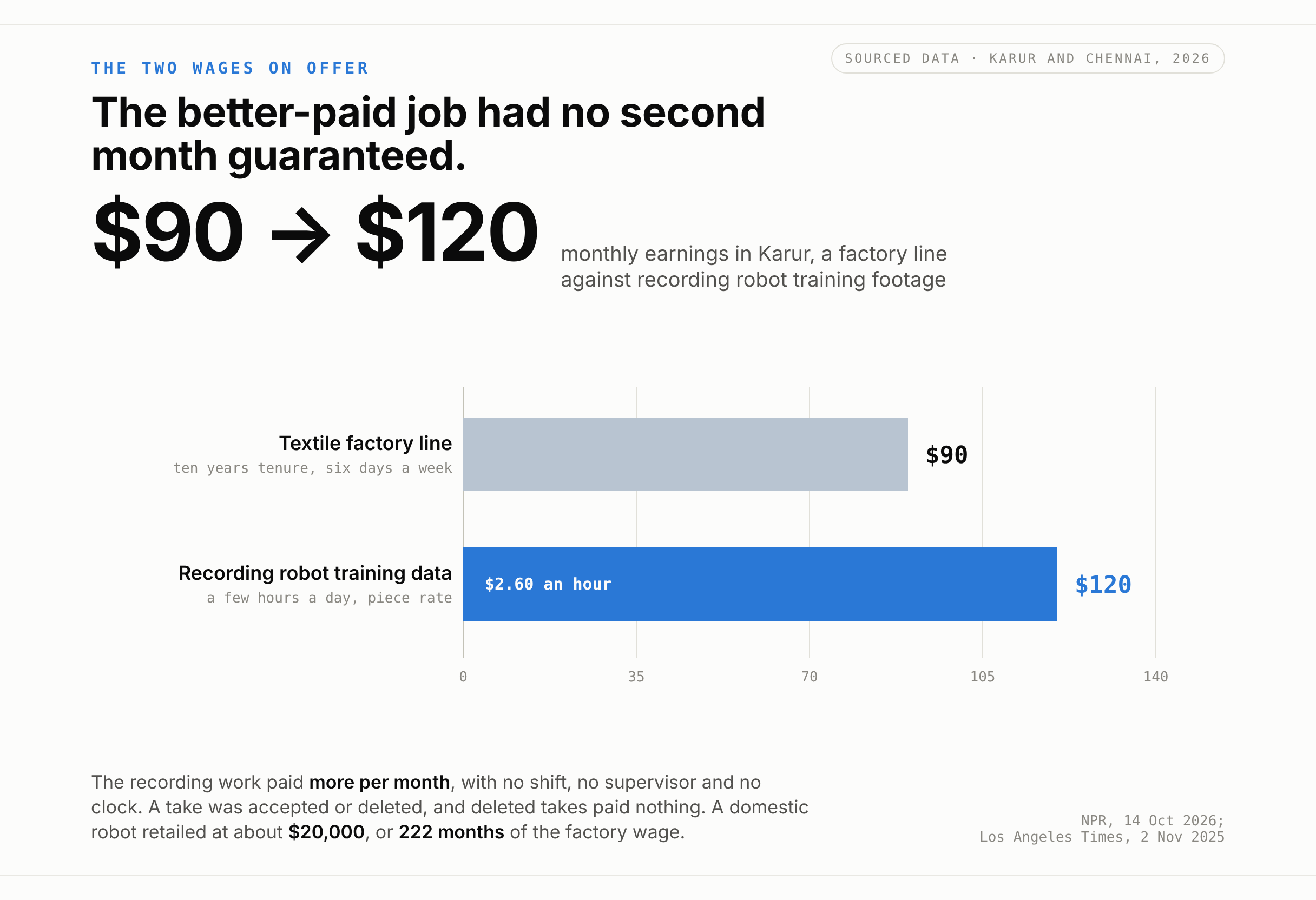
Shoba Kirubakaran was forty. She had been at the factory ten years, six days a week, roughly nine in the morning to six at night. She earned 90 dollars a month. She said nobody had told her the footage would train robots that might replace her.1
Kannagi Periyasaamy was forty-two. She had spent three months recording herself folding and packing aprons. She was paid about 2.60 dollars an hour, and she had been told exactly what it was for. "I'm proud I can teach it to do a good job," she said.1
Set those two wages beside each other. Six nine-hour days a week comes to a little over 200 hours a month, so the line paid somewhere near 43 cents an hour. Filming the line paid six times that. Sneha Jegadish, twenty-four, recorded housework for a few hours a day at the same rate and made around 120 dollars a month, a third more than the factory paid for full six-day weeks.1
The cameras were not the beginning of the replacement. They were a better job.
What the buyers were paying for
Reporting from November 2025 had already mapped the demand side, and the numbers there were nothing like the numbers in Karur.
Objectways had more than 2,000 employees, about half working on sensor data for autonomous vehicles and robotics. It had annotated 15,000 videos of humanoid robots folding towels and clothes. Encord, a San Francisco data platform, contracted Objectways to collect human demonstration footage and worked with Physical Intelligence and Dyna Robotics. "Companies are building foundation models fit for the physical world," said Encord's co-founder, Ulrik Stig Hansen.2
Figure AI partnered with Brookfield to capture footage inside 100,000 homes, and planned to spend much of a billion dollars it had raised on first-person human data. Scale AI gathered 100,000 hours of robotics training footage through a prototype lab in San Francisco. Micro1 paid people in Brazil, Argentina, India and the United States to wear smart glasses through ordinary days. Nvidia put the humanoid market at 38 billion dollars over a decade.2
A news agency found the same trade across the country in June 2026, at the same rate: 250 rupees, about 2.60 dollars, per hour of video. A twenty-five-year-old in Chennai slicing mangoes at home with a smartphone strapped to her head. A fifty-five-year-old in Bengaluru who had made flower garlands by a roadside for a decade and was paid to wear a phone on her forehead while she did it. NITI Aayog, the government think tank, warned that the national argument about machines and jobs was fixed on office work and had largely skipped the country's 490 million informal workers.3
The one best way, priced by the take
What made the footage valuable was not that it showed work. It was that it showed work done correctly, once, inside a time limit.
Naveen Kumar, twenty-eight, folded towels in Karur with a camera on his forehead. "Sometimes we have to delete nearly 150 or 200 videos because of silly errors in how we're folding or placing items," he said. Each attempt had to finish within a minute or he started over. One batch of 200 towel-folding videos went to a single American client.2 At Objectways, teaching a system to recognise a water bottle meant screwing a lid on and off about a hundred times in front of a lens.1
The specification went all the way down. Dev Mandal, a twenty-year-old founder in Bengaluru, closed his data business when clients began dictating the exact robot arm and a table lit with purple lights. "Everything, down to the color of the table, had to be specified by them," he said.2
That is piece rate, and it came back without anyone announcing it. No shift, no floor supervisor, no clock to punch. A take was accepted or it was deleted, and deleted takes paid nothing.
What it turned into
Ravi Shankar, Objectways' chief executive and a Karur native who had moved to Arizona decades earlier, said AI robots "will be more expensive" than human labour.1 For most of the work in that town, through the early 2030s, he was right. A prominent domestic robot model retailed at about 20,000 dollars in 2026,1 which was 222 months of Shoba Kirubakaran's wage. The machine did not arrive to take the packing line. The packing line moved offshore, the way packing lines had always moved, and the recording stayed.
Astha Kapoor of the Aapti Institute called the practice exploitation of labour while it was happening.1 The sharper objection was quieter, and nobody built a campaign around it: the footage was not rented. It was bought outright, once, at an hourly rate, and what was bought was not an hour. It was the way a particular pair of hands solved a particular problem, which no contract treated as belonging to anyone.
Rajeshkumar Ramaswamy, who worked at Objectways, described the robot he was training as "like a child."1
A child you teach once.
Vasanthi's list
By 2036 the Texworth floor was a shipping office with a bank of monitors where the folding tables had been.
Vasanthi's exercise book was short, and it got shorter every quarter. She had worked out the shape of her own trade early. The price per task rose as the global catalogue filled, because what was left to film was rarer. But the number of tasks left fell faster than the price climbed. She was being paid to delete her own inventory, a minute at a time, and she was being paid well to do it.
The borewell pump was still on the list, three lines down. It had survived nine years because no two casings jam the same way, and because the men who could clear one did not own a camera and had never been asked.
She crossed out the jacquard card that Tuesday. Clean take, forty-one seconds, six angles. Then she sat in room three with the lamp off for a while, looking at what was left.
The open question
India's workforce is the second largest on earth, around 600 million people working or looking for work.1 The decade settled something narrow and real: the first money that artificial intelligence sent into a place like Karur arrived as wages, not as layoffs, and it paid better than the work it was recording.
What it never settled is who owns a gesture. A wage buys an hour. These payments bought a method, in perpetuity, from people who were told the rate and not the term. No court has been asked the question yet, and the archive is finished.
Author's Note
This article is speculative journalism written from 2036. Vasanthi Murugaiyan, her recording studio and her exercise book are fictional composites. Every wage, rate, company, project, scale figure and quotation cited below is real, published and sourced, and the workers named in the sourced material are real people described as the reporting described them. The hourly arithmetic comparing the line wage to the recording rate is the author's, from the published monthly wage and hours. Projections past October 2026 are the author's.