
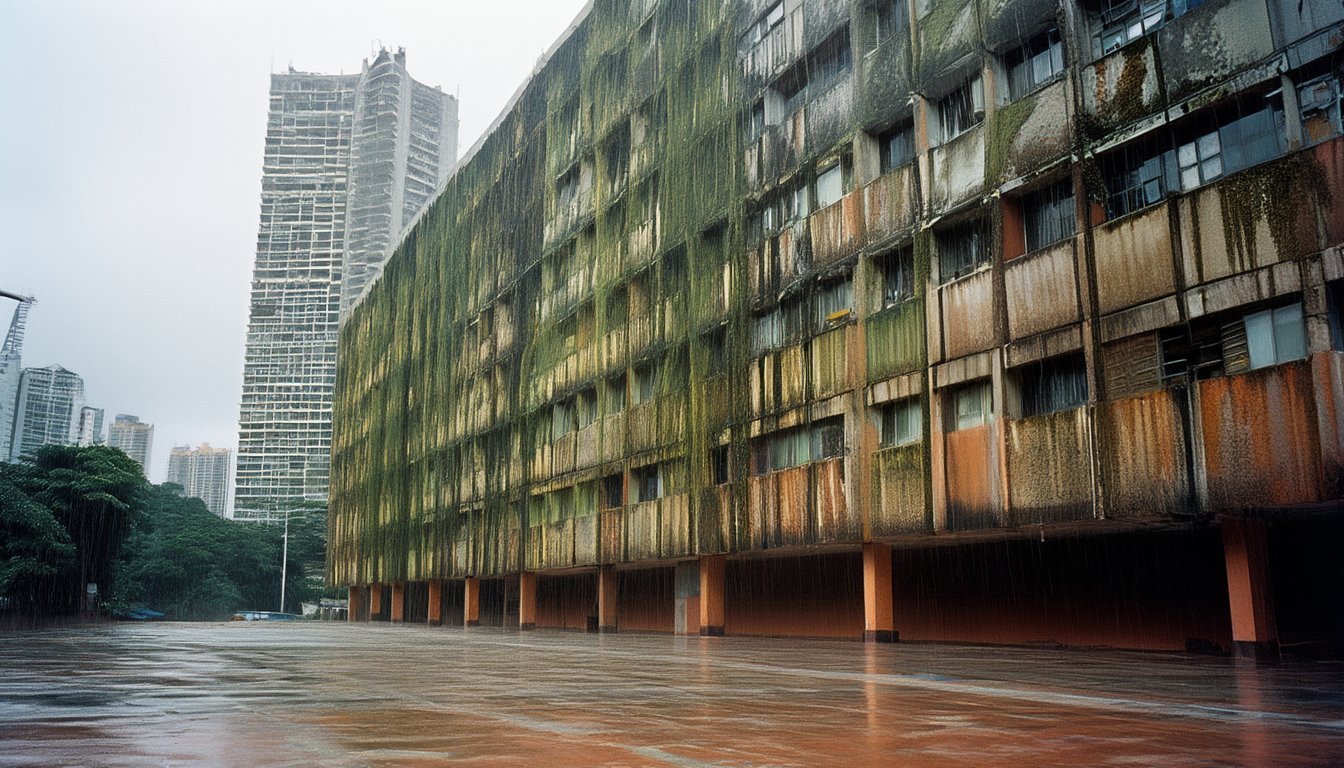
A speculative 2036 look at how breathing buildings — and the people who keep them alive — reshape urban life.
Priya Nair runs her thumb along a hairline crack in the stairwell wall and doesn't reach for filler. She reaches for a water bottle. It is a wet morning in Mumbai in 2036, and she squeezes a thin line of water down the fracture the way her mother once watered a windowsill plant. Then she waits. By the time she climbs back down at the end of her shift, the crack has begun to close on its own — a faint white seam of new mineral knitting the wall shut from the inside.
Priya is a building keeper, a job that didn't exist when she was a girl. Her badge says facilities, but the older tenants call her the wall nurse. The tower she looks after is alive, in the narrow, literal sense that matters here: its concrete is seeded with dormant bacteria, and her job is to keep them well.
The promise
The promise was simple and a little utopian. Buildings that fix themselves. Buildings that breathe.
For a century, concrete failed the same boring way — water seeps into a crack, reaches the steel inside, and the rebar rusts and swells until the structure spalls. The repair crews came with epoxy and jackhammers. The fix that arrived in the 2020s skipped the crew. Researchers learned to fold spore-forming bacteria from the Bacillus family directly into the mix. The bacteria sleep in the high-alkaline dark, surviving the pH 12-to-13 environment that kills almost everything else, until a crack lets water in.1 Then they wake, feed on embedded nutrients, and precipitate calcium carbonate — limestone, essentially — sealing the gap they were planted to find.2
The lab numbers were real, if more modest than the brochures. Bacterial mixes recover meaningful strength after cracking — studies report regaining 40 percent or more across repeated damage cycles, and in some pre-cracked samples close to 90 percent of original strength.3 The crack widths these strains can bridge run roughly 100 to 800 microns: a human hair to a pencil line.4 Not magic. But enough to stretch a building's life by years and pull a jackhammer out of the loop.
Then there was the other promise — the carbon one. Some concrete doesn't just heal; it captures. CarbonCure's mineralization process injects captured CO₂ into fresh concrete, where it mineralizes permanently into the stone. By late 2024 the company reported more than 500,000 metric tons of CO₂ saved across millions of truckloads.5 At the University of Colorado Boulder, Wil Srubar's lab grew cement from photosynthetic algae instead of kilned limestone, and the spinout, Prometheus Materials, began selling masonry blocks made the living way.6 A wall that eats its own footprint.
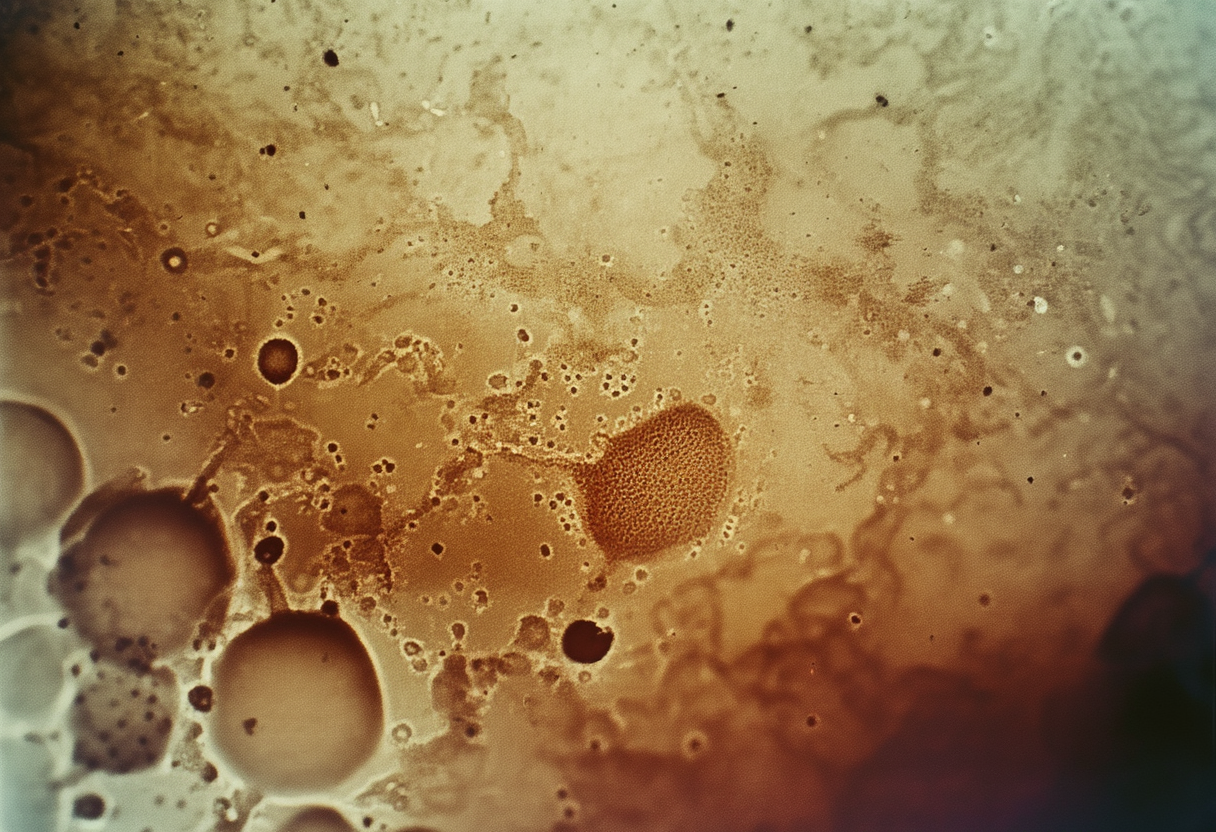
The mechanism, and the new job it made
What the brochures never priced in was Priya.
A living wall is not a finished object. It is a colony with a maintenance schedule. Nutrient levels drift. Heat waves stress the bacteria. A long dry spell can leave a crack un-watered and un-healed for a season. So the trade grew a new craft around it — people who read a wall the way a vet reads an animal that can't tell you where it hurts. In 2036, the tenants' joke about the wall nurse isn't really a joke. Priya checks moisture, logs a sour smell near a column, and notes when a patch of concrete heals too slowly or, stranger, too fast.
This is the quiet retrieval inside the high-tech story. Before industrial cement, builders knew their local materials in their hands — when the clay was right, where the good stone was. Living concrete drags some of that intimacy back. You cannot fully digitize the judgment of someone who has spent three years learning how one specific building behaves in the monsoon.
The turn
Here is where the dream curdles.
Give a building a metabolism and you give it a way to get sick. The same adaptive chemistry that lets bio-concrete strengthen itself is, viewed coldly, uncontrolled growth — and uncontrolled growth is the thing buildings are not supposed to do. Engineers writing in 2024 were blunt that microbial self-healing still carries open risks around durability and unpredictable long-term behavior; this is not a solved technology.7 In a tower full of living concrete, "the wall is acting strangely" stops being a metaphor.
And dependency cuts the other way too. A wall you have to keep alive is a wall that can be neglected to death — or, in the darker scenarios planners now war-game, targeted. A pathogen tuned to a specific regional strain could, in principle, do to a city district what blight does to a single crop. The promise was resilience. Pushed far enough, the same biology becomes a single point of failure with a pulse.
The cruelest reversal is the plainest one. Self-healing was sold as the end of the repair crew. But it didn't abolish the labor of keeping buildings standing — it moved it, from the demolition-and-epoxy crew to the building keeper, and then it sorted that labor by wealth. Towers in rich districts get premium strains, sensors, and a keeper like Priya on staff. Older buildings in poorer ones get a living material no one is funded to tend — concrete that was supposed to heal itself, slowly dying because healing, it turns out, was never free.
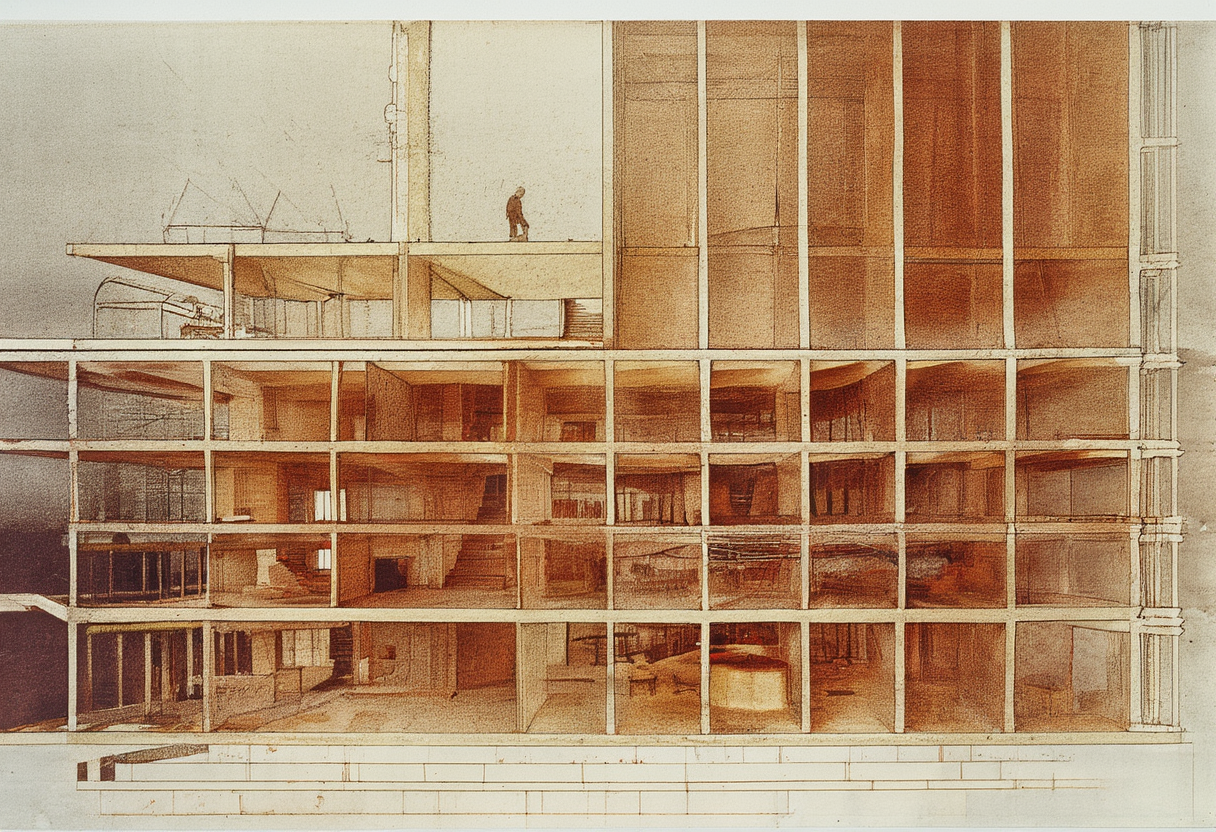
Back to the stairwell
Priya's tower is one of the lucky ones. It has a keeper. Two districts over, in the building where she grew up, the same living concrete sits in the walls, seeded a decade ago by a developer who has since sold and gone. No one waters those cracks. The bacteria are still in there, technically, still alive, still waiting for the drink that signals it's time to work. They are just waiting in a building no one has decided is worth keeping.
She climbs back up the stairwell at dusk and checks her seam. The white line has thickened — the wall has fed, healed, closed itself a little more. She rests her palm flat against it for a second, the way you'd feel a child's forehead. Warm, but not too warm. Today the building is well.
The question that hangs over 2036 isn't whether our buildings are alive. We settled that. It's whether a city can afford to keep all of them alive — or whether "living infrastructure" quietly becomes one more thing the rich get to keep breathing and the poor are left to bury.
Author's Note. This is speculative journalism written from an imagined 2036. Priya Nair, her tower, and the building-keeper trade are fictional composites, used to make a real shift concrete. Everything outside the scene is sourced: the bacterial self-healing chemistry, the strength-recovery and crack-width figures, the CarbonCure and CU Boulder/Prometheus carbon-capture work, and the open durability risks are all drawn from the cited present-day research. The far-future details — neglected living housing blocks, strain-targeted attacks, a city's triage of which buildings to keep alive — are extrapolation, not reporting.