
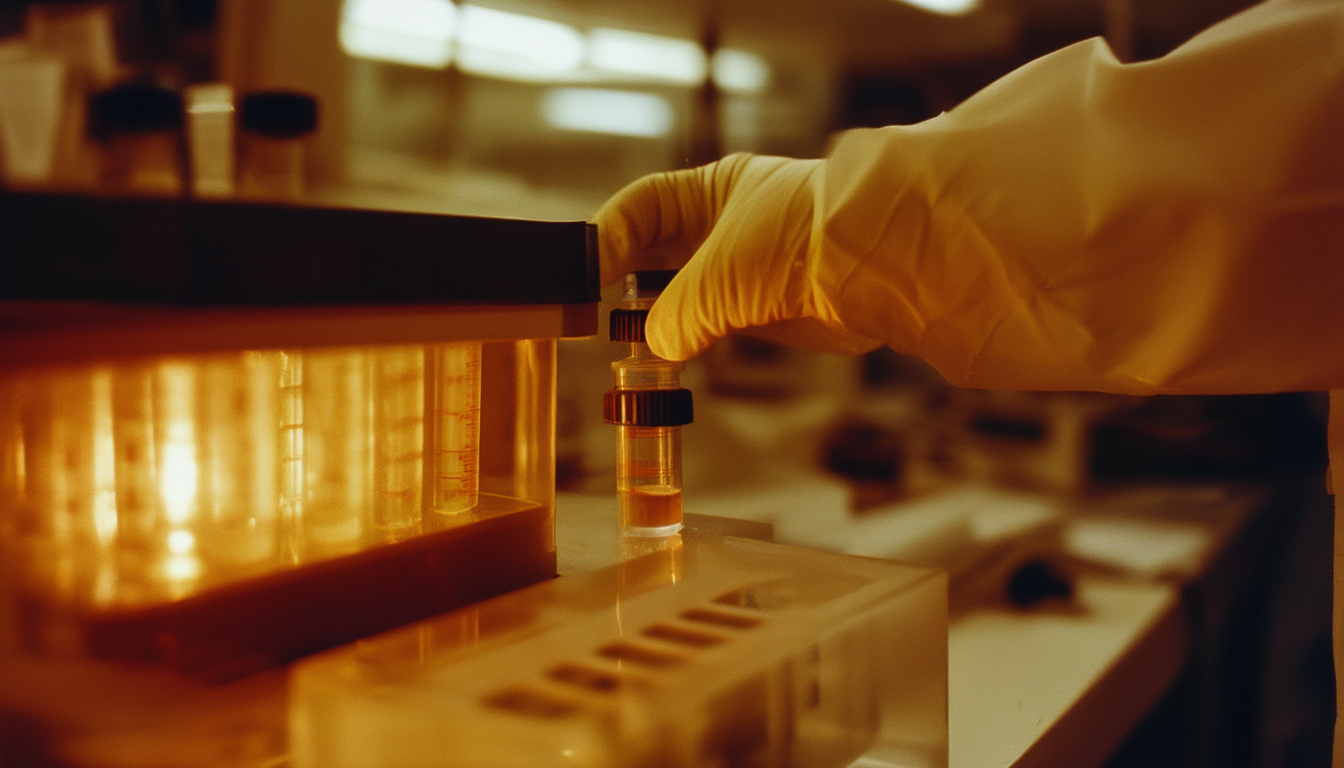
The order came in at 3:12 on a Tuesday, and by the time Mara Ostrowski flagged it the DNA was already growing in a dish two states away.
She ran biosecurity screening for a mail-order synthesis house outside Cambridge, the kind of shop that turns a text file of A, C, G, and T into a physical vial of DNA and ships it overnight. Her job was to catch the orders that should never be built. For twenty years the work had a comfortable shape. Compare each incoming sequence against a library of known dangerous ones, the smallpox genes, the toxins, the regulated agents, and hold anything that matched. The system read new orders by asking an old question. Have we seen this before?
The order that Tuesday matched nothing. It was a small viral genome, a few thousand letters long, and every stretch of it came back novel. No hit. No ancestor in the database. The software passed it clean, because a screen built to recognize the known cannot see a thing that has never existed. Mara only caught it because an unrelated customer flag tripped a manual review, and by then the shipment was already gone.
To understand how a virus could have no ancestor, you have to go back to the fall of 2025, when a team at the Arc Institute and Stanford did something that had been a stated goal of the field for decades. They designed a complete, working genome with an AI model.1
The model was called Evo. Its second version had been trained on more than nine trillion nucleotides of genetic code drawn from across the tree of life, learning the deep grammar of how living sequences fit together.2 The researchers pointed it at ΦX174, a tiny bacteriophage, a virus that infects E. coli and does nothing to people. ΦX174 is a landmark: 5,386 letters, eleven genes, the first genome ever sequenced, back in 1977, and the first ever chemically synthesized, in 2003.1 Reading, then writing. The 2025 work added the third verb. Designing.
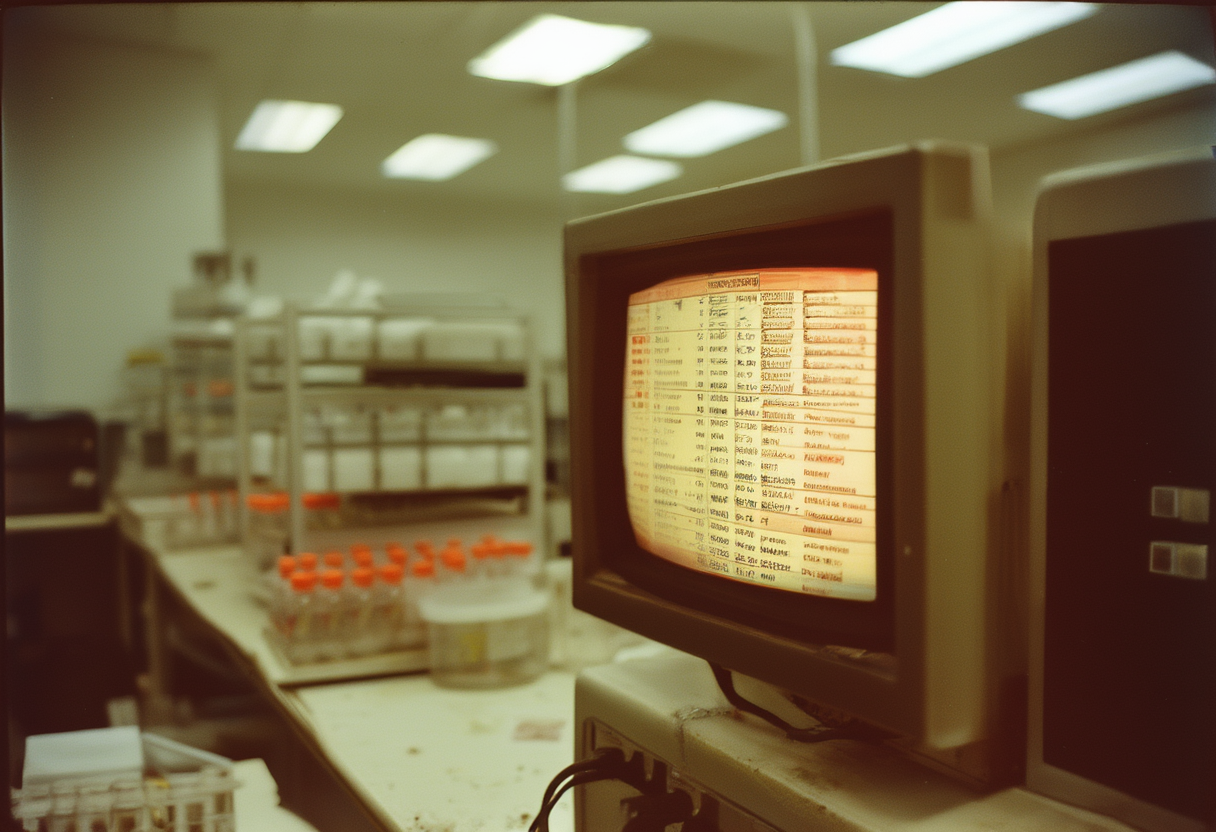
Figure 1. A synthesis-screening console at a mail-order DNA provider, March 2036. Legacy screens compared each order against a library of known threats; a fully novel generated genome returns no match and passes clean.
Evo generated roughly three hundred candidate genomes in the shape of ΦX174. The team built them and dropped them onto bacteria. Sixteen came alive, assembling into working viruses that infected and killed their host cells as well as the natural phage did, and in some cases better.13 Thirteen of the designs carried mutations found in no natural sequence anyone had on record.1 The machine had written life that evolution never got around to.
The promise was real, and it was urgent. Drug-resistant bacteria are one of the quiet catastrophes of the century. In 2019 alone, bacterial antimicrobial resistance was directly responsible for an estimated 1.27 million deaths, more than HIV or malaria.4 Phages, the viruses that hunt bacteria, are one of the few weapons that can adapt as fast as the bugs do. The Arc team showed why AI mattered here. When they bred E. coli that could shrug off natural ΦX174, cocktails of their AI-designed phages overcame the resistance in every strain, usually within a handful of passages, while the wild virus failed completely.1 Nature discovers phages one lucky match at a time. The model could generate a whole crowd of them at once, each attacking from a slightly different angle, so the bacteria had nowhere to hide.
Mara knew that promise from the inside. Two years before the Tuesday order, a lung infection her mother carried had stopped answering to every antibiotic on the shelf. What saved her was a designed phage cocktail, mixed to her particular bacteria, the same class of medicine the 2025 paper had pointed toward. Mara had sat in a hospital chair watching a fever finally break because a machine could write a virus. She never thought the technology was evil. That was never the problem.
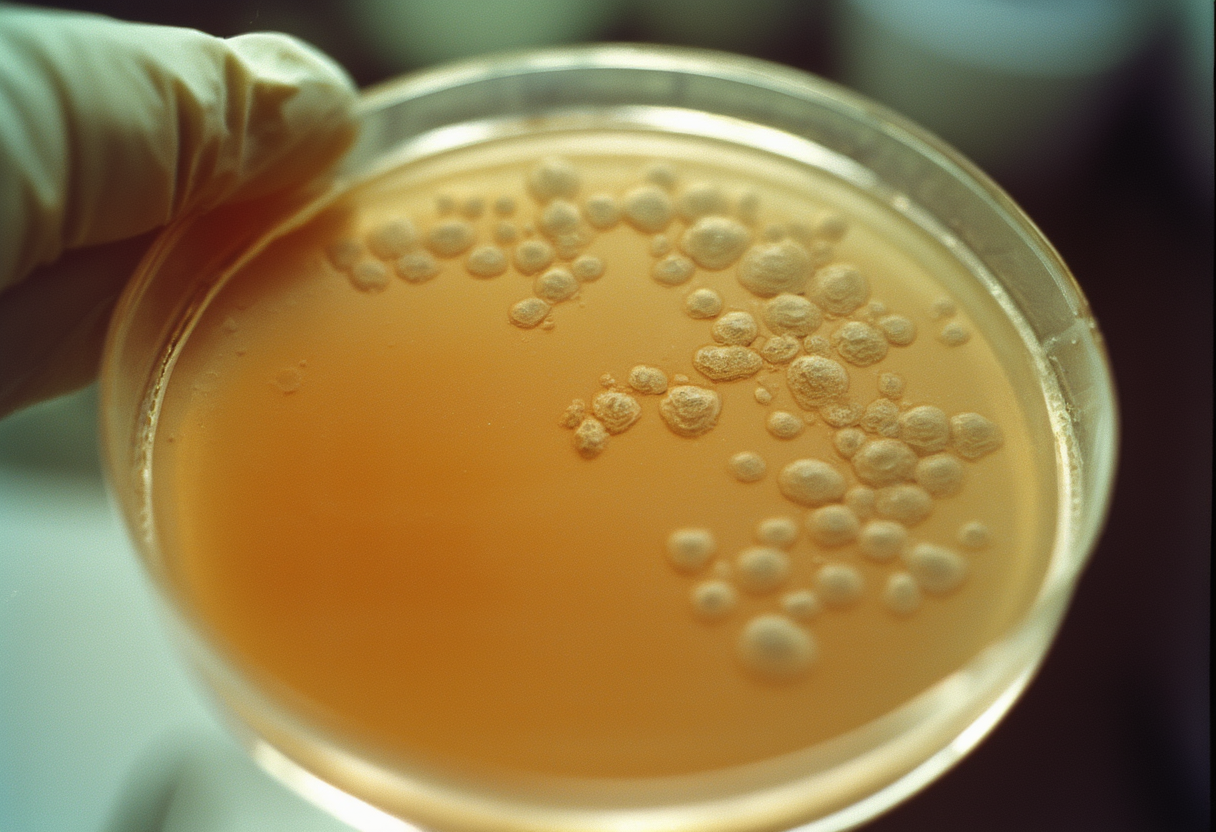
Figure 2. Plaque assay from a designed-phage therapy line, 2036. Each clear spot is a colony of bacteria killed by a generated bacteriophage; the same capability that produces a healing cocktail produces a genome with no natural match.
The problem was that the gift and the blind spot were the same capability. A model that can compose a working genome with no natural template is, by definition, a model that produces sequences with no ancestor to match. The Arc team had been careful. They worked only with harmless lab strains of E. coli, and they had deliberately kept human pathogens out of Evo's training so it could not design them.15 The restraint was real. But restraint is a property of the people who build the tool, not of the tool, and the researchers said as much between the lines. Every safeguard they described was a choice, and choices do not travel with the software.
Outside voices said it plainer. "This raises some serious regulatory and safety concerns, to say the very least," a microbiologist not involved in the work told reporters when the study broke, noting there was no guarantee the next lab would show the same care.6 The deeper issue was structural. The screening systems the whole biosecurity edifice rested on, the ones Mara ran every day, worked by matching orders against known threats. Generative design broke the match. You cannot keep a list of every dangerous sequence when a machine can write dangerous sequences that have never been on any list. More than a hundred researchers signed an open letter warning that a small slice of biological data, in the wrong pipeline, could help build severe biological threats, and that no consistent rules governed any of it.7 Reviewers put it most cleanly: the ability to compose viral genomes with generative AI now existed; the governance to steer it safely did not.8
By 2036 the models got better, and the gap did not close so much as get papered over. Synthesis houses added a second layer of screening that no longer asked whether a sequence was known, but whether it looked functional, whether it read like something that would work, harmless or not. It caught more. It also flagged the class of medicine that had saved Mara's mother, and thousands of legitimate research orders besides, because a therapy and a threat can be built from the same grammar. The watchers had traded a blindness for a fog.
Mara still works the desk. The Tuesday order turned out to be a plant-pathogen study, legitimate, cleared after three days of phone calls. But she keeps the ticket pinned to the edge of her monitor, because it was the first time she understood what her job had become. For two decades she had been asking sequences where they came from. The machines had quietly made that the wrong question. The only one left was harder, and no database could answer it. Not where is this from, but what will it do.
Author's Note: Mara Ostrowski and the Cambridge synthesis house are fictional composites, and the 2036 scenes are imagined. The science underneath is real and current as of 2026. The Arc Institute and Stanford genome-design study, the Evo models and their training, the ΦX174 results, the resistance-breaking cocktails, the deliberate exclusion of human pathogens, the antimicrobial-resistance death toll, and the biosecurity warnings are all drawn from the sourced record below. Where this piece speculates, in the clinical vignette and the 2036 screening landscape, it is labeled as speculation. No data or sources were invented. (Caelus Ward)