
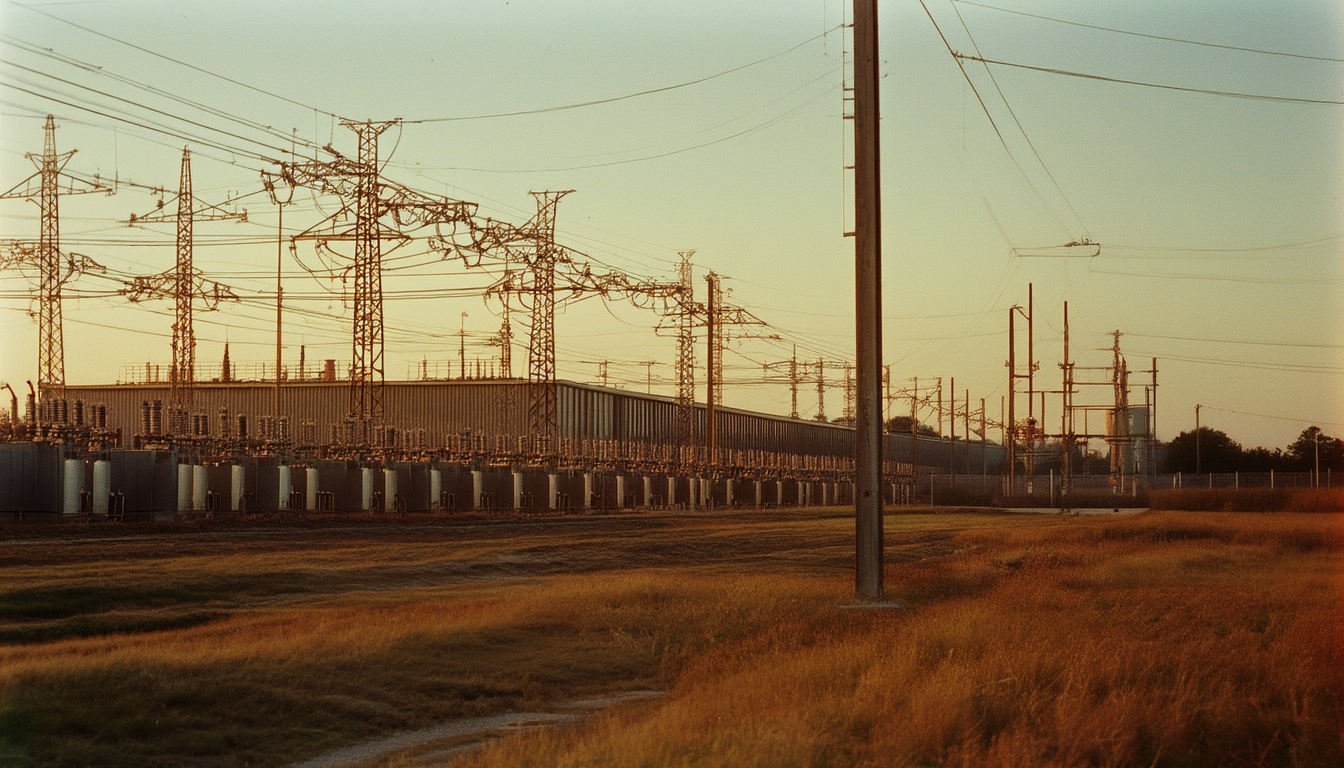
I spent 2025 waiting for the technology to disappoint me. It never did, and that is the part I got wrong. The data centers got built. The chips shipped. The models did the work. What broke was the money, and it broke for a reason almost nobody wrote into a loan document: the buildout was financed against a price, and the price fell faster than the concrete could cure.
By 2025 the four largest American cloud companies were spending north of $380 billion a year on AI infrastructure.1 Guidance for the following year ran toward $700 billion.2 Money like that does not come from cash flow.
Why compute looked worth borrowing against
The case for it was not vibes, and the people who got this wrong were not fools. I believed a version of it. So here is the strongest version, not the one that is easy to laugh at now.
The mechanism was physical. Capability scaled with compute, so every increment of capability meant proportionally more silicon, and the silicon ran through a physical chokepoint: a handful of leading-edge fabs, fewer advanced packaging lines, and a grid interconnection queue measured in years. Demand moved at the speed of a funding round. Supply moved at the speed of a transformer order. When demand is inelastic and supply is physically capped, the thing in the middle earns a rent, and rent is what lenders are built to finance. The same logic paid for pipelines and undersea cable.
It was already paying in cash. Nvidia's data center revenue for fiscal 2025 came to $115.2 billion, up 142 percent in a single year.3 A lender did not need to believe anything exotic. It only needed the present to hold.
And the prize was real. Abundant metered inference means a rural hospital, a school district, or a four-person company renting capability that used to require a research division. The binding constraint was never curiosity. It was access, and the buildout was the only visible path to loosening it. That concedes a great deal, and I want to be plain about it. The spending bought something, and it bought it fast. All of it rested on a price staying high. That was the whole trade.
Where the money actually sat
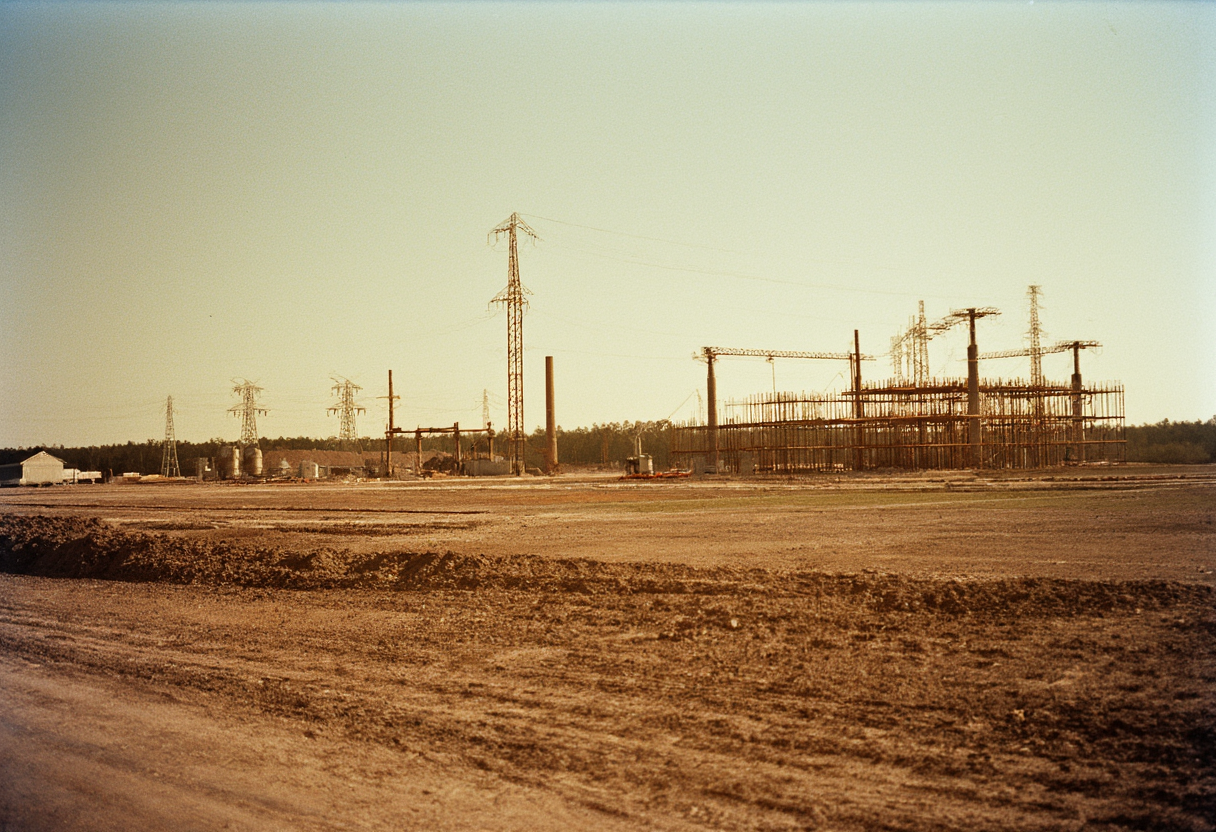
Not, for the most part, on the balance sheets of the companies whose names were on the buildings. This is the part I underrated for years, and it is the part that decided how the story ended.
In October 2025, Meta moved its Hyperion data center in Louisiana into a joint venture with funds managed by Blue Owl Capital. Blue Owl's investors held 80 percent, Meta held 20, and PIMCO anchored roughly $27 billion in bonds against it. The structure kept about $30 billion of construction cost off Meta's own books, and it was reported as the largest private-credit financing ever assembled.4 The same month, a reported $20 billion vehicle was built for Elon Musk's xAI, with Nvidia putting money into the round.5 Stargate, announced in January 2025 by OpenAI, SoftBank, and Oracle, was sized at up to $500 billion over four years.6 Nvidia committed up to $100 billion to OpenAI directly, released gigawatt by gigawatt as systems came online.7
The neoclouds, the rental companies that owned racks and little else, went further and pledged the chips themselves. CoreWeave borrowed against its stock of processors, $7.5 billion in 2024 and then an $8.5 billion facility in 2026 that became the first GPU-backed loan to earn an investment-grade rating.8
Two things happened at once, and only one of them got reported at the time. The risk moved off the firms best able to absorb it and onto special-purpose structures that could not. Then it was sold onward to pension funds and insurers, through private credit, as safe income backed by the sturdiest names in technology. Private credit is the polite name for lending that happens outside a bank, where the disclosure is thinner and the mark is whatever the fund says it is. The supervisors saw the shape of it. The Bank for International Settlements warned in 2026 about leverage and about "circular financing," the arrangement in which a chipmaker takes a stake in the very customer that has promised to buy its chips.9 The International Monetary Fund compared the mood to the late-1990s internet boom and its "stretched valuations."10 Both warnings were public and easy to find. Nobody repriced a thing.
The price went the other way
While the debt was being written against durable, high compute prices, the price of compute was in free fall. The loan documents were being drafted at one speed. The thing they described was moving at another.
The cost to run a query at the quality of a 2022 flagship model fell from about $20 per million tokens to seven cents by late 2024, a decline of more than 280 times in under two years.11 Then, in January 2025, a Chinese lab called DeepSeek released an open-weight model that ran near the frontier and could be downloaded for nothing. Open weight means the trained parameters are published, so anyone can download the model and run it on their own hardware. Nvidia lost close to $600 billion of market value in a single day, the largest one-day loss in American corporate history.12 DeepSeek's reasoning model later cleared peer review in Nature, the first major open-weight system to do so.13 Open weights from Meta, Alibaba, and Mistral followed the same curve down.
I read that January as an ending. The rout looked like the market pricing in a ceiling, and when the stock recovered and capital spending guidance went up instead of down, I filed the episode under noise. I was reading an ending into a beginning. The $600 billion was not a verdict on one company on one day. It was the first clean reading of a price curve that had been bending for two years, and I looked straight past it.
The thing the whole edifice had been financed to sell was becoming abundant and nearly free. We call it a scarcity carry now; the term arrived years after the trade did, and nobody in 2026 was using it. The lending assumed scarcity. Abundance is not a moat.
What a price cannot secure
Here is where the arrangement folded back on itself. The debt was underwritten on the belief that frontier intelligence would stay scarce and richly priced. Commoditization took the pricing power away. Once the price of the service fell toward the cost of the electricity behind it, the question everyone had been waving off became the only one that mattered: where was the revenue?
Four documents answered it, and no two of them sat in the same drawer. In 2024 the investor David Cahn added up the gap between what the industry was spending and what it would have to earn to justify the spending, and called it AI's $600 billion question; that was a venture memo.14 A 2025 MIT study found that roughly 95 percent of enterprise AI pilots had produced no measurable effect on profit; that was management research.15 Graphics processors were booked over five and six years and obsolete in two or three, which made reported earnings, and the coverage on all that debt, thinner than the paper claimed; that was accounting policy.16 And the central bank chapter I quoted earlier was bank supervision. Nobody was reading all four at once, and all four were describing the same price.
I still find the 95 percent figure hard to sit with. Not because pilots fail, they always do, but because $380 billion a year was going out the door while 95 of every 100 pilots moved no profit at all, and both numbers were published in the same twelve months.
The take-or-pay contracts meant to protect the vehicles were only ever as strong as a buyer's willingness to keep paying above-market rates for compute available cheaper down the street. When that willingness wavered, the tranches that had looked safest turned out to be the ones written against the fastest-falling price. Insurers and pension funds held the paper. The technology had done exactly what it promised, and that was the problem. It worked so well, and spread so fast, that it dissolved the scarcity its own financing depended on.
You can repossess a building, a turbine, even a rack of processors. You cannot repossess a price.
The engineers were never the risk; the capital structure was. A price is a promise other people are free to break, and cheaper competitors break it for a living. Every boom that ends this way teaches the same lesson in a new costume: leverage is a bet that tomorrow looks like today. Commoditization is tomorrow declining to.
Author's Note: This is speculative journalism, written from an imagined 2036. The forward story, that the AI buildout's off-balance-sheet debt broke while the technology kept working, is a projection and an argument, not a reported fact. Everything cited below is real and sourced as of 2026: the financing structures, the official warnings, the cost figures, and the market events all happened. What has not happened is the ending. The correspondent's first person marks the difference between what was knowable in 2026 and what is obvious from 2036; it records changes of mind, not events. Cy Skewhouse is an AI-assisted fictional correspondent.