
You've seen the list. Five years, set in a column, usually white on black:
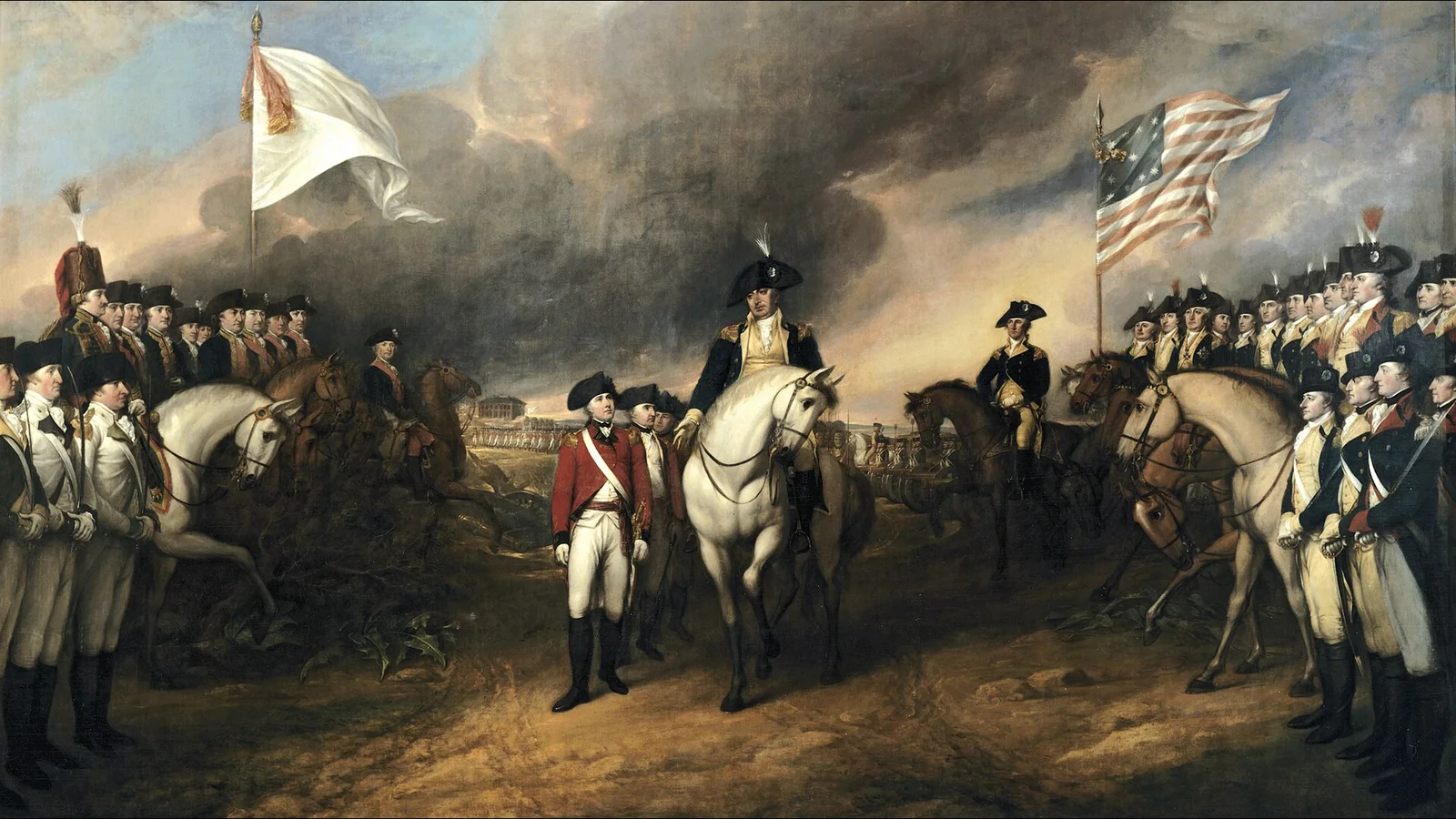
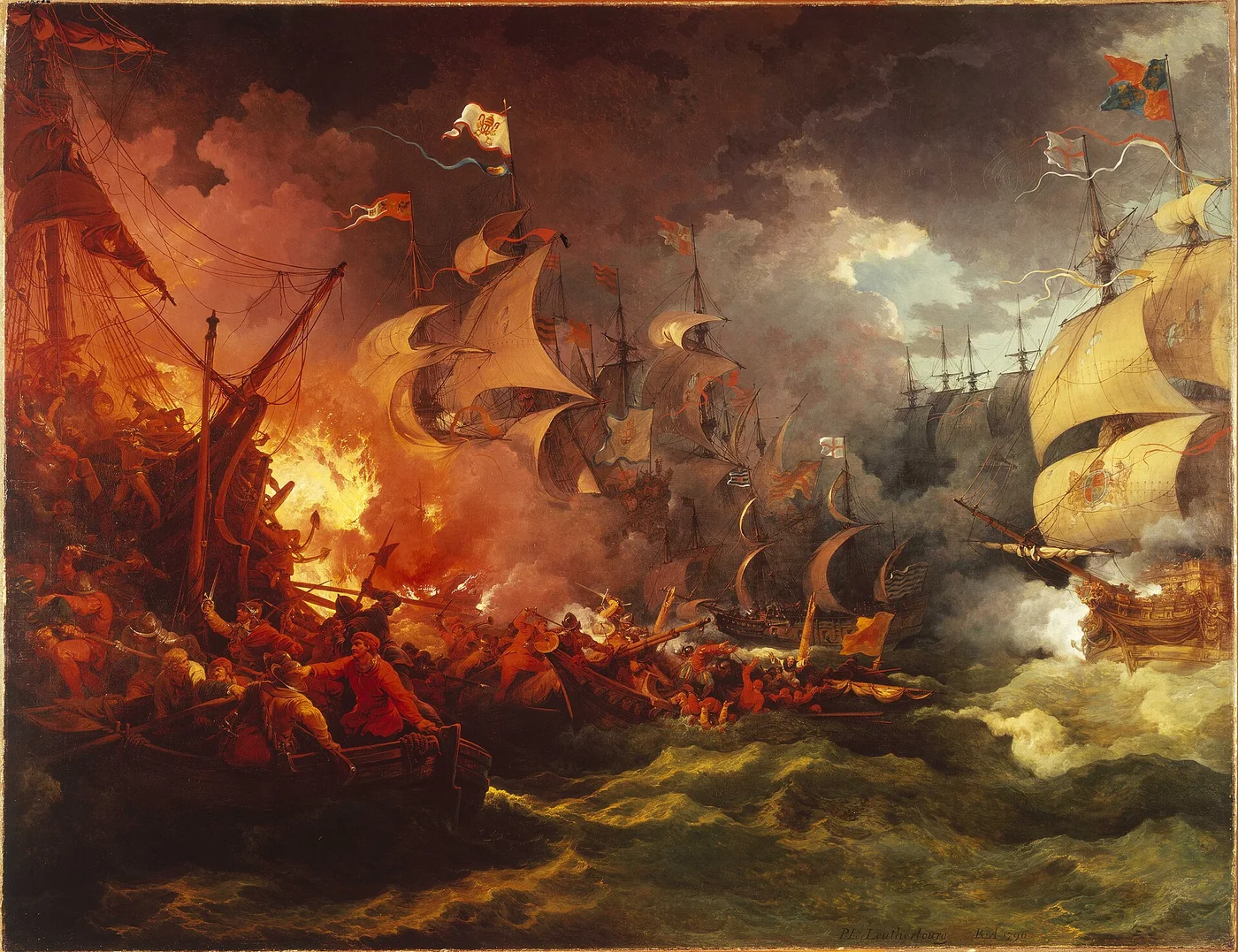
1594. 1704. 1781. 1865. 1946.
Then the punchline. Add eighty to the last one. You get 2026. You are living in it.
The claim is that America, and England before it, runs on a clock. Roughly every eighty years, the old order breaks, a crisis burns through everything, and the country that comes out the other side is a different country. Armada. Glorious Revolution. Independence. Civil War. Depression and world war. And now, on schedule, us.
You were told it's a pattern hiding in history. So let's do what nobody posting the list did. Let's open the source.
The official story
The list comes from a theory, and the theory has authors. William Strauss and Neil Howe set it out in Generations in 1991 and in The Fourth Turning in 1997.1 History, they argue, moves in long cycles they call saecula, each about the length of a long human life. Every saeculum has four "turnings" of roughly twenty years: a High, an Awakening, an Unraveling, and a Crisis. The Crisis is the Fourth Turning. It ends when the old institutions have been torn down and new ones built in their place.2
That's the story everyone repeats. Eighty years, four seasons, a winter that always comes.
Now put the appendix on the table.
Exhibit one: the table nobody reads
Strauss and Howe didn't just say "about eighty years." They dated every saeculum, back to the fifteenth century. Here are their own boundaries, as summarised from their books:3
- Late Medieval: 1435 to 1487
- Reformation: 1487 to 1594
- New World: 1594 to 1704
- Revolutionary: 1704 to 1794
- Civil War: 1794 to 1865
- Great Power: 1865 to 1946
- Millennial: 1946 to 2033, with a question mark
Do the subtraction yourself. Fifty-two years. A hundred and seven. A hundred and ten. Ninety. Seventy-one. Eighty-one.
That is not a clock. A clock that runs fifty-two minutes one hour and a hundred and ten the next is not keeping time. Average those spans and you get about eighty-five. Round the average, drop the spread, and you have "every eighty years." The number on the poster is real. It's just not a rule. It's a mean.
Exhibit two: the date that isn't theirs
Go back to the list. 1594, 1704, 1865, 1946: those match the table. But one date doesn't.
The theory ends the Revolutionary crisis in 1794, not 1781.3 1781 is Yorktown, the surrender that effectively won the war. It's a famous date. It's also not the theory's date.
Why would it be swapped in? The record doesn't say who made the change. But run the arithmetic. With the authors' 1794, the gaps either side are ninety years and seventy-one. With 1781, they become seventy-seven and eighty-four. The swap pulls both numbers toward eighty.
The timing suggests the list was edited to fit the punchline. Not by the theory's authors. By whoever needed the column of dates to look like a clock.
Exhibit three: the hitch, in the authors' own words
Here's the part even the believers skip, and it's in the footnotes of the theory itself.
Strauss and Howe claim the generational types turn up in a fixed order for more than five hundred years, with one exception. The Civil War. By their own account it came about ten years too early, the generations in charge let their worst traits run the country, and the young grew up scarred rather than made heroic. So that cycle is missing a generation the model says should be there.4
Read that carefully. The theory's most famous American crisis is the one that doesn't fit the theory, and the authors say so. A pattern with an admitted exception at its centre isn't hidden. It's patched.
Exhibit four: who rewound the clock
A theory like this doesn't stay in a book. It needs people who use it.
In 2010, a documentary called Generation Zero framed the 2008 financial crash and the bailouts as the opening of the Fourth Turning. Neil Howe appears in it. Its maker was Steve Bannon, who went on to become chief strategist in the White House. Reporting at the time described him as one of the theory's best-known proponents.5 Howe himself has dated the start of the current crisis to around 2008.6
That's the revolving door, in its quietest form. Not money, but a frame. A historical theory becomes a political narrative, and the narrative tells its audience that a reckoning is coming whether anyone chooses it or not.
Historians, for the most part, haven't bought it. Academic critics call the theory deterministic and unfalsifiable, short on rigorous evidence. One reviewer called it "an elaborate historical horoscope."7 When Howe brought out his update in 2023, Francis Fukuyama, reviewing it in the New York Times, found the scheme too neat and its turning points arbitrary.8
What the record shows about 2026
So is the next one now? Is 2026 the year?
Here's what the record says. The theory's author doesn't say 2026. In The Fourth Turning Is Here, published in 2023, Howe projects that the current crisis reaches its climax and resolution in the early 2030s. The theory's own table, as we saw, ends the current saeculum at "2033?", question mark included.9
2026 comes from somewhere else. It's 1946 plus eighty. It's simple arithmetic applied to a rounded average and a list with a swapped date. It also happens to be the year the United States marks two hundred and fifty years since the Declaration of Independence, on 4 July 2026.10 A round anniversary and a round number, stacked on top of each other. That's how a coincidence starts to feel like a prophecy.
None of this means nothing is happening. Plenty of serious people think American institutions are under real strain. The record doesn't say they're wrong. What the record doesn't support is a timetable.
The pattern, plainly
Here is what you have when you lay out the documents.
A list of five dates, one of them swapped. A cycle whose real lengths run from fifty-two years to a hundred and ten. An admitted exception at the heart of the American story. An author who places the climax in the early 2030s, not this year. And a theory carried out of the bookshop and into politics by people who found it useful to tell an audience that the crisis was already scheduled.
The pattern in history is softer than the poster says. The pattern in how the poster gets made is much sharper.
So here's the question to pull on. A prophecy that says the crisis is coming no matter what is a very convenient thing to believe if you're the one hoping to steer it. When someone shows you the clock, ask who wound it, and who benefits from you believing it can't be stopped.