
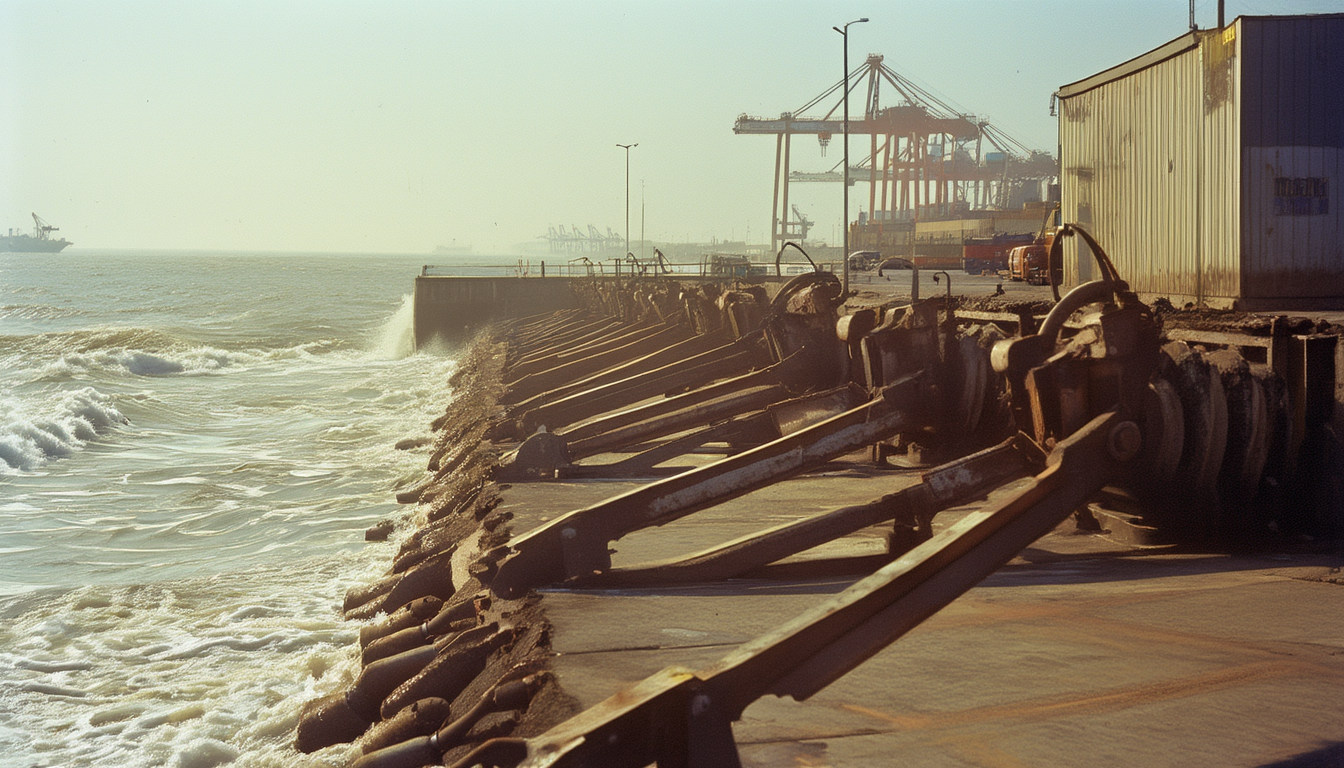
Wave power did not win by getting bigger. It won by learning to flinch.
That is the part the early coverage missed. For four decades the industry chased a machine that could stand in the surf and hold its ground — a fortress that would take everything the Atlantic threw at it and convert the blows into watts. Every fortress was eventually destroyed, and the companies that built them went into administration with grim regularity. Pelamis Wave Power, Scotland's celebrated red sea-snake, collapsed in 2014. Aquamarine Power followed in 2015. The pattern was so reliable that engineers had a name for the technology's permanent condition: perpetually five years from commercialization.
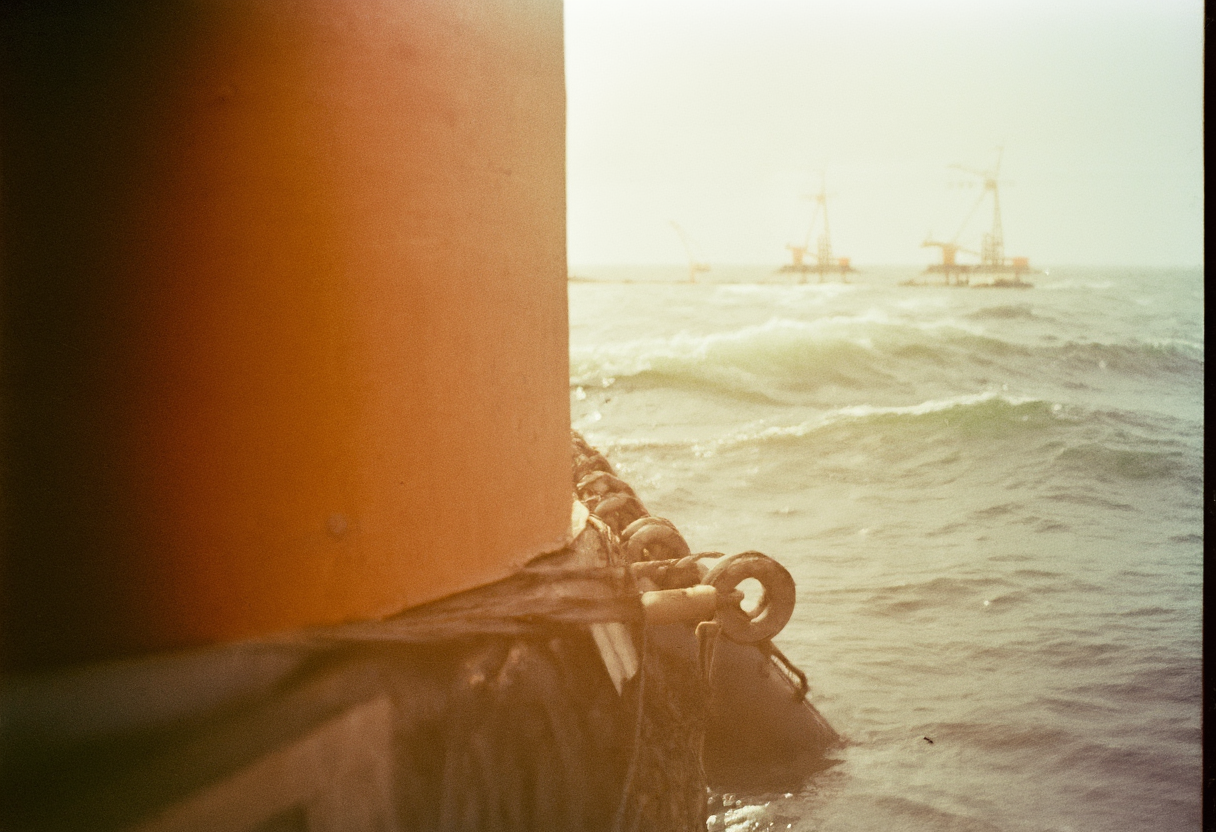
The breakthrough, when it finally came in the mid-2020s, was a reversal of the entire design philosophy. Stop resisting the storm. Get out of its way.
The conventional wisdom: bigger ocean, bigger machine
The numbers were always seductive. The theoretical energy in the world's waves runs to roughly 30,000 terawatt-hours a year — on the order of total global electricity demand — a figure that launched a thousand pitch decks.1 The logic seemed to follow: an ocean that vast deserves an apparatus to match. Build the heavy hydraulic leviathan, anchor it to the seabed, and harvest at industrial scale.
The economics punished that logic without mercy. Wave systems carried capital costs of several million euros per megawatt installed, and early projects needed feed-in tariffs north of €300 per megawatt-hour to pencil out — at a time when utility-scale solar was clearing under €40.2 Investors, reasonably, treated the sector as a lottery ticket with bad odds. A bigger machine in a more violent place was not a business plan. It was a more expensive way to be wrong.
Force one: the value of being boring
What the spreadsheets undervalued was predictability. Sunlight and wind swing by the hour and apologize to no one. Waves, generated by weather systems acting across thousands of kilometers of open water, can be forecast days out. To a grid operator that distinction is worth real money: predictable supply means fewer idling backup plants and less storage bought to cover the gaps. Wave power's pitch quietly shifted from cheapest to most schedulable — and schedulability, in a grid drowning in intermittent solar, became the scarce commodity.
This is the law that enhances: wave energy intensifies the grid's appetite for firmness, the boring virtue of power you can count on. It does not need to beat solar on price. It needs to be there when solar is not.
Force two: subtraction as engineering
The second force was the design inversion. CorPower Ocean's C4 buoy, tested off Portugal, was built to detune in heavy seas — to slacken its grip and let monstrous waves pass through rather than fight them. In November 2023, Storm Domingos drove swells reported up to 18.5 meters past the device, and it survived, having made itself transparent to the very forces that had wrecked its predecessors.3 The company put the gain at roughly five times the energy per ton of machine compared with earlier designs.4
Onshore, Eco Wave Power ran the same logic from the opposite direction: bolt the working parts to existing piers and breakwaters, where the concrete already absorbs the ocean's worst, and let cheap floaters ride the residual swell. In September 2025 the company switched on a 100-kilowatt demonstration at the Port of Los Angeles — seven floaters on a jetty, the first U.S. wave-energy project of its kind, contracted to run two years collecting operational and environmental data.5
Here the tetrad turns twice. Wave power obsolesces the fortress — the seabed-anchored leviathan engineered to outmuscle the sea. And it retrieves something far older: the harbor wall, the breakwater, the human habit of borrowing structures we already built against the water rather than conquering open ocean. The frontier was won, in the end, by people who declined to treat it as a frontier.
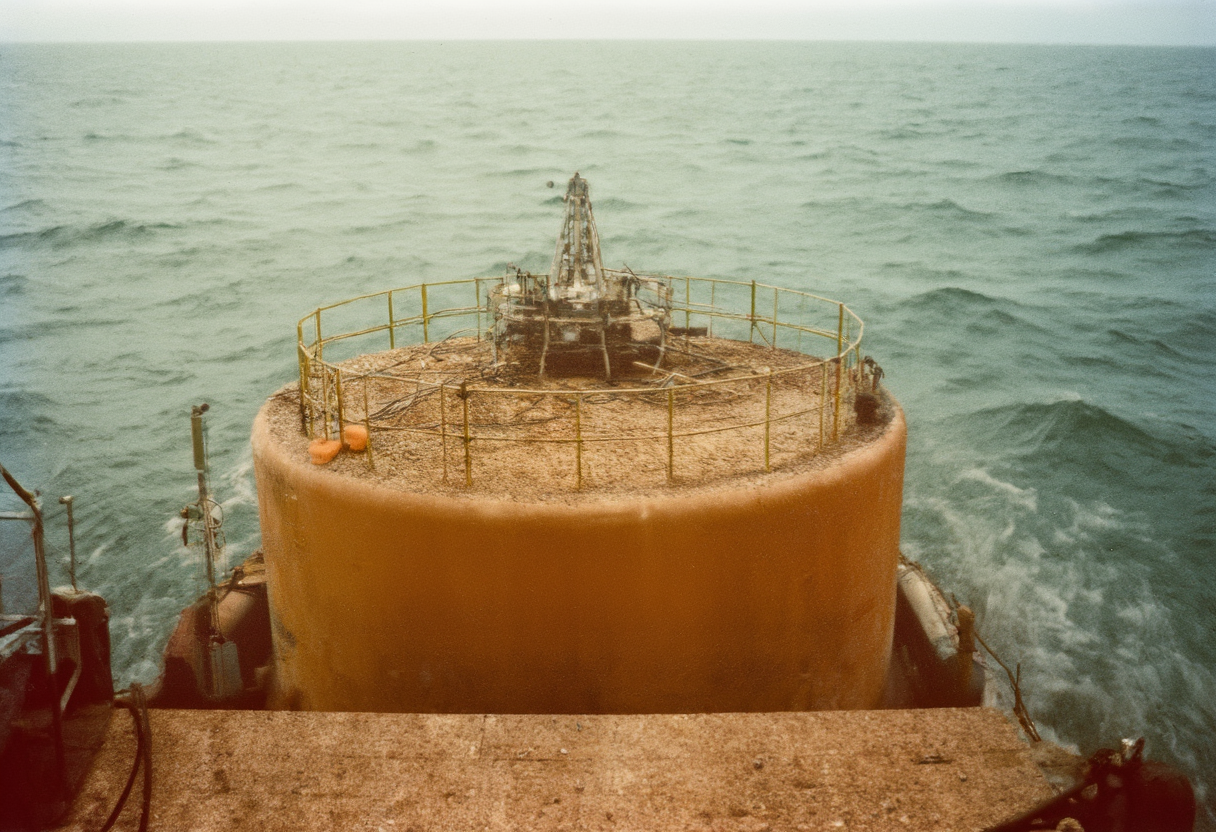
The reversal: the technology of getting out of the way becomes the technology of moving in
And then the law that matters most — the one the early optimists never priced.
A device designed to yield to the ocean is, by definition, a device that can be moved, scaled, and replicated cheaply. Modularity was sold as resilience: as the climate shifted wave patterns and stranded fixed assets, you could simply relocate. McKinsey's read was that the sector needed only around 600 megawatts of cumulative deployment to reach cost parity with wind and solar — a threshold that turns a science project into a supply chain.6 Cross it, and the marginal device gets cheap. Cheap devices proliferate. Proliferation is the point at which the promise inverts.
The thing built to leave the ocean alone became the most efficient instrument ever devised for filling it up. The European Union's own ambition — 1 gigawatt of ocean energy by 2030, 40 gigawatts by 2050 — describes a coastline converted, stretch by stretch, into an energy production zone.7 Arrays that skim a fifth of the incoming wave energy alter sediment transport, beach dynamics, and the intertidal communities tuned to a particular violence of surf.8 The same coastal residents who polled most enthusiastic about wave power also reported the sharpest sense of its risks — because the people most attached to a shoreline are the ones who notice when it changes.9
That is the reversal in one line: a technology that succeeded by refusing to dominate the sea became the most scalable means yet of industrializing it. The fortress destroyed a few companies. The flinch may yet remake every coast it touches.
The lesson
By 2036 the verdict is partial and honest. Wave power is real, bankable in niches, and concentrated where it was always going to make sense first — island grids paying diesel prices, ports, hydrogen plants that prize a steady current. It is not the 40-gigawatt civilization-scale resource the brochures promised, and it is no longer the graveyard joke either. It is a tool that found its size.
The durable principle is older than the technology. The hard environments do not reward the strongest machine; they reward the one that stops fighting the thing it cannot beat. Wave energy spent forty years trying to out-muscle the ocean and went bankrupt doing it. It started winning the day it learned to get out of the way — and the warning folded into that victory is that anything cheap enough to put everywhere, eventually, goes everywhere.
Author's Note: This is speculative journalism written from a vantage point of 2036, looking back at wave-energy developments that were real as of 2024–2025. The technologies, companies, projects, cost figures, storm data, EU targets, and research findings cited above are drawn from actual reporting and peer-reviewed studies and are documented in the footnotes. The 2036 framing, the projected verdict, and the interpretive arc are the author's extrapolation — one plausible trajectory among several, not a forecast. Market-size projections for the sector vary widely between research firms and have been treated here as directional rather than precise. The ocean's power is real; how fully we choose to harness it remains undecided.