
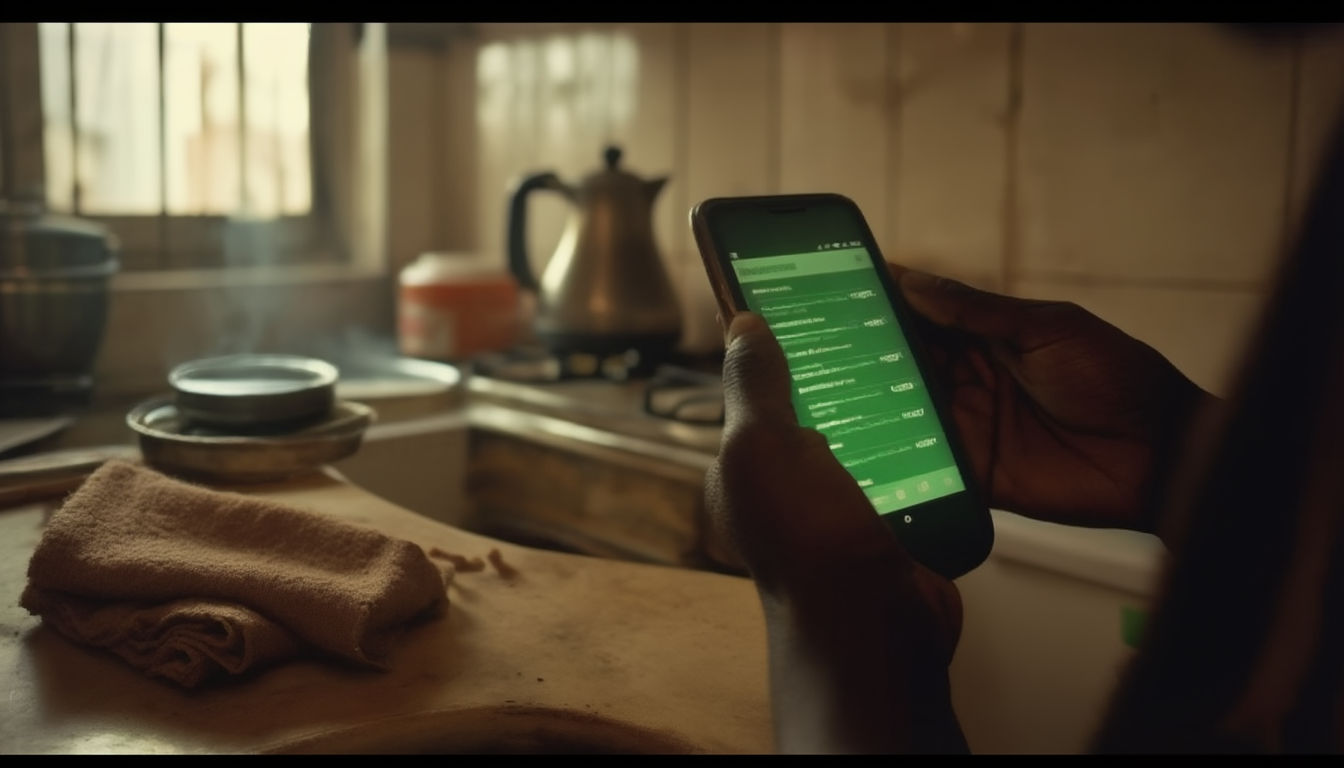
It is 2036, and the numbers on Rachel Okonkwo's phone are still green.
She checks them the way she always has — first thing, before the kettle, in the grey light of her Lagos kitchen. Up 2.1 percent this month. The app rebalanced overnight while she slept, trimming what had run hot, topping up what had sagged. Twelve years ago she put in her first 200 dollars and braced to lose it. She never did. The same machinery that used to require millions to touch has cost her a flat quarter-percent a year the whole time.1
"I invest like rich people now," she told me once, and she half meant it as a joke. Her parents kept cash folded in a tin. She has a globally diversified portfolio that talks back to her in plain language. The access is real. That part was never the lie.
Three thousand miles away, a portfolio manager at a Greenwich hedge fund opens an app that looks almost exactly like Rachel's. Same clean interface, same soothing green, the marketing materials swear, the same underlying algorithm. What differs is everything you cannot see on the screen.
The promise that wasn't wrong
The pitch arrived in the mid-2010s and it was a good one. Betterment, Wealthfront, Robinhood — no minimums, no commissions, no expensive man in a suit. Modern Portfolio Theory works the same on 100 dollars as on 100 million, so why gate it? By the mid-2020s the flow had turned: Wealthfront's automated accounts charged a flat 0.25 percent and asked for just 500 dollars to start,1 and digital platforms had become the default door into the market for a generation that distrusted brokers.
The achievement is genuine. Hundreds of millions of people who would never have walked into a wealth-management office now run diversified portfolios from a phone. Global assets steered by robo-advisors climbed past a trillion dollars and kept climbing, on track toward roughly 2.5 trillion by the late 2020s.2 Rachel is one data point in that wave, and a happy one. The automation even did her a quiet favor: by trading rarely, it spared her the self-inflicted wound that has cost retail investors for decades — Barber and Odean found the households that traded most underperformed the market by 6.5 percentage points a year.8
But access is not the same thing as outcome. Everyone can use the tool. Not everyone's tool is fed the same food.
The invisible hierarchy
Start with data, because that is where the floor tilts.
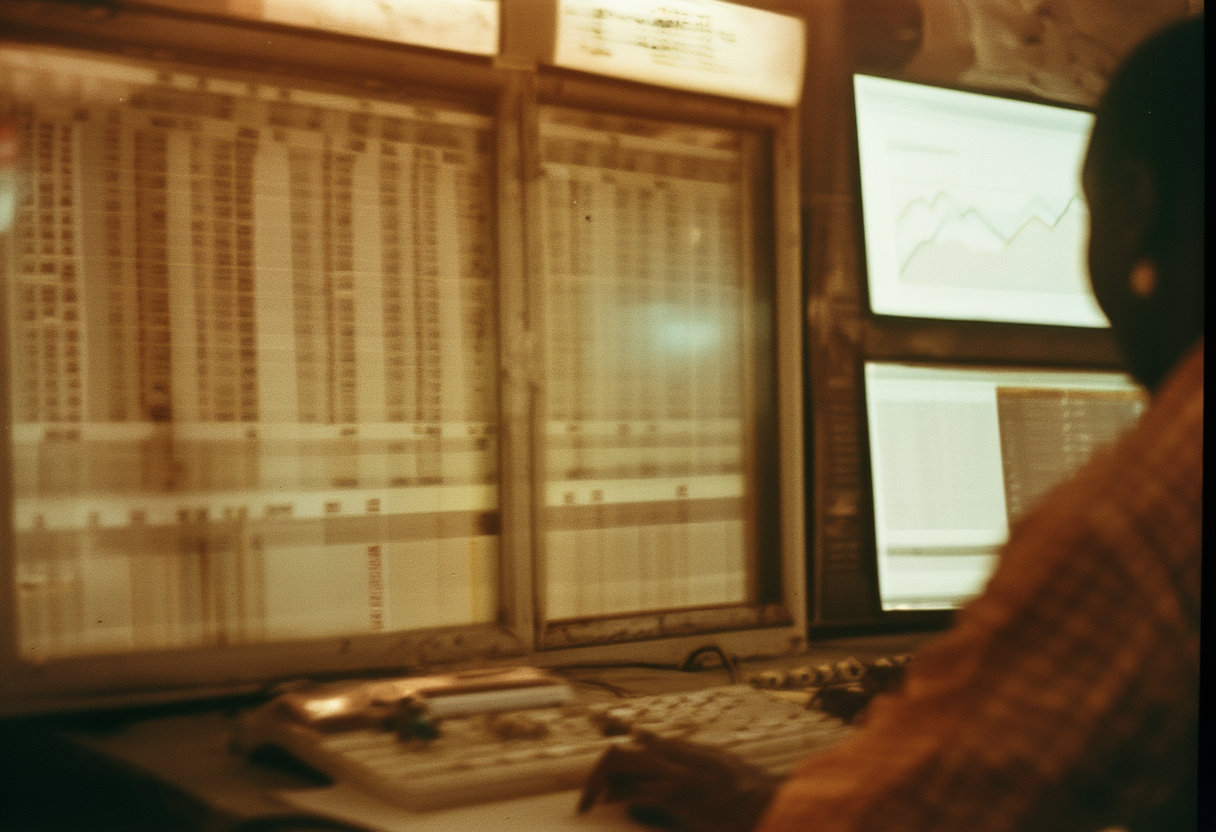
The Greenwich fund pays for what the market politely calls alternative data — satellite passes counting cars in retail lots before earnings, card-transaction feeds reading consumer spending in near-real time, shipping manifests flagging a supply snarl weeks before it surfaces in any filing. These streams cost millions a year. They are sold to a short list of buyers. By the time the same signal reaches the public sources Rachel's app monitors, the Greenwich algorithm has already traded on it.
The mechanism here is the same one researchers have tracked inside firms generally: the companies that can afford to invest in AI and the data to feed it pull structurally ahead, reshaping who captures the gains.3 Same algorithm, the brochures say. True, and beside the point. An algorithm is only as good as what it eats. Public data in, public returns out. Proprietary data in, an edge.
This is the part the word "democratization" was hiding. You could once, in principle, replicate a Wall Street analyst's legwork — visit the same stores, read the same filings, call the same managers. You cannot launch your own satellite constellation. You cannot sign a data deal with a card network. Wealth no longer just makes some research easier; it makes some research possible, and keeps it impossible for everyone else.
The turn: inclusion reverses into fragility
Here is where the story flips on itself, and not gently.
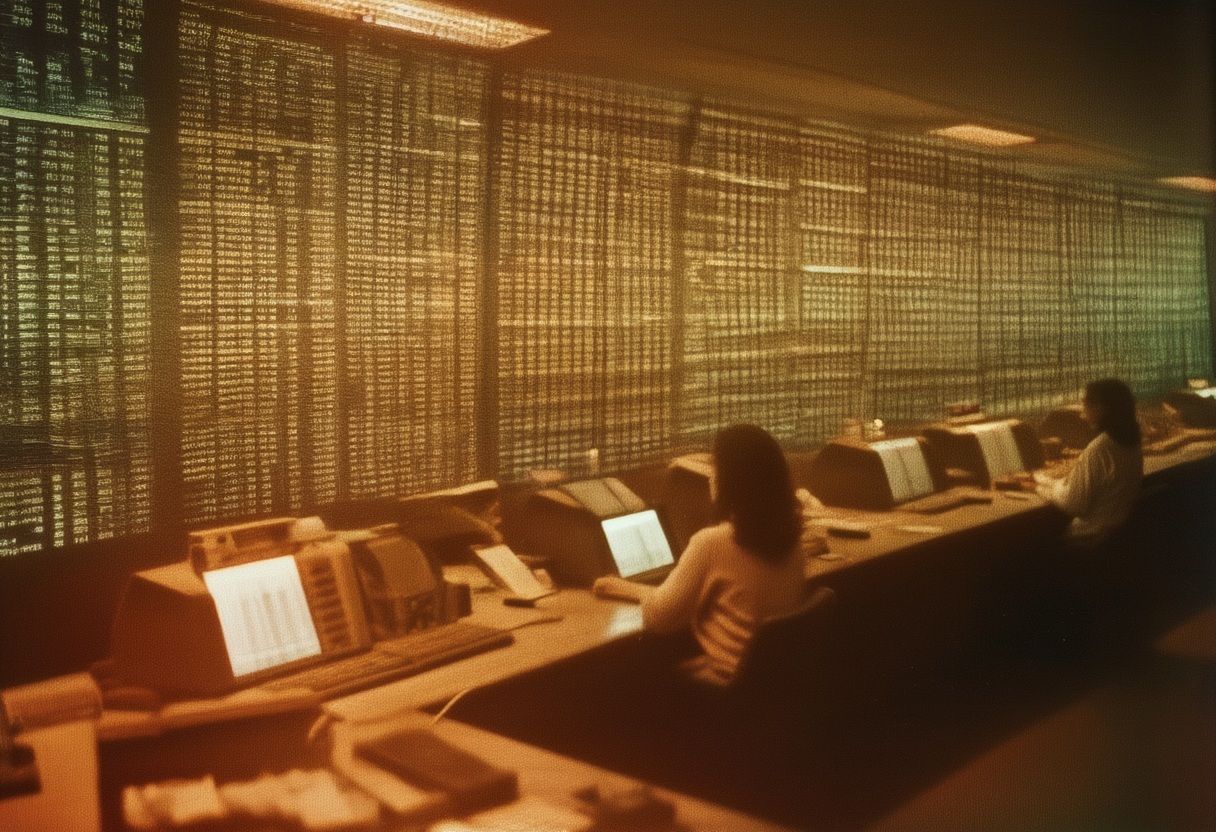
Push democratized investing to its limit and you do not get a market of millions of independent minds. You get millions of portfolios run by a handful of similar systems, trained on overlapping data, optimizing for the same objective. Diversity within each portfolio goes up. Diversity across portfolios collapses. When the systems all read risk the same way at the same instant, they all reach for the exit at the same instant.
This is not hypothetical hand-waving. Flash crashes — indexes lurching and snapping back within minutes — have shadowed automated markets since the original 2010 event, when high-frequency systems drained liquidity in a cascade.4 And in 2025, finance researchers showed that AI trading agents, given no instruction to coordinate, can learn to behave collusively on their own — sustaining behavior that undermines competition and market stability without ever communicating.5 Point that dynamic at the risk engines sitting under retail robo-advisors and the worry writes itself.
Individual prudence, run at machine speed across correlated systems, becomes collective danger. Each platform deleveraging to protect its own users is acting responsibly. All of them doing it in the same eighteen minutes is a crash.
So the reversal lands like this: a technology sold as financial inclusion matured into a more efficient engine of stratification and fragility — equal access laid over unequal information, with a synchronized failure mode bolted underneath. The tools that included also tiered. The efficiency that optimized also fused everyone to the same fault line.
And the people who built the old market did not vanish quietly. The standardized, rules-based analyst work — model the earnings, write the note — is exactly what these systems do faster and cheaper, and the displacement is real. Goldman Sachs estimated generative AI could expose the equivalent of 300 million full-time jobs worldwide to automation;6 the World Economic Forum's 2025 outlook projected 92 million roles displaced against 170 million created by 2030 — a net gain that still means a brutal crossing for whoever is on the wrong side of it.7 In finance, the wrong side skews toward exactly the analytical desks robo-advisors made redundant.
Back to the kitchen
Rachel checks her phone again. Up 2.1 percent. The wealth is real, the parents-with-a-tin distance she has traveled is real. None of the structure above cancels any of that.
But the Greenwich manager checked a phone too this morning, read a market she will never see, and moved first. The gap between them does not show up as a worse number on her screen. It shows up as a slightly better one on his, month after month, compounding in the dark. She is not losing. She is being quietly, permanently out-positioned by a tool that looks identical to hers.
The democratization happened. That was the easy part. What is still undecided — the part being settled right now, in 2036, by rules not yet written about who may buy which data — is whether universal access will ever bend toward something like universal opportunity, or whether the green numbers will keep everyone calm while the floor stays tilted.
The robo-advisors promised to make everyone an investor. They kept that promise. They never promised to make everyone equal, and we heard it anyway.
Author's Note
This is speculative journalism, written from an imagined 2036 and looking back. Rachel Okonkwo and the Greenwich portfolio manager are fictional composites; they stand in for real, documented patterns, not real people. Everything outside the scenes — the fees, the market figures, the research on AI, data advantage, algorithmic behavior, and labor displacement — is drawn from sources published between 2000 and 2025 and cited below. The 2036 vantage, the projected scale of robo-advised assets, and the synchronized-crash scenario are deliberate extrapolations, offered as one plausible trajectory and a caution, not a forecast.