
Nobody called it a renaissance while it was happening. Structural shifts in monetary order rarely announce themselves. They accumulate quietly in settlement data and Treasury auction books while everyone argues about something louder.
In 2022, after the G7 froze roughly $300 billion in Russian sovereign reserves, the obituaries for dollar dominance arrived in earnest.1 The dollar had been turned into a weapon, the argument went, and the world would route around it. They were right about the weapon. They were wrong about the response.
Look at where we ended up. The dollar still anchors the world's reserves — around 58% at the close of 2024, down from a peak near 73% in 2001, a slow erosion, not a collapse.2 No BRICS settlement currency ever launched.3 And the populations most determined to escape dollar dependence spent the decade dollarizing anyway, one phone at a time, holding their savings in tokens backed by U.S. Treasury bills.
How that happened is not a story about American policy genius. It is a story about two forces nobody in 2022 had fully priced, arriving at once.
Force One: The Capital That Couldn't Go Anywhere Else
Start with the buildout. Combined AI-infrastructure spending by the largest U.S. hyperscalers climbed from about $162 billion in 2022 to roughly $448 billion by 2025, with projections near $725 billion for 2026.4 Data centers, chips, power, fiber, the people who filled the buildings — all of it denominated, cleared, and custodied in dollars.
The capital chasing it had nowhere comparable to go. Gulf sovereign funds, Norwegian and Canadian pensions, Tokyo and Singapore institutions all wanted exposure to the defining buildout of the century. The frontier labs were in San Francisco. The clusters were in Virginia and Texas. None of it was available in yuan. To own a piece of the AI future, you owned dollar-denominated assets — and to own those, you needed dollars.
This was American exceptionalism operating as infrastructure rather than ideology: the property law, the capital markets that price early-stage risk, the universities that still pulled in foreign-born researchers. China built real capability but kept its ecosystem largely closed to foreign ownership. Europe regulated faster than it built. The cynics who said in 2022 that the AI cycle would hollow out American industry instead watched it generate the largest sustained demand for dollar assets in financial history. This is what the dollar enhanced: its reach as the settlement layer for the one buildout everyone wanted in on.
Force Two: The Stablecoin Backdoor
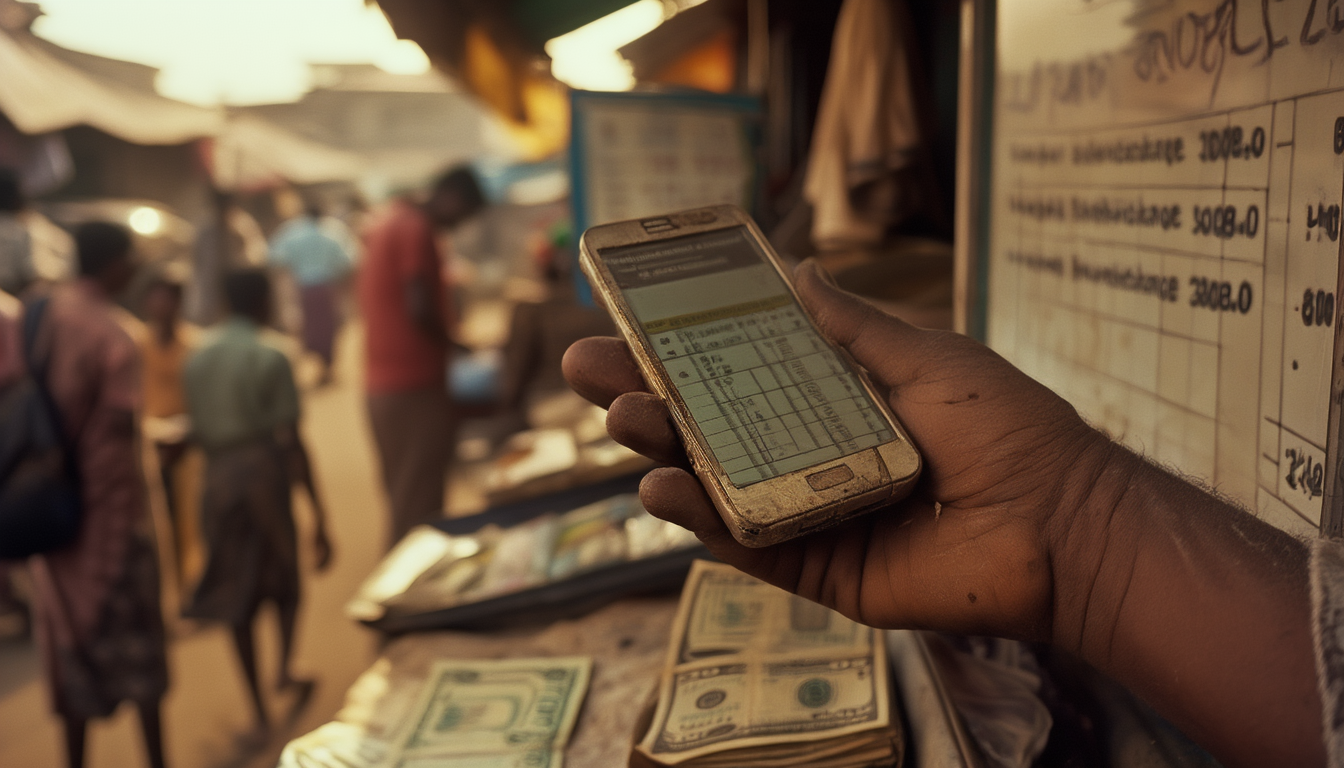
While the geopolitical drama played out in summit communiqués, something quieter happened at street level in Lagos, Buenos Aires, Istanbul, and Nairobi. People were buying dollars — not through banks or exchanges, but through phones.
Populations under the worst monetary instability did not turn to the yuan or a commodity basket. They turned to dollar-pegged stablecoins, which are functionally dollars with better distribution. Stablecoin settlement volume reached roughly $27.6 trillion in 2024 and about $33 trillion in 2025 — figures that, on paper, rival the card networks.5 In Argentina, stablecoins came to represent more than half of crypto-exchange activity as the peso shed value.6 Nigeria processed tens of billions in stablecoin volume; Turkey processed more than $60 billion in cross-border stablecoin payments in 2024 alone.6
The issuers became Treasury buyers at scale. By late 2024, Tether alone held on the order of $100 billion in U.S. government debt, ranking among the largest non-sovereign holders on earth; together with Circle, the stablecoin sector rivaled mid-sized sovereign creditors.7 Here is what the dollar obsolesced — the correspondent-banking remittance and the local branch — and what it retrieved: the dollar's old role as the world's hand-to-hand cash, now reissued as a token on a phone.
In 2025, Washington formalized the arrangement. The GENIUS Act, signed in July, created the first federal framework for payment stablecoins and required one-to-one backing in cash or short-term Treasuries, with monthly disclosure.8 The law mostly ratified what already existed: every dollar token in Karachi or Accra was, through its reserves, a small purchase of American government debt. If the petrodollar was Washington's first engine of structural dollar demand, the stablecoin was the second — and it required no secret monarchy, only a smartphone.
The Alternatives That Stayed in the Conference Room
The de-dollarization camp was not wrong that countries wanted out. They were wrong about how hard the exit is. The 2023 BRICS expansion in Johannesburg — Saudi Arabia, the UAE, Iran, Egypt, Ethiopia invited in — read like the petrodollar's death notice.9 But Saudi Arabia let its old understanding with Washington lapse without staging a flight from the dollar; oil stayed roughly 80% dollar-priced.10 The proposed BRICS currency never launched, snagged on the same wall every alternative hits: a reserve currency needs deep, open, liquid markets, and no member would open its capital account that far.3
China's CIPS payment rail grew fast — annual volume up 43% in 2024 — but it settled trade between aligned partners; it did not become a place to store reserves.11 Settling a trade and trusting a vault are different problems. The Russia freeze did change one behavior for good: central banks bought gold at record pace, over 1,000 tonnes a year from 2022 on.12 That was not a dollar substitute. It was a hedge against the one risk the freeze exposed — that dollars can be made unavailable by political order. Gold can't be frozen by a Treasury memo. The diversification was real, and narrower than the collapse narrative claimed.
The Reversal
Here is the turn the 2022 obituaries never saw. The same mechanism that rescued the dollar also re-armed the weapon that started the panic — and pointed it at the very people the technology was supposed to liberate.
A subsistence trader in Lagos who moved her savings into a dollar token did escape her local currency. She also moved them onto a programmable rail whose reserves sit in American banks, whose issuers answer to U.S. regulators, and whose tokens can be frozen at a single address by a single compliance call. The 2022 freeze hit one central bank in Moscow. Its 2030s descendant can reach a hundred million individual wallets, one at a time, with none of the friction sovereign assets enjoy. A tool sold as financial inclusion reversed into the most granular instrument of monetary control ever built: the dollar's reach extended not by invitation but by dependency, and its sanctions surface widened from nations to people. Inclusion became leverage. That is the dollar's second act, and its hidden cost.

The Lesson
The dollar did not win because America argued well. It won because a credible successor never showed up. The yuan stayed inconvertible at scale; the euro stayed a consortium currency without a unified fiscal backstop; gold stayed finite and inconvenient; the BRICS unit stayed a slide in a deck.
So the durable principle is narrow. A monetary transition needs two things, not one: the erosion of the incumbent and the arrival of a successor. Through the 2020s the world delivered only the first. While it waited for the second, America built the internet's next layer and priced it in the only currency that worked — then quietly wired the savings of the world's poorest into a ledger it can read, and freeze. Empires don't last forever. But this one found a way to make even the people fleeing it pay rent in dollars.